This site is the most comprehensive on the web devoted to trans history and biography. Well over 1800 persons worthy of note, both famous and obscure, are discussed in detail, and many more are mentioned in passing.

There is a detailed Index arranged by vocation, doctor, activist group etc. There is also a Place Index arranged by City etc. This is still evolving.

In addition to this most articles have one or more labels at the bottom. Click one to go to similar persons. There is a full list of labels at the bottom of the right-hand sidebar. There is also a search box at the top left. Enjoy exploring!

Showing posts sorted by relevance for query victor barker. Sort by date Show all posts

15 February 2017

Victor Barker: Part II - husband, actor, manager

Part I: origins: daughter, wife, mother
Part II: husband, actor, manager
Part III: the trial
Part IV: reactions and afterwards


Sir Victor Barker DSO settled in at the Grand Hotel, Brighton. He visited a gentleman’s outfitters and purchased two or three suits, including a dress suit for evening wear, shirts, collars ties, etc. The asset sales from the farm and the sale of his mother’s jewellery, and his small annuity would carry him for the time being. His three-year-old son was cared for elsewhere in Brighton. He participated in tennis, swimming and horse riding with the other hotel residents.

Elfrida Haward arrived on the second day. Barker had explained:
“I told Miss Haward that I was not what she thought I was; I told her that I was a man who had been injured in the war; that I was really a man acting as a woman for family reasons. I made some excuse about it being my mother’s wish, and she believed it.”
The son was explained as with a first wife who had died, and the daughter was of Peace Crouch and his wife from whom he was now separated. Barker did concede though that
“I think that she had some doubt as to my being a baronet. I explained that I had dropped the title while living on my farm, but had assumed it again in the hope that it might help me get a job. I don’t think she swallowed this tale, though she never said much.”
Elfrida would later claim that she did not know that he was a woman until the trial and she understood that Victor could not have 'normal relations' because of an abdominal wound received during the war.

However Victor's previous persona, Mrs Peace-Crouch, had patronized the shop. Victor Barker was able to convince Elfrida's father that he had lived much of his life as a woman because his mother had always wanted a girl and had taken advantage of the death of the father to impose this whim. However he had also been an army Colonel, had served with the British Expeditionary Force in France, and had been awarded a DSO.

However, once this tale was digested, a new problem arose. The young man – albeit supposedly a woman – had spent a night with Elfrida in her bedroom. To avoid scandal they must marry. For Elfrida, this was a good match: a tradesman’s daughter and a knighted military man. However her parents, while permitting the marriage did not care for Sir Victor. They cancelled their plans to settle a sum of money on Elfrida at marriage.

Because the parents did not care to wait through the customary reading of banns on three consecutive Sundays, Victor applied for a marriage license. To do this he had to produce both their birth certificates, and make a sworn affidavit that
“he believeth that there is no impediment of any kindred or alliance or of any other lawful cause, or any suit commenced in any Ecclesiastical Court to bar or hinder the proceeding of the said Matrimony according to the Tenor of such licence”.
The impediment of alliance was not mentioned, nor was his biological sex; and a forged birth certificate was produced. Victor and Elfrida were married 14 November 1923 at St Peter’s, the parish church of Brighton. The ceremony was performed by the curate as the vicar collapsed and died while running for a bus that very morning.

From a meeting at the Grand Hotel, Barker became involved in the Brighton Repertory Company where he was paid 10/- a week. However his lifestyle required more. He opened an antiques and second hand furniture shop in Andover, Hampshire. He also bought a .32 Webley pistol and obtained a certificate for it. He sang in the Andover choir and played with the local cricket club. However he did not know much about antiques, they left town owing £457 to a fellow officer.

Barker did have some success as an actor. Using the stage name of Ivor Gauntlet, he obtained parts in touring productions playing against famous actresses such as Mrs Patrick Campbell and Dolores. However his voice broke down after the strain of singing in a low register.

And Ivor Gauntlet soon had creditors. A tailor in Birmingham was claiming £40/13/-. An actor was public and easy to trace. Victor Barker resorted to paid employment: farm manager (3 months), kennel manager (1 month) and labourer in a brick works where he contracted chicken pox. Elfrida nursed him back to health.

However by this time she had had enough and went back to her parents, and working in the chemist shop. Barker took rooms in Soho.

the boxer
Either because of a misdelivered letter, or on the suggestion of a fellow resident, in late 1926 Barker came into contact with Colonel Henry Rippon Seymour, the leader of the National Fascisti, a splinter group from the British Fascists. He became the live-in secretary of the group and gained the flat above their offices at 5a Hogarth Road, Earls Court. At that time the National Fascisti had a membership of less than 400.

Barker was in his element. He often wore his medals (actually those of Pearce-Crough), gave fencing and boxing lessons to the young recruits, and advised them of the folly of getting mixed up with women.

On 8 March 1927 a small group of fascisti, mainly from the Croydon branch, dissatisfied with Seymour’s usurpation of leadership, burst into the offices. Seymour grabbed his sword, and the Webley pistol from the drawer of the desk and threatened to shoot the first man.

The police arrived. They took possession of the pistol. Seymour appeared at the West London Police Court the next day and pleaded guilty to common assault and possessing a firearm. However the magistrate directed that the second plea be withdrawn when it was clarified that the gun was Barker’s. It was a Webley pistol, but not the same one as on Barker’s certificate from Andover. He was charged with “uttering a forged firearm certificate”.

At the trial in July Barker presented with his eyes swathed. His counsel explained that ‘temporary blindness owing to war wounds’ had flared up. He was found not guilty and discharged.

His firearms certificate was cancelled; he quit the National Fascisti; the Public Prosecution Office wrote to the War Office to ascertain Colonel Barker’s war record; they discovered rumours from Andover about a woman masquerading as a man. However the Prosecutor’s Office dismissed the rumours about a woman, and did not proceed.

Also in July 1927, Tom Barker died of tuberculosis, age 28. He left £1,000 to his sister Valerie. This enabled Barker, and a second Mrs Barker, to rent an expensive flat (£295 per annum) in Mayfair, and employed a valet. His son came to visit regularly, but the current Mrs Barker was always sent away on these occasions.

Barker often held dinner parties for officers whom he had met while in the National Fascisti. From this grew the idea of a fellowship for the British survivors of the Battle of Mons, August 1914. The inaugural dinner was held in Barker’s flat 17 December 1927 with fourteen veterans. However the events proved so successful, that they had to be moved to a hotel.

This was done in association with Colonel Neave, who in fact had been present at Valerie's wedding to Harold Arkell-Smith, but who was completely convinced by Colonel Barker's knowledge of military manoeuvres. Some thought that Barker looked a bit odd, but when he talked about his experiences in the war, he was completely convincing.

With of the success of the Mons dinners, Barker felt that he could run a restaurant. In February 1928, he found one to lease just off Charing Cross Rd, and renamed it Mascot Café. The Daily Sketch received an anonymous tipoff that Colonel Barker was really a woman, and sent a reporter. Twice he engaged Barker in conversation, but was unable to fault his manhood.


However the café did not thrive. He owed a considerable sum in back-rent and the landlady was losing patience. He surrendered the café, moved to cheaper accommodation and found a job as reception clerk at the Regent Palace Hotel.


_____________________________________________________

Rose Collis' biography of Barker, the most reliable source, definitely states that the two guns were Webleys.   However the EN.Wikipedia on the National Fascisti insists it was a colt,   It does not cite Collis at all, but relies on Martin Pugh's Hurrah For The Blackshirts!: Fascists and Fascism in Britain Between the Wars, 2006, but this merely says 'revolver'.  (Pugh, for some reason refuses to be polite, and uses female pronouns throughout). This EN.Wikipedia article summarizes Barker's involvement:  "In 1927 a leading member was "Colonel Victor Barker", who was actually a cross-dresser by the name Valerie Arkell-Smith. Her fellow National Fascisti members did not know she was a woman and treated her as a man and she became secretary to Rippon-Seymour as well as training members in the boxing and fencing clubs."  This of course distorts the issue and misses the point.

Surely Seymour could have pleaded self-defence.

The EN.Wikipedia page on English Fascists includes Valerie Arkell-Smith but not Victor Barker.

19 February 2017

Victor Barker: Part III - the trial

Part I: origins: daughter, wife, mother
Part II: husband, actor, manager
Part III: the trial
Part IV: reactions, and afterwards


Victor Barker did not pay much attention to an obscenity trial that took place in November 1928, that of John Radcliff Hall’s novel, The Well of Loneliness, whose protagonist was a masculine woman. With much brouhaha the book was banned.

A bankruptcy notice and receiving order addressed to Barker was delivered to the Mascot Café, but Barker had left and did not go back. Hence he did not know that he was required to be present for a public hearing on 24 January 1929. An arrest warrant was subsequently issued, Barker’s presence at the Regent Palace Hotel was discovered, and he was there arrested. He was taken to Brixton Prison, where like all new prisoners he was medically examined. He was told to put his clothes back on and was quickly transferred to Holloway women’s prison.

It took a week before the first newspaper article about him appeared in The Times. This was quickly followed by articles in The Daily Herald and The Evening News. Government departments paid attention. The War Office and the Director of Public Prosecutions exchanged files.

Barker’s lawyers raised the issue that a person arrested as a man was being held in a women’s prison – which appeared to be unlawful. In addition they made application in the bankruptcy court that all information in connection with the bankruptcy had now been supplied and thus the offence had been purged. Barker’s immediate release was ordered.

However Holloway insisted that no woman would leave dressed as a man. This despite the fact that they had no women’s clothing that would match Barker, especially in girth. A special purchase was made, and the next day Barker was handed a coat, skirt, blouse, silk stockings and a large hat. A large crowd of reporters and onlookers awaited, but Barker was allowed to leave by the staff entrance at the back.

By now the police had tracked down Valerie’s second husband, Ernest Pearce Crouch, who had spent the last six years working sometimes in France, sometimes in England. He politely declined to give a statement.

Elfrida Haward (Barker) however was talking to the police, and to the press.

In the same weekend, 10 March 1929 both Mr and Mrs Barker published their respective accounts in the press. Victor’s story was in the Sunday Dispatch, illustrated with photographs of both Valerie and Victor.
“A man seems to have a better and easier time. There is, I am certain, more opportunity for a man in the world than a woman – that is why I became a man. I believe that, similarly placed, I would do much the same again. I do not mean that I would deliberately do those things which I now realize were wrong, but they were done in foolishness and not with any wrong intent.” 
Elfida’s account was in the Sunday Express.
 “It could not have been more of a shock to any woman in the world than it was to me to find myself utterly deluded, utterly alone in experience, in a position that made my name known to every man and woman in the country.” 
The Director of Public Prosecutions was considering whether they could charge Barker under the Army Act for impersonating an officer and wearing medals that had not been awarded to him. Instead they settled for charging him with “wilful and corrupt perjury in an affidavit” re his bankruptcy “in which affidavit she swore that she was truly named Leslie Ivor Victor Gauntlett Bligh Barker”.

Wisely or not, Barker turned up for the hearing on 27 March in female clothing including a large hat and a large feather boa, so that he could hide his face.

Barker’s lawyer made the obvious point that there was no law against a woman dressing as a man, and in the affidavit Barker had used the name by which ‘she’ had been known for some time, and thus that was the name given. This was allowed in English law. The magistrate agreed.

However the prosecution than asked the magistrate to hear evidence and commit the defendant for trial on a different issue. In violation of the Perjury Act, 1911, the defendant had “knowingly and wilfully caused a false statement to be entered in a register of marriage”. The doctor from Brixton prison and Elfrida were called as witnesses. A copy of the marriage certificate was produced. Barker’s lawyer attempted the argument that “as two persons of the same sex could not marry there has been no marriage, and therefore no offence”. The magistrate was not having that.

The perjury in an affidavit charge was dropped, but Barker was formally charged with the second offence re the marriage register. £50 bail was granted, and the trial was set for 24 April at the Central Criminal Court (Old Bailey).

The judge was to be Sir Ernest Wild, KC, Conservative MP, Freemason, Recorder of London, who had been a strong supporter of the failed attempt in 1921 to criminalise “any act of gross indecency between female persons”, and who was firmly opposed to female jurors, especially in cases where the defendants were homosexual. The Prosecutor would be the same one Barker had faced in 1927 on a false firearms certificate charge.

On the day of the trial there was large queue for the public gallery. Victor Barker appeared dressed as his true self, but was summoned under the name of Lillias Irma Valerie Arkell-Smith. The prosecutor admitted, with some embarrassment, that the defendant had been prosecuted in this same court as a man two years previously. He made the comment
 “If she wanted to marry another woman she could have gone through a ceremony in a registry office. There is no justification for her abusing the Church to go through this ceremony”. 
And then:
“Your Lordship will appreciate how important it is that marriage registers should not be falsified. That is an aspect of the case which is of considerable gravity”.

Elfrida was the main witness. Despite admitting that she first met the defendant as Mrs Pearce Crouch, she claimed that she did not truly know Barker as a woman until she saw it in the newspapers. Barker's lawyer in summing up concentrated on Barker’s need to earn a male wage, and once having taken that step she had to keep it up or lose the employment. He did not defend the point about a false statement being entered in a register of marriage.

Sentencing was delayed until the next day when Recorder Wild commented:
“Without expressing any view as to the truth or falsity of Miss Haward’s evidence, I am assuming in your favour that Miss Haward must have known before the alleged marriage that you were a woman”. He concluded: “I have considered and carefully pondered on everything which can be said in your favour, and the result at which I have arrived is this. You are an unprincipled, mendacious and unscrupulous adventuress. You have, in the case before me, profaned the House of God, you have outraged the decencies of Nature, and you have broken the law of man. You have falsified a marriage register and set an evil example which, were you to go unpunished, others might follow. So grave in the eye of the law is the offence which you have committed that the maximum penalty for it is seven years’ penal servitude. In all the circumstances of this case, showing all the leniency that I can, I pass on you a sentence of nine months’ imprisonment in the second division.” 

The police considered action against Ernest Pearce Crouch who had made a false declaration in applying for Valerie Arkell Smith to be added to his passport; however they decided not to pursue the issue.

In Holloway prison, it was found that they had no uniform large enough to fit the new inmate known as Valerie Arkell Smith who weighed 16st 8 lb (105kg). It took a fortnight for the uniform to be ready, most of which Arkell Smith spent in the prison hospital. In the regular prison he was dismayed by the sanitation, by the food and by the non-recognition of class. The required work was tedious.

While Barker was in jail, Violet Morris, in Paris, also a masculine woman who always wore male clothing, sued the women's sporting authorities for rejecting her.   She insisted that she was not at all like Barker in that she did not attempt to pass as male.

Overall Arkell Smith was regarded as of good behaviour, and was released 15 December 1929. By now his weight was down to just above 13 st (82.5 kg).
_________

Not only was there no law against a woman dressing as a man, there was no specific law against any cross-dressing. This had been established in the trial of Fanny and Stella in 1870. Those persons arrested while transvesting were charged with ‘disturbing the peace’, ‘mischief’ etc.

Women’s fashions during the 1920s approached very close to transvestity. Barker, of course, had gone much further than making a fashion statement.

The second Mrs Barker seems to have quietly disappeared.  Only the Sunday People speculated about her: "'Col. Barker's' Red-Haired 'Wife' Vanishes: She Was 'His' Second".  Front page, 10 March 1929.   Despite a detailed series of articles on Barker, The People strangely carried no account of the actual trial.

The prosecutor made the comment “If she wanted to marry another woman she could have gone through a ceremony in a registry office”. Now this is odd in that such a ceremony, for gay men, lesbians or a couple containing a trans person, in a registry office would not be legal until the government introduced civil unions in 2004. Even after the Marriage (Same Sex Couples) Act 2013 such a ceremony is still not allowed in an Anglican church.

Barker’s lawyer focused on the practical aspect of men getting jobs more easily and earning more. The issue of Barker being a congenital invert (to use the language of the time) did not come up, and as we will see in Part IV, this led to misunderstandings.

The three trials, that of The Well of Loneliness, of Victor Barker and of Violet Morris, marked the end of the 1920s acceptance of female masculinity.    The 1930s would be very different.

23 February 2017

Victor Barker: Part IV - Reactions and afterwards

Part I: origins: daughter, wife, mother
Part II: husband, actor, manager
Part III: the trial
Part IV: reactions, and afterwards


Reactions

John Radclyffe Hall, in the doldrums after her novel, The Well of Loneliness, had been found obscene and banned in November 1928, and who partially cross-dressed herself but never really tried to pass as a man, wrote: 'I would like to see [Colonel Barker] drawn and quartered. A mad pervert of the most undesirable type'. Radclyffe Hall considered herself an invert and Barker a pervert, but despite what was said at Barker’s trial about passing as male to earn a wage, it was Barker, not Radclyffe Hall who lived full-time as male.

The novelist DH Lawrence wrote a pamphlet, A Propos of Lady Chatterley's Lover, later in 1929. This was to explain his novel, Lady Chatterley's Lover, and cited Elfrida’s belief that she was “married normally and happily to a real husband” as an example of the profound ignorance about sex in 1920s England.

The sports star, Violet Morris, in Paris, rejected by the French women's sporting authorities for her practice of wearing male clothing and who had just had her breasts removed, sued for reinstatement. She insisted that she was not at all like Barker in that she did not attempt to pass as male.

William Holtom, a timber haulier’s carter in Evesham, Worcestershire expressed great indignation about the Colonel Barker case. However he had recently quit his job after his best workmate had died under the wheels of the horse-drawn wagon he was driving. His health declined and when he was admitted to the infirmary with enteric fever, he was transferred to the women’s ward.

The farm that had been run by the Peace Crouches had since been acquired by Lady Evelyn and Colonel Guinness. Their son Bryan became engaged to Diana Mitford. Diana and her sisters had pored over the Colonel Barker story and she was thrilled to visit the scene of the crime. However she quickly learned that any mention of Barker was taboo by the dictat of Lady Evelyn. (The marriage of Bryan and Diana lasted three years; her second marriage of 42 years was to Oswald Mosley, leader of the British Union of Fascists.)


Afterwards

On release Victor continued to live as a man. He still had his £9 a month annuity, but that was mainly taken by his son’s boarding school fees. Barker became John Hill.

He worked six months at a furniture store in Tottenham Court Road, and then became a car salesman, but was twice recognised by female customers who had read of his trials in the newspapers. He worked a little as an extra in films at Elstree studios.

In the summer of 1932 he was in Shanklin, a seaside resort on the Isle of Wight working as an assistant to a fortune teller and also to a diver who went off the end of the pier in an asbestos suit, soaked in petrol and set alight.

In 1934 he was working as a kennelman for 15/- a week in Henfield, West Sussex. On 18 August he found a forgotten purse in the village’s only phone box. On 27 September he was charged, as John Hill, for theft by finding. However his legal name as Valerie Arkell Smith was revealed to the court, which enabled his lawyer to explain his odd behaviour as a fear of being found not to be a man. The jury understood and returned a verdict of not guilty.

John Hill spent the rest of 1934 and 1935 as an assistant chef at two large hotels in Cornwall and Devon. For a few months he was a manservant to a South African millionaire. Then he was servant to a Mrs Adrian Scott, who administered a charity and received 400-500 letters a day from around the world enclosing contributions. There were piles of money in every room. Despite the piles, Hill took five one-pound notes from Mrs Scott’s handbag. A police detective-sergeant came round. Hill unbuttoned his waistcoat to be searched. The detective-sergeant noticed that he was “full in the chest” and realised that he was Victor Barker.

Hill then confessed, and was taken to Marlborough Street Police Court. He was remanded for a week which he spent in the hospital ward at Holloway prison. Although he pleaded guilty the detective-sergeant recounted that Hill was also Barker and also Arkell Smith etc. Hill was fined twenty shillings, and ordered to pay back the five pounds within a month.

This brought Hill/Barker to the attention of Luke Gannon, an impresario in the popular seaside resort of Blackpool.

Gannon’s previous star attraction had been the ex-Revd Harold Davidson, defrocked for immoral conduct with young women.

In 1937 Hill again became Colonel Barker, 'The most famous intersexual character of our time'. The set arranged by Gannon on the Golden Mile at Blackpool allowed viewers who had paid two pence to look down upon two beds separated by a belisha beacon and traffic lights permanently on red; Barker in one bed, his wife in the other.
Colonel Barker in Blackpool

At the boarding house where he stayed, Barker gave the name Jeffrey Norton. The wife from the exhibit, Eva, shared his bed.

After the ex-Revd Davidson’s unfortunate demise in July 1937 (the lion, with whom he shared his act in Skegness, mauled him) his wife sold her story in several parts to The Leader, a weekly publication. As she finished, The Leader started “Colonel Barker, the Man-Woman who Hoaxed the World”, which purported to be Barker’s soon-to-be-published autobiography, although no such book ever appeared.

With the coming of war in September 1939, and subsequently identify cards and then ration cards, Jeffrey Norton and his wife Eva were registered in those names. Jeffrey was working on the switchboard of a local hospital. At the suggestion of the police, he, like many men of his age, joined the Home Guard ("Dad’s Army").

Victor’s son had joined the Grenadier Guards in 1938, and after earning his commission had transferred to the RAF to be trained as a pilot. Mr and Mrs Norton moved back into London, and Jeffrey worked at a factory making Hurricane fighter planes, but he found that his legs could not take the long hours standing at the factory bench. He left and became a night porter at an expensive apartment building in Grosvenor Square.

Victor’s son, now a fighter pilot, announced his marriage, to be held in a church. The father was understandably nervous about signing the marriage register, even as a witness, as the groom’s father would normally be expected to do. So he pretended to have got into the wrong train, and arrived late.

By 1944 the son was a bomber pilot flying over Germany. Jeffrey volunteered to be a driver of an ‘incident lorry’ – to go out during air-raids and mark any signs of bomb damage with red lamps. One night, while driving near Regent’s Park, an explosion blew him out of his lorry, but he survived.

However his son died in the daylight bombing of German garrisons in France after the D-Day invasion.

In 1948, Geoffrey and Eva Norton (he had changed to the other spelling of his name) moved to Kessingland, Suffolk. They kept to themselves. In 1956 Geoffrey’s health deteriorated, and the village doctor had him admitted to Lowestoft Hospital, 4 miles (6 km) away. Initially in the men’s ward, he was quickly moved to the women’s, and then to a private room, although he was not asked to pay for the private room. Eva came regularly, even though the journey required two buses. She pushed him around in a wheelchair.

Despite the National Health Service being up and running, and therefore having no medical bills, Geoffrey Norton was still in need of money, and his solicitor acted as an agent and arranged for Barker’s life story to be sold to Empire News and Chronicle. It appeared 19 February till 15 April 1956. Barker, again writing as Valerie Arkell-Smith, insisted that there was nothing ‘perverted’ in the life that he had chosen.

He had “suffered no ‘tendency’ to become a ‘man’ … I have undergone no physical operation to turn me from woman into man, and physically I am, as I started out in life to be, 100 per cent woman. But so long have I lived as a man, that I have come to think as one, behave as one, and be accepted as one.” This was all done for the sake of his boy. “I ask for no pity or sympathy. You may feel that I do not deserve it anyway and maybe you are right.” 

The story was not picked up by the local press in Suffolk, but the nurses at the hospital read it with interest. The Empire News and Chronicles sent the novelist Ursula Bloom to interview Barker at home as by this time he had been discharged.

He was not diagnosed while in hospital but over the next few years it became obvious that he was suffering from Parkinson’s disease as did his mother. Barker was in hospital again in 1957, and in 1958 Eva was admitted, and died in hospital. A neighbour took on the task of looking after Geoffrey, assisted by the district nurse.

He sank into a coma and died in February 1960. He was buried in the grounds of the parish church, in an unmarked grave. He was 64.
________

The definitive account is, of course, that by Rose Collis, which I have largely followed. An excellent book.

Barker lived in many places. If you consult the EN.Wikipedia page for each you will find that in none of them is he listed among the notable residents.

Barker’s account in the Empire News and Chronicle was April 1956, two years before the press brouhaha about Michael Dillon, but two years after Betty Cowell’s autobiography. Most newspaper readers would not then know of female-to-male surgery, but Barker still feels a need to deny it.

Barker claimed at the 1929 trial that he lived as a man for the better wages and for his son, and claimed in his 1956 newspaper autobiography that he was 100% woman.   However he never reverted to living as female, not after his son died in the skies over France, not when he was no longer earning more than a woman would.   His existential need was to be male.

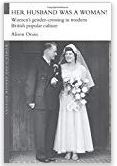
There is no record that Victor Barker ever met Joe Carstairs or any other trans man.   The term was not then in use, of course.   The most common term between the wars was 'female husband'.   Collis gives episodes about other female husbands who were featured in the press, and one assumes that Barker read about them.   There is good discussion in Alison Oram's Her Husband was a Woman! about how the newspapers at that time fitted such tales into standard patterns (although Oram refers to Barker only as 'she' and 'her').
________

*Not the novelist.
  • Valerie Arkell-Smith. “The Man-Woman – My Story” Sunday Dispatch, 10 March 1929.
  • Elfrida Barker. “My Story: By the Man-Woman’s Wife: Mrs Barker Reveals the Truth”. Sunday Express, 10 March 1929.
  • Valerie Arkell-Smith. “Colonel Barker, the Man-Woman who Hoaxed the World”. The Leader, 11 September 1937.
  • Valerie Arkell-Smith. “I Posed as a Man for 30 Years! My Amazing Masquerade – a wife confesses”. Empire News and Chronicle,19 February 1956
  • Valerie Arkell-Smith. “I posed as a man for 30 years”. Empire News and Chronicle 19 February 1956.
  • Julie Wheelwright. Amazons and Military Maids: Women who Dressed as Men in the Pursuit of Life, Liberty and Happiness. Pandora 1989: 1-5,10,11,70,157,165.
  • Julie Wheelwright. “’Colonel’ Barker: A Case Study in the Contradictions of Fascism”. In Tony Kushner & Kenneth Lunn. The Politics of Marginality: Race, the Radical Right, and Minorities in Twentieth-Century Britain. Riutledge, 1990: 40-8.
  • James Vernon. “’For Some Queer Reason’: The Trails and Tribulations of Colonel Barker’s Masquerade in Interwar Britain”. Signs 26, 1 Autumn 2000: 37-62.
  • Rose Collis. Colonel Barker's monstrous regiment: a tale of female husbandry. Virago, 2001.
  • Laura L. Doan. Fashioning Sapphism: The Origins of a Modern English Lesbian Culture. Columbia University Press, 2001: 82-94.
  • Alison Oram & Annmarie Turnbull. The Lesbian History Sourcebook: Love and Sex Between Women in Britain from 1780–1970. Routledge, 2001: 15, 38-43.
  • Judith Halberstam. Female Masculinity. Duke Univ. Press, 2006: 91-5.
  • Martin Pugh. Hurrah For The Blackshirts!: Fascists and Fascism in Britain Between the Wars. 2006: 54-5. 69.
  • Alison Oram. Her Husband was a Woman!: Women's gender-crossing in modern British popular culture. Routledge, 2007: 2-3, 63-7, 76-7, 124-5, 150.
  • Lyndsy Spence. Mrs Guinness: The Rise and Fall of Diana Mitford, the Thirties Socialite. The History Press, 2015: 54.


WomenOfBrighton     EN.Wikipedia    Aangirfan

13 February 2017

Victor Barker (1895 -1960) part I: origins

Part I: origins: daughter, wife, mother
Part II: husband, actor, manager
Part III: the trial
Part IV: reactions and afterwards

James Barker was a prosperous businessman in Oldham, Lancashire. His son Thomas (1857 – 1918) became an architect in Brighton, Sussex. In 1887 he wed the 18-year-old Lillias Hill (1868 – 1923), the fourth daughter of a country parson, and a distant relative of Olave Baden-Powell.

James Barker died in 1889, and Thomas, coming into his inheritance, abandoned his career and with his wife moved to the parish of St Clement, Jersey. Their daughter Lillias Irma Valerie Barker was born in 1895.

The family moved back to England in 1899, and settled in Bramley, Surrey, where a son, Thomas Leslie was born later that year. Later they moved to nearby Milford.

As it developed, it was Valerie who grew up with a love of dogs, horses, sports and pranks. Mr Barker, disappointed with his son, taught his daughter fencing, cricket and boxing. After attending two schools for young ladies, as a finishing, she was sent to a convent school at Graty, Silly near Brussels. Both at the convent school, and back home, Valerie would dress male whenever she could. At age 19, Valerie had her formal coming out ball.

During the First World War she was a nurse, an ambulance driver and then a horse trainer. Particularly the last position entitled her to dress in khaki breeches, tunic, cap and riding boots. At the end of the war she was working with horses at an estate in Kent, where she met the recuperating Harold Arkell-Smith, an Australian who had been successively promoted from private to lieutenant and awarded three medals. They were married in April 1918. - however the marriage lasted only six weeks, although they never did divorce.

In August using her married name, Mrs L I Valerie Smith enrolled in the newly established Women’s Royal Air Force. The WRAF was considered to have the smartest uniform of all the women’s services and it made no concessions at all to femininity. The women in the WRAF liked to refer to each other with male nicknames. Valerie Smith worked as a driver and was paid 38/- a week.

Thomas Barker died in October, age 63. His widow went to live in London with their son. The WRAF was disbanded after the Armistice. Valerie found work in a tea-shop in Warminster.

There she met another Australian, Ernest Pearce Crouch. He also was separated from his wife. Crouch was offered a job in the Paris office of The Times, and Valerie having agreed to join him, he applied for his wife, Valerie Pearce Crouch to be added to his passport. They lived in Paris just over a year. Valerie continued her preference for masculine attire, and they had a baby son. However The Times had falling sales, and Ernest was made redundant. They rented a house in Hook, in the London borough of Kingston, not far from where Valerie’s brother was living. However Ernest was unable to find work, and a daughter was born in June 1921. Neither child was ever registered.

The Pearce Crouches became tenant farmers at an estate outside Littlehampton, West Sussex, intending to also run it as a guest house. Valerie, as usual wore men’s clothing to do farm work, including a collar and tie, and was even spotted in a dinner suit. Ernest took to drink, and sometimes violence.

Valerie was developing a friendship with Elfrida Haward who worked in her father's chemist shop in Littlehampton.

Lillias Barker had been suffering from Parkinson’s disease for six years, and died in September 1923, age 55. She left her daughter an annuity of £9 a month for life.

After an assault that put her in hospital for a few days, Valerie threatened legal action if Ernest did not leave. She agreed that he could take their daughter.


She sold off what she could of the farm’s assets. After purchasing some new men’s clothes, she bicycled to the next railway station, not Littlehampton, where she would be recognised. She then took the train to Brighton, and a taxi to the Grand Hotel, where a reservation for Sir Victor Barker DSO was waiting.

________________________________

The Grand hotel in Brighton in 1923 was one of the finest in England.   It was one of the first, outside London, to have lifts, electric lights and external fire escapes.

25 November 2019

The Triple-Whammy 1928-9

​
I have previously referred to the triple whammy of 1928-9 - when, within a few months, trans men and masculine women in London and Paris were involved in three much publicised trials which, while they did not lead to legislation about clothes, gender or civil rights, did sent a message to trans men that they should be careful.

Note regarding pronouns: Most of the persons discussed here never stated a preferred pronoun. In addition, Swann, Gluck, Lowther, Carstairs, Radclyffe Hall and Sackville West had considerable inherited wealth, and were therefore less affected by the laws about clothing and gender which the lower orders had to conform to. Swann, Gluck, Carstairs and Barker masculinised their names and wore male clothing. Barker, Wood, and Holtom had to work for a living, and therefore they had to pass. They are close enough to the 21st century concept of a trans man that anything but male pronouns would be wrong. Pelletier and Morris both kept their female first name, but dressed in male clothing, and worked at a time when women of their class did not, Pelletier as a doctor and Morris in sports and with motors. Morris also had a double-mastectomy (top surgery). But because of their retained first names, Madeleine and Violet, it is difficult to use male pronouns for them.

The biographers of Gluck, Lowther, Carstairs, Morris and Pelletier use female pronouns, but I expect that this will change for future biographies.

Contrariwise to Pelletier and Morris, Radclyffe Hall did take a male name: John, and was so addressed by friends. However her manner of dress was only in-between: usually a skirt topped with a male-style jacket and tie – a style that had been very fashionable for upper-class women through the 1920s. Laura Doan, author of Fashioning Sapphism comments on Radclyffe Hall:
“Her haircut was thought to be the most feminine of all the short cuts popular at the time, and she had her hair done at Harrods — not a barbershop. Even Hall’s famous sartorial choices were on the feminine side of what was known as the ‘severely masculine mode’… Nor did Hall and her partner Una Troubridge dress in a bizarre manner, wearing, as some biographers have claimed, clothing from a costume shop. The couple studied fashion magazines and built their wardrobes not from men’s tailors in Savile Row, but from the most chic of London’s department stores for women. [unlike Gluck who bought suits from the expensive men’s tailors].  Hall always wore a skirt and conducted herself in a completely womanly way - in short, Hall definitely didn’t model her protagonist, Stephen Gordon, after herself.” 
Diana Souhami’s biography frequently refers to Radclyffe Hall as John, but she never uses the pronoun ‘he’. While Radclyffe’s anti-hero Stephen Gordon in the Well of Loneliness is very definitely a trans man, perhaps also intersex, his author was not so. And we should note that Radclyffe Hall uses female pronouns for her protagonist in The Well of Loneliness.

Sackville-West had done soldier drag as part of her affair with Violet Trefusis, and as such the pair had fled to France pursued by their husbands. However she did not persist in such gender expression.

Trans men not mentioned below: Madeleine Pelletier was a doctor in Paris; Camille Bertin and his wife were residing with their three daughters in Juan-les-Pins on the Côte d'Azur.

Radclyffe-Hall, Carstairs, Barker and Morris

1924

Wynsley Michael Swann, Lieutenant-Colonel in the Women’s Army Corps during the Great War, quietly transitioned.

Ernest Wood, cellarman, waiter, died age 24 from consumption, and was found to be female-bodied. He was buried as “Miss Ernest Wood”.

Gluck, now having taken male clothing and appearance, has first one-man show of 56 paintings in South Kensington.

Joe Carstairs bought and developed a secluded estate in Hampshire, which he named Bostwick after his grandfather. He bought a yacht, Sonia, and became so proficient that by 1924 he was winning yachting prizes.

Toupie Lowther had run an ambulance unit that was incorporated into the French Army, 1917-8, and in the 1920s ran a lesbian salon, and Radclyffe Hall and other female writers popular at the time attended. Toupie loved to tell how, while motoring, she was stopped at the Franco-Italian border for masquerading as a man. On the return journey she wore a skirt and was arrested for masquerading as a woman. In 1926, Toupie Lowther was elected a member of the French Academie d’Armes, the only woman to that date to be so.

Mary Weston was the best UK shot-putter 1924- 1930.

Multi-event athlete (put-shot, javelin, football, swimming, cycling, motor-racing) Violette Morris, who had set new records in the 1922 Olympics, opened a car/motorbike accessories shop, Spécialités Violette Morris, at 6, rue Roger-Bacon, Paris, using the inheritance from her mother. The rent was 8,000 francs per annum, and the 41,000 franc valuation was all in the stock. She lived in the flat upstairs.
  • Vita Sackville-West. Challenge. George H. Doran 1924. A novel, based on the affair between Vita and Violet Trefusis, with Vita’s male persona, Julian Davenport,  the leader of a revolution on a Greek island. His cousin Eve (Violet) joins him as his lover but becomes jealous of his attachment to the island. The book was published in the States only, for Vita’s father found the portrayal obvious enough to identify his family. In the real world, Julian and Violet broke up because the latter had sex with her actual husband.

1925

Joe Carstairs commissioned the best motorboat that money could buy, a hydroplane from Samuel Saunders of East Cowes, Isle of Wight. Joe named the boat Gwen after his lover, Gwen Farrar. After the boat capsized and came up again, Joe reversed the name to Newg.

1926

Carstairs took part in and won the Duke of York’s International Trophy. On Lake Windermere Joe set a world record of 54.97 mph for a 1½ litre class boat.

Morris had been temporarily suspended for giving performance-enhancing drugs to her football team, for questioning the referees and for doing nothing when the referee was hit by a member of her team. In 1926 Morris was indefinitely suspended from football. She used her name to recruit female athletes for a film. She refused to transfer her licence to another club.

Gluck had an exhibit at the Fine Art Society in London.

Radclyffe Hall wrote a short story, "Miss Ogilvy Finds Herself", although it was not published until 1934. It drew on Toupie Lowther's accounts of her life during the war, her masculinity and her lack of fit in society. Ogilvy, "My God! If only I were a man", who, even as a child had insisted that "her real name was William and not Wilhelmina", finds a role in the war leading an ambulance unit, but afterwards finds that again her masculinity has become absurd. She commits suicide.
  • Oscar Paul Gilbert. Men in Women's Guise: Some Historical Instances of Female Impersonation. John Lane The Bodley Head Limited. 284 pp 1926

1927

Wynsley Michael Swann took a wife. Unlike what happened to Victor Barker two years later, this marriage was never challenged.

Victor Barker was the live-in secretary of National Fascisti. After a fracas with dissident members, he was charged with “uttering a forged firearm certificate”. He was found not guilty, but his firearms certificate was cancelled. The Public Prosecution Office did find rumours about a woman masquerading as a man, but did not pursue them.

Joe Carstairs commissioned Samuel Saunders to build three hydroplanes designed to be the fastest craft ever at a cost of £50,000. In a significant lapse of memory, Joe named the boats Estelle I, II and III after his mother Evelyn.

Mary Weston was the best UK javelin thrower.

Anton Prinner , artist, moved to Paris from Budapest taking a male name and from then wearing male clothes, a beret and smoking a pipe. Picasso would greet him as "Monsieur Madame".

The Fédération française de sports féminins (FFSF)  notified Morris that she was suspended for violations, and for wearing male clothes. Her smoking and drinking did not help. The FFSF also banned shorts that were too short, playing without a bra, and costumes that were too tight.

A journalist from Paris Midi who questioned Morris apropos the new regulations thought that he must be meeting her husband or brother, "mais non, c'était bien elle, en chair plus qu'en os, habillée d'un complet veston, avec pantalon - comme vous et moi, monsieur - faux col et cravate (but no, it was her in the flesh, dressed in a full jacket with trousers - like you and me, sir - collar and tie)".

Morris won the motor-racing Bol d'Or against male competitors, and practised boxing, sparring with Raoul Paoli (1887-1960), the male Olympics athlete, champion boxer, wrestler, and rugby player for France.

Morris attended a meeting of the FFSF, and issued a defense of her dress style: "L'habit masculin n'a, à ce que je sache, rien de malséant. J'y suis tenue de par mes obligations professionnelles et tant que les lois de la République française ne m'en empêcheront pas, rien ni personne ne peuvent m'interdire un costume qui, vous en conviendrez, est toujours décent (There is nothing, to my knowledge, unseemly about male clothing. I am bound by my professional obligations and as long as the laws of the French Republic  do not prevent it, nothing and nobody can forbid me to dress in a way that you will agree, is still decent)". However this argument did not convince, and Morris was expelled from the FFSF, and thereby from all French championships and the French team for the Olympics where she was expected to win gold medals.

1928

The novel The Well of Loneliness by Radcliffe Hall was rejected by three publishers, and then accepted by Jonathan Cape, who priced it at 15/-, twice the price of an average novel.
  • Radcliffe Hall, with an appreciation by Havelock Ellis. The Well of Loneliness. Jonathan Cape, 1928. The cover page names the author as ‘Radclyffe Hall’, not as Marguerite nor as John.
Plot: Aristocratic parents, the Gordons are expecting a boy and so call the child Stephen anyway. Stephen is narrow-hipped and broad-shouldered, hates dresses, wants short hair and longs to be a boy, and from age seven develops crushes for heterosexual women. The father reads Ulrichs and Krafft-Ebing to understand Stephen, but does not share his findings. After his death Stephen opens his locked bookcase and discovers the concept of ‘invert’. Stephen is an accomplished fencer, tennis player and motorist, and during WWI is in the ambulance unit in the battles at Compiègne, and is awarded a Croix de Guerre. This draws on the life of Toupie Lowther. The book presents inversion as natural, but Gordon’s self-loathing leads him to pretend an infidelity so that his girl-friend will leave him to go with a real man. The word ‘lesbian’ does not appear in the book at all. Radclyffe Hall uses female pronouns for Stephen throughout.

27 July: published. Reviews were mixed. No calls for it to be banned.

28 July-12 August The Olympics were held in Amsterdam. Although only a few women's events were included, Morris was not on the French team.

19 August: Christian reactionary James Douglas’s editorial in the Daily Express: "I would rather give a healthy boy or a healthy girl a phial of prussic acid than this novel. Poison kills the body, but moral poison kills the soul”. Cape sent a copy to the reactionary Home Secretary William Joynson-Hicks who had been supressing alcohol, nightclubs and gambling. Joynson-Hicks replied after two days that the book was "gravely detrimental to the public interest". Proceedings would be brought if publication not stopped. Cape secretly transferred printing to Pagasus Press in Paris.

28 September: Pegasus editions on sale in London.

3 October: Joynson Hicks issued a warrant for shipments of the book to be seized.

11 October: publication of Virginia Woolf’s Orlando: A Biography.  A magic sex-change novel.
"Orlando had become a woman - there was no denying it. But in every other respect, Orlando remained precisely as he had been. The change of sex, though it altered their future, did nothing whatever to alter their identity". 
Based on Woolf’s affair with Vita Sackville-West, imagining Vita as Orlando. Despite the fuss about The Well of Loneliness, no fuss was made about Orlando.
  • Virginia Woolf. Orlando: A Biography. Hogarth Press, 1928
19 October : the Chairman of the Board of Customs balked. He had read The Well and considered it a fine book, not at all obscene; he wanted no part of suppressing it. On 19 October he released 250 seized copies for delivery. However police were waiting when they were delivered. Jonathan Cape and the bookseller were summoned to appear at Bow Street Magistrates Court.

9 November: the trial. Havelock Ellis was not willing to testify, his book Sexual Inversion having been previously convicted of obscenity and thus his presence might be counter-productive. Sexologist Norman Haire was to be the star witness for the defence – he argued that homosexuality ran in families and a person could no more become it by reading books than if he could become syphilitic by reading about syphilis. However he and the other witnesses were not called.

16 November : The chief magistrate ruled that the book was obscene.

For a while after the trial, Toupie Lowther took to dressing as a heterosexual woman: skirts, silks etc, and disassociated herself from Radclyffe Hall and her wife Una Troubridge.
  • Havelock Ellis. Studies in the Psychology of Sex. Vol 7 Eonism and Other Supplementary Studies. FA Davis 1928. “On the psychic side, as I view it, the Eonist is embodying, in an extreme degree, the aesthetic attitude of imitation of, and identification with, the admired object. It is normal for a man to identify himself with the woman he loves. The Eonist carries that identification too far, stimulated by a sensitive and feminine element in himself which is associated with a rather defective virile sexuality on what may be a neurotic basis.” Perhaps not the very best time to publish this work.
  • Anonymous. The Sink of Solitude. 1929. A lampoon in verse by "several hands", satirised both
    sides of the controversy over The Well of Loneliness. Its primary targets were Douglas and Joynson-Hicks, "Two Good Men – never mind their intellect". The introduction, by journalist P. R. Stephensen, described The Well's moral argument as "feeble" and dismissed Havelock Ellis as a "psychopath". The Sink itself endorsed the view that lesbianism was innate: “Though Sappho burned with a peculiar flame/ God understands her, we must do the same,/ And of such eccentricities we say/ "'Tis true, 'tis pity: she was made that way”. It portrayed Hall as a humourless moralist who had a great deal in common with the opponents of her novel. One illustration, picking up on the theme of religious martyrdom in The Well, showed Hall nailed to a cross. The image horrified Hall; her guilt at being depicted in a drawing that she saw as blasphemous led to her choice of a religious subject for her next novel, The Master of the House.


1929

January: Victor Barker was arrested after he did not respond to a bankruptcy notice that he did not receive. He was arrested and put in Brixton prison until medically examined. He was then quickly transferred to Holloway women’s prison.

February: using the excuse of fitting into a racing car, Violet Morris publicly had a double mastectomy (what today we would call top surgery) at the clinic of Dr. Cazalis in the suburb of La Garenne-Colombes.

10 March: both Victor Barker and his wife published accounts of their marriage in different newspapers.
  • Valerie Arkell-Smith. “The Man-Woman – My Story” Sunday Dispatch, 10 March 1929.
  • Elfrida Barker. “My Story: By the Man-Woman’s Wife: Mrs Barker Reveals the Truth”. Sunday Express, 10 March 1929.
27 March: Barker was charged with “wilful and corrupt perjury in an affidavit” re his bankruptcy. Of this he was discharged, but was then charged with having “knowingly and wilfully caused a false statement to be entered in a register of marriage”.

24 April: the second trial. Barker was sentenced to nine months imprisonment.

11-12 May: William Holtom of Evesham, Worcestershire, coal heaver, a cow-man, a road mender, a timber haulier and a navvy, was taken ill, and admitted to the Evesham Poor Law Hospital men’s ward with enteric fever. He was then 42. This led to a discovery of strapping around his chest, and he was hastily transferred to the women’s ward.

Radcliffe Hall wrote: 'I would like to see [Colonel Barker] drawn and quartered. A mad pervert of the most undesirable type'. Radclyffe Hall considered herself an invert and Barker a pervert, but despite what was said at Barker’s trial about passing as male to earn a wage, it was Barker, not Radcliffe Hall who lived full-time as male.

16 June: Claude Lowther, brother of Toupie, died age 59 after a period of illness. He was unmarried but the father of two, and had established a career as a right-wing Conservative. The outing of his sister during the trial cannot have helped.

9 September: The World League for Sexual Reform held its third congress in London in 1929, organized by Norman Haire. The two trials were not on the programme.

Toupie spoke of being the inspiration for Stephen Gordon and some books say that John and Una dropped her for saying so. Una wrote in her life of Radclyffe Hall: “She passed out of our lives when John wrote The Well of Loneliness, and we afterwards heard that she had resented the book as challenging her claim to be the only invert in existence. Later still, when she was growing very old, I was told that she had moreover acquired the illusion that she had served as a model for Stephen Gordon.”

Morris sued the FFSF for reinstatement and 100,000 francs in damages. While her case was against the arbitrary use of power, the trial focused on the right to wear male clothing. Her male lawyer defended the inherent decency of trousers, and questioned why trousers had been okay with the FFSF for ten years, but no longer. He contrasted Morris with Victor Barker in England who had attempted to pass as male. The FFSF had two female lawyers, one of whom, Yvonne Netter, was a noted feminist, divorced and an advocate of planned parenthood. They explained that because of their responsibility to the government (which provided grants) and to parents, they must set good examples. Morris was accused of cross-dressing to attract attention. They noted how female clothing had evolved from the long skirts and corsets of the pre-war era. They portrayed Morris as being a moral danger in female locker rooms, and criticized her in that she had never applied for a permission de travestissement. Morris' lawyer produced a letter from the Commissioner of Police giving assurance that they no longer pursued women in trousers.

The court ruled: "nous n'avons pas à nous occuper de la façon dont se vêt à la ville et dans ses autres occupations Mme Violette Morris, mais nous estimons que le fait de porter un pantalon n'étant pas d'un usage admis pour les femmes, la FFS avait parfaitement le droit de l'interdire. En conséquence, le tribunal déboute Mme Violette Morris et la condamne aux dépens"(we do not have to deal with how Mme. Volette Morris dresses in the city and in her other occupations, but we believe that to wear trousers is not permitted by custom for women, FFSF had every right to prohibit it. Accordingly, the court dismisses Mme. Violette Morris and awards costs)".
  • Gladys Mitchell. Speedy Death. Victor Gollancz, 1929. The first (of 66) Mrs Bradley detective novel. Explorer Everard Mountjoy is discovered dead in the bath, and to everyone’s surprise – especially his fiancée – he has a female body. Review. Included the delightful untrue story of Captain Jack Tremain who was part of the British team sent to Khartoum in 1884 to rescue General Gordon. Tremain died of malaria and a post mortem revealed his secret. He was previously Miss Wilhelmina Nash.....who wrote in a diary "to be a woman with ambition beyond that which society will allow is to endure a slow death. I was determined to live a life."
  • Joan Riviere. “Womanliness as a Masquerade”. International Journal of Psycho-Analysis, 9, 1929: 303-313. Analyses how intellectual women in particular practice an artificial femininity as a defensive mask that is put on to hide masculinity. An important contribution to the concept of gender as social construction.

1930

Evan Burtt in a village near Salisbury, Wiltshire, had been declared male at age 29 after examination by a doctor, and supported by Salvation Army solicitors had his birth certificate changed.  Saturday 30 March he married a childhood friend.  This was reported favourably by local and national newspapers.  

Aftermath

The boyette fashion style of a skirt with jacket and tie had, as clothing fashions do, run its course by 1928 and was being replaced by more feminine styles. While Radclyffe Hall’s appearance had been regarded “on the feminine side of what was known as the ‘severely masculine mode’” before 1928, afterwards it came to signify lesbianism, much as effeminacy came to signify male homosexuality only after the Oscar Wilde Trial in 1895.

Despite this, skirt, jacket and tie in later decades became the standard female school uniform – without any suggestions of lesbianism.

1932

  • Gerald Berniers writing as Adela Quebec. The Girls of Radcliff Hall. Privately published, 1932. A spoof which featured Berniers, Cecil Beaton and others as lesbian schoolgirls at an institution named after the famous writer. Beaton attempted to have all the copies destroyed and it became a very rare book until reprinted in 2000.

1934

Joe Carstairs had seen an advert in a US newspaper for the sale of an island in the Bahamas. He bought Whale Cay for $40,000, and moved there. He was sensitive to the growing hostility about gender variant persons in the press. He never returned to England.
  • Radclyffe Hall. Miss Ogilvy Finds Herself. William Heinemann, 1934.

1935

Bill Allen had a mysterious stay in hospital, and afterwards claimed that he was now a man.

1936

Mark Weston, previously England’s best female shot-putter and javelin thrower, underwent two operations by Lennox Broster at Charing Cross Hospital, and was declared male.  Unlike Violet Morris, he took a male name.  Two months later he married a female friend. Not Britain’s first surgically completed trans man – there had been others operated on by Broster – but the first to garner press attention because Weston was a well-known athlete.

1948

Una Troubridge, Hall’s partner, petitioned the Home Office to reconsider the ban on The Well of Loneliness (as she hoped to include it in the republication of Hall’s major works), all the relevant files were drastically purged and then closed for one hundred years.

1949

Falcon Press brought out an edition of The Well of Loneliness with no legal challenge. It has been in print in the UK continuously since.
________________________________________________

It is ironic that Douglas and Joynson Hicks regarded The Well of Loneliness as dangerous in that it would lead young women into an inversion composed of depression and self-hatred, while they had no problem with Orlando that presented inversion as a high-spirited romp – in fact as gay in the old sense. But experience teaches that those who would censor are rarely consistent.

Both Woolf and Radclyffe Hall seem to be incapable of imagining inverts who are not aristocratic and wealthy. Readers had to wait until the 1950s for invert stories where the protagonists are ordinary people.

Radclyffe Hall’s books give the author’s name as just that, without a given name, and many write as if Radclyffe were her given name (what in the 1920s would be called a ‘christian name’). Radcliffe Hall’s given name was Marguerite and later John. Radclyffe-Hall was a double-barrelled surname. Her father was Radclyffe Radclyffe-Hall.

You could easily argue that Morris’ law case was wrong-headed. It is a pity that Morris did not follow Weston’s example of, after gender surgery, taking a male name and pronoun and leaving female sports behind. However Morris was 13 years older than Weston and had her operation seven years earlier. It is indicative that she did not claim top surgery as gender surgery, but excused it on the grounds of fitting into a racing car. Morris had been sparring with the male Olympics athlete Raoul Paoli, and in motor racing had held her own against male drivers – and actually won the Bol d’Or in 1927. It was time to leave female sports behind – and she was already 36. Neither Morris nor her lawyer nor the FFSF discussed whether a trans man should be involved in female sports. No-one used those concepts in 1929.

Either way, Morris’ trial came immediately after those of Radclyffe-Hall and Barker, and the three together had an impact.

So where are the trans women and female impersonators in this period? Actually there were very few in England and France 1924-9. Once we move into the 1930s it changes significantly. Also of course the situation in Berlin was significantly different and Magnus Hirschfeld oversaw the surgical completion of a few trans women.


05 December 2017

Some thoughts on Timelines


Timelines, sometimes called Chronologies. Many Timelines of LGBT or just trans history are found on the Internet. Some are quite good, others are pretty bad.

Wikipedia

EN.Wikipedia has Timelines, which it usually calls LGBT History. Here is one for Canada. Note the almost total lack of trans content. Where is Diane Boileau, The Clarke Institute, Rupert Raj, Aaron Devore, Toby Dancer, Viviane Namaste? And therefore why call it LGBT rather than LGB?

Here is the EN.Wikipedia Timeline on US Georgia. It contains no trans events at all, and in its Notable LGBT Georgians section, the closest it comes to a trans person is RuPaul.

Gay History Wiki

What about Gay History Wiki? Here is its Georgia Chronology. It actually lists several trans persons – but only those who were murdered! Of those who thrived, who organized, who wrote, who performed – not a word.

OutHistory

What about OutHistory.org. They have a page: Out in Atlanta: Atlanta’s Gay and Lesbian Communities Since Stonewall: A Chronology, 1969-2012, which does not claim to include trans events but does mention various trans marches and Southern Comfort Conference. But no trans individuals are mentioned.

On the other hand the same site has Las Vegas Transgender which is actually quite informative.

How about universal or national trans Timelines?


T-Vox
The one at T-Vox (which is UK centric) is worth looking at. However it make nonsense claims such as that Hirschfeld coined ‘transvestite’, and of the Berlin trans women only Lili Elvenes (Elbe) is mentioned; Toni Ebel and Dorchen Richter are ignored. The Beaumont Society is mentioned but not Virginia Prince or Tri-Ess. And what happened to Charlotte Bach and Victor Barker? Where is Yvonne Sinclair?

Mercedes Allen
Mercedes Allen did a US-centric trans Timeline in 2008 and published it in six parts on Bilerico Project:

· Trans Expression in Ancient Times
· The Rise of Hatred (Middle Ages)
· Into the Modern Age (1700s - 1932)
· From Germany to Stonewall (1933 - 1968)
· Stonewall and Its Fissures (1969 - 1995)
· Toward the Future (1996 - 2007)

This is certainly one of the better Timelines. It does include Violet Morris, but not Victor Barker, “Lili Elbe” but not Toni Ebel and Dorchen Richter, ignores sexologist Bernard Talmey and Benjamin’s first trans patient Otto Spengler.

Pierre-Henri Castel
The most detailed trans Timeline was compiled by Pierre-Henri Castel with Bernice Hausman, Heike Boedeker & Geneviève Morel, and was published as an appendix to Castel’s book La métamorphose impensable: essai sur le transsexualisme et l'identité personnelle. Gallimard, 2003. The Timeline is France-centric but includes much from the UK and North America. The emphasis is on professionals and publications, and actual trans persons only pop up here and there. For example neither Violet Morris nor Victor Barker are even mentioned. Coccinelle is in, but not Bambi. The timeline is online in two parts:

1910-1972
1973-1998.


GVWW

Within this encyclopedia I have included several Timelines:
The Eurovision Song Contest
Trans Persons acting in soap operas, telenovelas and other dramatic serials on television
A Blanchard-Binary Timeline - Part 1: to 2000
A Blanchard-Binary Timeline - Part 2: 2001-10
TG, Word and concepts: Part 2: The early years up to 1990
TG, Word and concepts: Part 3: The full-blown usage after 1990
Sport Gender & Trans - part 1: to 1945
Sport Gender & Trans - part 2: the Cold War
Sport Gender & Trans - part 3: recent developments
Trans in Prison: Part 1 - to the conviction of Oscar Wilde
Trans in Prison: Part 2 - to Stonewall
Trans in Prison: Part 3 - to Framer v. Brennan
Trans in Prison: Part 4 - to the Synthia Kavanagh Human Rights Case
Trans in Prison: Part 5 - to the New Prison Guidelines
Trans in Prison: Part 6 - Comments & Bibliography

To do a universal Trans timeline would be an enormous task. However I will now be doing a series on smaller areas – cities or close-by cities.


This is in addition to the series of Trans persons who changed thing at the country or multi-country level.

25 September 2018

Annotated reading list for English trans history.


Bram Stoker. Famous Imposters. Strurgis & Walton, 1910. 

EN.Wikipedia. Yes, that Bram Stoker, the author of Dracula. Today we would object to trans persons being included in a book on imposters, but this was 1910. Includes essays on Hannah Snell, La Maupin, Mary Easy, D’Eon and the Bisley Boy/Elizabeth Tudor.

Havelock Ellis. Studies in the Psychology of Sex. Vol 7 Eonism and Other Supplementary Studies. FA Davis 1928. 

Ellis was aware of Hirschfeld’s Die Transvestiten, but disagreed with his terminology. In 1913 Ellis proposed the term 'sexo-aesthetic inversion' to describe the phenomenon. In 1920 he coined the term eonism, which he derived from the name of a historical figure, Chevalier d'Eon. Ellis explained: “On the psychic side, as I view it, the Eonist is embodying, in an extreme degree, the aesthetic attitude of imitation of, and identification with, the admired object. It is normal for a man to identify himself with the woman he loves. The Eonist carries that identification too far, stimulated by a sensitive and feminine element in himself which is associated with a rather defective virile sexuality on what may be a neurotic basis.” Weirdly ignored in Phyllis Grosskurth’s study of Ellis.


C J S Thompson.  The Mysteries of Sex: Women Who Posed as Men and Men Who Impersonated Women. Hutchinson, 1935.

Essays on both famous and obscure trans persons up to 1935,

Michael Dillon. Self: A Study in Ethics and Endocrinology. William Heinemann Medical Books, 1946. 

The first book anywhere by a trans person that discusses transsexuality, although it does so as a sub-type of ‘homosexuality’.

Georgina Turtle. Over the Sex Border. Gollancz, 1963. 

Review. The first book anywhere to discuss trans women using the term ‘transexual’. Turtle was a dentist and a mosaic XO/XY transsexual, and thus was generally ignored e,g in Benjamin’s book three years later.

Roger Baker. Drag: a History of Female Impersonation on the Stage. Triton Books, 1968. 

The performivity end of the spectrum. Features tales of impersonators who later transitioned, but also many who did not.

Gilbert Oakley. Sex change and dress deviation. Morntide, 1970. 

Review. The author of the hoax trans biography, Man into Woman, 1964, and several books on self confidence and psychology. He was also a female impersonator. Offer a typology and concludes: “From his observations, the author is convinced that the transvestite is far happier than the trans-sexual. Life is by no means so complex, so painful, or so embarrassing for them. The future is not obscured by a mist of hopefulness and doubt. The best of two worlds lies within the transvestite's grasp, for he can change from male to 'female' at will. The author concludes, therefore , that the sex-change phenomenon is wholly and completely disastrous, and that medical bodies the world over are seriously at fault in encouraging it in any way when other means of therapy are surely at their disposal to help these unfortunate people." Reaches conclusion similar to Virginia Prince without having heard of her.

Desmond Montmorency. The Drag Scene: The Secrets of Female Impersonators. Luxor Press, 1970. 

Much less scholarly than Roger Baker’s book. The Oakley and the Montmorency book were both published in 1970. Both books are the same size and shape, both are dominantly yellow and both have a partial title but no author on the spine. One is published by Morntide and the other by Luxor. However both Morntide and Luxor give their address as 50 Alexandria Road, London SW19.

Peter Ackroyd. Dressing Up: Transvestism and Drag, the History of an Obsession. Simon and Shuster. 1979. 

Review. Ackroyd’s first non-fiction book. While openly gay, he describes himself as an outsider to this subject. “Some transvestites are exclusively fetishistic; they dress, in other words, to obtain some kind of sexual arousal. Psychoanalysts believe this to be the dominant mode of transvestism and, indeed, many transvestites remain fixed at this stage, assuaging their obsessions by frequent or intermittent cross-dressing. But there are other transvestites who move out of the fetishistic stage; they cease to be sexually excited by the act of cross-dressing itself, and go on to a more comprehensive form of feminine ‘passing’.” This book was in the bibliography of almost every book on trans in the 1980s.

George Ives (ed Paul Sieveking). Man Bites Man: The Scrapbook of an Edwardian Eccentric. Penguin Books, 1981. 

The 19th century pioneer gay activist left many press cuttings, including on transvestism,

Kris Kirk with photographs by Ed Heath. Men In Frocks. Gay Men's Press 1984.

Review. Despite its ill-chosen title, this book traces trans history from the 1940s when there was almost nowhere for trans persons to go, and shows how performance went from being the only option to one of several options. Kirk found many of his interviewees at the London TV/TS Group. My choice for the best English trans history book. "If there is any one lesson to be learned from studying this field it is that the individual is individual. People define themselves and the self-definition must always take priority over the received wisdom. I have met self-defined draq queens whom others would describe as TV either because they enjoy 'passing'; or because they 'dress' so often that it could be seen as a compulsion; or because they wear lingerie, either to turn men on or to make themselves feel sensuous. I have met drag performers who have grown to dislike drag, and men who insist on being called 'cross-dressers' because they dislike what the word 'drag' stands for, and men who wear part-drag in order to create confusion and doubt amongst others, but who would never wear full drag because that would defeat their object. I know self-defined TVs who are gay or bisexual or oscillating, some of them having learned to cross this sexuality barrier through their cross-dressing. I have met TVs who dress like drag queens and drag queens who dress like TVs, and TVs whose cross-dressing has encouraged them to question their 'male role', which in turn has made them examine their idea of 'femininity'. And perhaps most important of all, I have learned how marshy a terrain is the middle ground between our earlier clear-cut distinction between transvestites and transexuals."

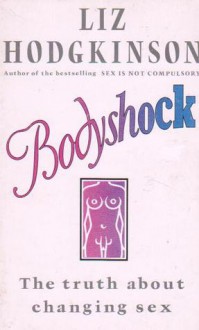
Liz Hodgkinson. Bodyshock: The truth about changing sex. Columbus Books, 1987. 

Hodgkinson found her interviewees at SHAFT. Two years before her full-length biography of
Michael Dillon, Michael née Laura, she wrote this overview which features Judy Cousins, Rachael Webb (lorry driver and the first elected trans person in Britain), Michael Dillon, Mark Rees, Adèle Anderson and Stephanie Anne Booth.


Annie Woodhouse. Fantastic Women: Sex, Gender, and Transvestism. Rutgers University Press, 1989. 

Concentrates on the wives of transvestites. She also found interviewees at the London TV/TS Group.

Dave King. The Transvestite and the Transsexual: Public categories and private identities. Avebury, 1993. 

A neglected but quite useful history of both trans persons and the doctors.

Roger Baker. Drag: a History of Female Impersonation in the Performing Arts.
Cassell, 1994. 

Not an expansion of the 1968 book, as content from that has been removed. A rewrite with a much more positive attitude.


Richard Ekins & Dave King (eds). Blending genders: social aspects of cross-dressing and sex-changing. Routledge. 1996. 

Includes two chapters from King’s 1993 book. Also two contributions from Peter Farrer, and chapters by Mark Rees, Roberta Perkins, Phaedra Kelly, Carol Riddell, Rachael Terri Webb and Stephen Whittle. But also Neil Buhrich, Dwight Billings and Thomas Urban, and Janice Raymond.


Peter Farrer. Cross Dressing between the Wars: Selections from London Life, 1923-1933. Karn Publications, 2000. 

Farrer wrote many books analysing trans content in various publications. This is probably the best.

Alison Oram & Annmarie Turnbull. The Lesbian History Sourcebook: Love and Sex Between Women in Britain from 1780–1970. Routledge, 2001. 

Includes 40 pages of source documents on ‘cross-dressing women’. Oram regards them as lesbians, but many seem to be trans men such as Victor Barker, James Allen, Harry Stokes,

Richard Ekins & Dave King. The Transgender Phenomenon. Thousand Oaks. 2006. 

The major work from Ekins and King. Some of their conclusions are odd (e,g, their support of Blanchard and Prince) but the book includes history not found anywhere else.

Peter Farrer. Cross Dressing between the Wars: Selections from London Life, Part II 1934-1941. Karn Publications, 2006.


Alison Oram. Her Husband was a Woman!: Women's gender-crossing in modern British popular culture. Routledge, 2007. 

Impressive analysis from the newspaper archives 1900-1960. Again Oram regards the persons as lesbians rather than trans men. Includes William Holtam, Victor Barker, Ernest Wood, Harold Lloyd, Michael Johnson.


Clare R. Tebbut. Popular and Medical Understanding of Sex Change in 1930s Britain. PhD Thesis, University of Manchester, 2014. 

PDF. A neglected but very useful publication. More detail on Lennox Broster than anywhere else; cover the Charing Cross clinic, the press, glands and hormones and sport. One gripe is that she refers to Norma Jackson only by her male name.

Peter Ackroyd. Queer City: Gay London from the Romans to the present day.  Chatto & Windus, 2017.

Review. A history of queer London. Transvestites are discussed from 1394 to The Well of Loneliness in 1928, but not a single one after that, and also no transsexuals at all.


Christine Burns (ed) Trans Britain: Our Journey from the Shadows. Unbound, 2018. 

Review. Burns’ historical chapters keep over-emphasising what the Beaumont Society achieved and minimises what the other groups achieved, but will spread the story.


Gender Variance Who’s Who, 2007-now

This encyclopaedia contains many entries applicable to English trans history, as well as that of the rest of the world.