This site is the most comprehensive on the web devoted to trans history and biography. Well over 1800 persons worthy of note, both famous and obscure, are discussed in detail, and many more are mentioned in passing.

There is a detailed Index arranged by vocation, doctor, activist group etc. There is also a Place Index arranged by City etc. This is still evolving.

In addition to this most articles have one or more labels at the bottom. Click one to go to similar persons. There is a full list of labels at the bottom of the right-hand sidebar. There is also a search box at the top left. Enjoy exploring!

Showing posts with label costumier. Show all posts

11 December 2023

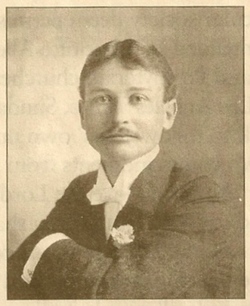
James Bidgood/Terri Howe (1933-2022) 1950s drag performer

James Bidgood was born and raised in Wisconsin. He moved to New York City in 1951.

He found work at the drag nightclub Club 82 when it opened in 1953 as a set and lighting designer, and then as one of the drag performers, performing under the name of Terri Howe. 


He also graduated from the Parsons School of Design, and then worked professionally as a window-dresser, costume designer and free-lance photographer. He desisted as a drag performer. 

Through the 1960s he became a photographer of male nudes, often working in his own small Hell’s Kitchen apartment. His masterpiece is taken to be the 1971 film Pink Narcissus, IMDB, with male actress Charles Ludlam, again mainly filmed in his apartment over a period of seven years, although he was not credited with the film until almost 30 years later in that he took his name off the film after the financers became exasperated by his perfectionism, and imposed their own edit and soundtrack. For many years it was incorrectly assumed that Andy Warhol was behind the film.

In 1999 Bruce Benderson, having researched Bidgood’s life and work, published a large coffee-table book of Bidgood’s photography, and put the record straight re Pink Narcissus

In 2005 Bidgood was honored with a Creative Capital grant, which financed his return to art photography. He was recognized in the last years of his life as pre-cursor of camp. and is now spoken of along with Andy Warhol and Kenneth Anger. 

He died of complications from COVID at age 88.

  • Bruce Benderson. Bidgood, Tashen, 1999.
  • Jesse Dorris. “Extremely Loud and Incredibly Camp”. Aperture, May 15, 2019. Online.
  • David Noh. “James Bidgood’s Sexy Phantasmagorical World”. Gay City News, June 25, 2019. Online.
  • William E Jones. “AGAINST NATURE: William E. Jones on the art of James Bidgood”. ArtForum, Summer, 2019. Online.
  • Trudy Ring. “James Bidgood, Creator of Film Pink Narcissus, Has Died”. Advocate, February 01 2022. Online.
  • Patrik Sandberg. “Elegy for a Packrat: Remembering James Bidgood: Patrik Sandberg on his years of friendship with the legendary filmmaker”. Frieze, 23 May 22. Online.
  • Miss Rosen. “How James Bidgood Inspired a Generation of LGBTQ Artists”. Blind-Magazine, October 24, 2022. Online.

EN.Wikipedia    IMDB

13 July 2023

Jenny O. Hushler (1862 - 1953) embroiderer, book seller.

(this article was previously of Jenny O.   However the discovery of her obituary gave us her surname.  Originally post 4/2/2015)

Hushler was born in Vorarlberg, Austria. Hushlet's father, a gamekeeper and horn player, died when Hushler was 5, of consumption, and his mother 1½ years later. Hushler was still wearing a dress after his brother, two years younger, had switched to trousers. The aunts who took in the orphan did not permit him girls' clothing except at Shrovetide (Mardi Gras).

After a few years in an orphanage of the Sisters of Mercy, Hushler stole some clothes from a girl of the same size and took her certificate of domicile and ran off to Switzerland, where she found work as a nanny, and taught herself embroidery. When she was 16, a man tried to force himself on her and denounced her as a 'hermaphrodite'.

Hushler moved to France and found work as an embroiderer. She also worked for a while as a man after a friend's boyfriend threatened to report her to the police. In 1882 Hushler emigrated to New York, and again worked as an embroiderer. A co-worker forced himself on her, and discovering her body, used threats of calling the police to make her an involuntary sex partner. One day when he was away Hushler dressed as a man and fled to Milwaukee and worked in a timber-yard and as a cook.

In 1885 Hushler arrived in San Francisco, where cross-dressing had been a crime since 1863. As a man Hushler became an itinerant bookseller using the name John, invested in property and began traveling for German newspapers. Indoors Hushler, as a woman, helped with children, and provided accommodation for dance-hall women.

In 1905 Hushler  wrote to the new German magazine Mutterschutz (Mother Protection) enclosing an article re feminine boys and men:
"If he is raised as a girl, then he will lose all doubt and will be more stable in his girlishness, so that he will then never will ever want to become a man; if he forced to behave as a boy, then he will feel destroyed and will yearn for the time when he can make a living as maid or something like that".
Despite that Mutterschutz advocated the equality of illegitimate children, legalization of abortion, and sexual education, it was not ready for this, and did not reply. Hushler then wrote to Magnus Hirschfeld enclosing the rejected article. They corresponded.  Jenny is Case 13 in the 1910 Die Transvestiten.  She provided photographs for the 1912 supplement to Die Transvestiten.

++ In 1922 Jenny moved to Mississippi, to the village of Waynesboro, population 700, 30% white.   She was quite accepted, her gender unquestioned, regarded as a spinster recluse.   She died there 31 years later at the age of 91, and only in preparation for burial was her gender history revealed.
  • Magnus Hirschfeld. Die Transvestiten; ein Untersuchung uber den erotischen Verkleidungstrieb: mit umfangreichem casuistischen und historischen Material. Berlin: Pulvermacher, 1910. English translation by Michael A Lombardi-Nash. Tranvestites: The Erotic urge to Crossdress. Buffalo: Prometheus Books.  1991: s. 1991: Case 13: 83-93.
  • Magnus Hirschfeld & Max Tilke. Der erotische Verkleidungstrieb (Die Transvestiten). Illustrierter Teil. A. Pulvermacher, 1912: plate XXII.
  • "Lived as Woman; Buried as One".  Humboldt Standard, March 23, 1953. 
  • Clare Sears. Arresting Dress: Cross-Dressing, Law, and Fascination in Nineteenth-Century San Francisco. Duke University Press, 2014: 74, 76, 78-80.

Thanks to researcher Kyle Phalen for finding the obituary.
_________________________________________________________________________________

If born a century later Jenny would, quite likely, have been an early transitioner. She did as much as she did without estrogens, and probably had no way to find out that there were cities others than San Francisco that did not have such anti-cross-dressing laws.


23 March 2022

Gerda von Zobeltitz (1891 – 1963) tailor

Original version November 2014.  Revised March 2022.

G. von Zobeltitz from Weißensee, Berlin, a scion of one of Germany's old noble families with ties to the Hohenzollern court, was making a living in Berlin as Gerda, a women's tailor, by 1910, and she was also sometimes a dancer.

In 1912 she was counselled by Magnus Hirschfeld and his colleague Ernst Burchard, and submitted a request for a Transvestitenschein, which would allow her to legally wear female clothing.  Later that year she was arrested in Berlin for public cross-dressing, as reported in the Berliner Tageblatt: "the alleged culprit was soon released once it was determined that it was a case not of disorderly conduct but instead of transvestism". 

Within a year Gerda had acquired the  Transvestitenschein in Potsdam, and when called for military recruitment in 1913, she appeared as Gerda and was deemed ineligible.

However in 1916 she lost her Transvestitenschein after a grand uncle's denunciatory intervention.

Despite this she did survive the Third Reich, possibly because she married a woman and therefore could not be accused of 'homosexuality'.  She had three wives throughout her life.
… 

At the age of 72 Gerda was run over by a car on the Kurfürstendamm in Berlin. She is buried in the  Friedhof Kaiser-Wilhelm-Gedächtniskirche.

  • Berliner Tageblatt, 106, 27 February 1912.
  • Jens Dobler. Von anderen Ufern. Geschichte der Berliner Lesben und Schwulen in Kreuzberg und Friedrichshain. Berlin: Bruno Gmünder Verlag 2003: 75.
  • Katja Koblitz, : „In ihm hat die Natur das berühmte dritte Geschlecht geschaffen“. Gerda von Zobeltitz, ein Transvestit aus Weißensee. In: Sonntags-Club (Hrsg.): Verzaubert in Nord-Ost. Die Geschichte der Berliner Lesben und Schwulen in Prenzlauer Berg, Pankow und Weißensee. Berlin: Bruno Gmünder 2009: 58-80; 
  • Letzte Änderung. "Verzaubert in Nord-Ost". Übersicht von Invertito 12, 31.07.2012. www.invertito.de/det3/d_inv1257.html.
  • Robert Beachy. Gay Berlin: Birthplace of a Modern Identity. Knopf, 2014: 172.
  • “Gerda von Zobeltitz”. In: Persönlichkeiten in Berlin 1825 - 2006. Erinnerungen an Lesben, Schwule, Bisexuelle, trans- und intergeschlechtliche Menschen. Senatsverwaltung für Arbeit, Integration und Frauen, Berlin 2015: 82-3. PDF.
____________________________________________________________

We know of Gerda 1912-16, and of her death in 1963.   But what in-between?   In particular, we know very little of how she survived two world wars and the Nazi regime?


13 February 2014

Billie Dodson (1876 - 1914) female impersonator, milliner

Billie Dodson was raised in the town of El Monte, California which was founded during the 1849 gold rush and is today part Los Angeles County. From the time of his birth his mother was an invalid. He spent his childhood by her side sewing, knitting and crocheting. When she died he stayed with his father doing the cooking, mending and housekeeping, and tending to the younger children.

When Billie left home, he went into vaudeville as a female impersonator making his own costumes. Being feminine came naturally to him, and he met acclaim for his performances.

However he felt obliged to return home to look after his father and step-mother. He hung out a shingle in El Monte as a milliner, and sold hats, corsets, garters etc. all made by himself. His shop became a women's social center where they would talk and talk and drink tea. His creations were sough far and wide. Also at family gatherings Billie would socialize with the women, and avoid the men.

A Los Angeles Times reporter wrote:
"The odd thing about Billie Dodson is that he lacks the offensive and wholesome suggestion that usually lingers about an effeminate man. He is more like a kind-hearted, sensible, cheery woman."
In 1905 Billie married an actress who had newly arrived from Seattle. Two years later Mr Dodson sought and was given a divorce. He married again in 1910. He then returned to the stage with a two-year engagement on the Pantages circuit.

He died at age 38.

18 April 2013

Les Lee (1929 – 2010) performer.

Les Lee from Québec became a female impersonator at age 19, emigrated to Paris in 1954 and stayed there for the rest of his life.

A glamorous performer Les Lee worked many years at Le Carrousel and frequently appeared in Japan and West Germany. He worked with Australian Tracey Lee as the Dolly sisters, and was like a big sister to April Ashley: he translated for her, found accommodation for her and went to visit when she had surgery:
Les Lee, Margaret Lockwood, April Ashley, 1957
"Les was always enormously kind to me. He had all the old-fashioned vices, but all the old-fashioned virtues too. He sent money home to his parents every month. He saved, had a budget for everything, made all his own dresses, sewed every sequin on himself.”

His début in England was in Paul Raymond's Birds of a Feather, 1970, a show that was ahead of its time.

Les Lee designed and modelled a collection of women's cloths with some success, such that the models union was able to persuade the French Government to pass a law forbidding female impersonators working as models.

He died at age 81.


  • Desmond Montmorency. The Drag Scene: The Secrets of Female Impersonators. London: Luxor Press. 1970: 96-7.
  • Peter Kenna and Steve J. Spears. Drag Show. Woollahra, N.S.W: Currency Press, 1977: 67.
  • Anthony Slide. Great pretenders: a history of female and male impersonation in the performing arts. Lombard, Ill.: Wallace-Homestead Book Co, 1986: 46.
  • April Ashley with Douglas Thompson. The First Lady. London: Blake. 383pp. 2006: 82, 86-8, 96, 98-9, 101, 103, 106, 114-6, 125, 132, 191.
  • "Drag History Diva-Les Lee" A Day with the Mistress Borghese, January 23, 2011. http://mistressmaddie.blogspot.ca/2011/01/drag-history-diva-les-lee.html.

16 October 2012

Robertina Manganaro (1958 - ) aristocrat, doctor, model, designer.

Manganara was born to a noble and rich family in Calabria, her mother a French psychoanalyst, her father a surgeon. She was taking hormones at 14, and was even permitted, at her private school, to wear a skirt.

Her mother, thirty years younger than her husband, left him and returned to Paris. Robertina and her father moved to Milan, where she was known as his daughter. She became a model for the avant-garde artist, Enrico Baj (1924- 2003). At age 20 she had genital surgery at a private clinic in England.

Following the family tradition, she qualified as a doctor, as did her brothers, and did an internship under the supervision of a friend of her father. However it did not work, even though she was Dottoressa Manganaro. Her proclivity for dressing in high fashion with high heels and jewels did not help.
Robertina returned to modelling which she found more friendly. She lived on the family money. She met Count Gianfranco Torelli, a wealthy aeronautical engineer, and they dated for a couple of years until he declared that he wanted to have a child with her. The next evening she told that she was transsexual, and did not see him again for a few years. Eventually she met him again at a dinner party. He chased her and took her to one of his estates for the weekend. Eventually he accepted her, and they were married in 1993.

Gianfranco encouraged Robertina to become a stilista. At age 35 she opened a studio in Paris, using her title Comtessa. At age 42 had her first show at the Milan Pret-a-porter, which cost her a million francs. "I do not do fashion to make money. I have money to make fashion". Even so there are limits: "If I have ever been discriminated against as a transsexual, it is as a fashion designer".

*Not Roberta Manganaro the dancer.
     

25 September 2012

Rose Jackson (1934 - 2011) window dresser, performer, costumier.

Barry Jackson was born in Paddington, Sydney. Barry knew that he was not really a boy almost from the start and was trying on his mum’s clothes by age five. He loved to swim and was a Bondi Beach lifesaver, and was also an avid cinema-goer. His uncle’s business owned property in the Kings Cross area, and after school he worked as a rent collector. This led to a discovery of the artistic demi-monde and the then largely hidden homosexual scene. He was invited and introduced, and asked in one club to be part of the show.

At 18 he had a job as a window dresser at David Jones Department Store, and was promoted to display manager. When she started going out as female, she took the name of the Marilyn Monroe character in Niagara: Rose. Rose was part of the Purple Onion when it first opened in 1957, where she did her first drag show. This was at a time when, if they went home or were on the street in drag, the police would charge them with offensive behaviour.

At 24 Barry went to Europe for five years, and after time in Paris and London he worked for a department store in Sweden.

When he returned to Sydney in 1964 Lee Gordon’s drag club The Jewel Box had become popular. Several of the performers were taking female hormones. Rose followed their example ‘to soften her look’. By the late 1960s she was living full time as a woman which caused a fracture with her family, and her to lose her job making costumes at the Old Tote Theatre.

P 21 in Drag Show
She performed again at the Purple Onion. And she was busy making clothes for Bobby Lloyd’s costume business. Every female star of note had to have a Rose Jackson frock. She was even rushed to the Opera House where the dance star, Robert Helpmann, was having costume problems. In 1969 Rose went to Capriccios and became its star performer. In 1983 David Mitchell and David Penfold created a show for Rose based on her own life. After that she opened her own club, Rose’s on Goulburn St. At the height of its success, the club burned down. She returned to making costumes. She estimated that she made over 70,000 costumes during her lifetime.

Tony Sheldon who played Bernadette in Priscilla, Queen of the Desert, in Sydney and then New York, has said that he based his interpretation on Rose, rather than on Carlotta as Terence Stamp did in the film version.

In her monologue for Drag Show, Rose wrote:
“The thing that has always distressed me - and it has taken me years and years to get over it - is the fact that one does have to lie. ... It came to the point where I had to say: ‘This is the way I want to be’. But not without thirty years of the most dreadful traumatic pressure. When you consider that you have to live a lie for your parents, to the public, to your friends and your work, the problem seems insurmountable. It takes a long, long time to be able to say: ‘I don’t care about the rest of the world: this is my life and I cannot cheat myself by not living it’. All those things need to said. It takes great strength. (p20)”
She died at age 77.

* Not the Sydney politician nor the US actress.
__________________________________________________________________________________

The obituary in The Sydney Morning Herald gives Rose's birthyear as 1935, but in the monologue that she wrote for Drag Show she says that she was born in 1934.

13 May 2012

Tony Sinclair (192?–2017) performer, costumier

Tony Morrison grew up in Cincinnati, where one of his friends was Robin Price, who also became a professional female impersonator. As a teenager Tony made a living as a female stripper. He joined the Jewel Box Revue as Tony Sinclair when it played in Cincinnati in the early 1950s, and toured with them for over a year. He then played at the Jewel Box Theater in Kansas City.

He arrived in Oklahoma in the late 1950s, where it is rumored that he lived and worked as a woman before becoming known as a female impersonator. Tony put on the Les Girls Revue at the Inferno club with female dancers. He quickly made a reputation for wardrobe design and sewing, and made specialized costumes for strippers and showgirls including Dallas legend Candy Barr. He also borrowed outfits from Payton-Marcus department store where he worked during the day.  In his own performances he was often taken as a woman until he took off his wig at the end of the act. He was also still working as a female stripper.

Tony’s male persona was one of the few out gay men in Oklahoma City in the 1960s. He never hid his sexual orientation nor his love of drag. He was active in the gay community, and was an early role model.

Les Girls Revue toured Oklahoma and Texas, and was considered locally as a rival to the Jewel Box Revue. Once they were doing a sold-out show in Fort Worth during a local election, and the Texas Rangers, the Texas Liquor Board etc raided and arrested the entire cast.

In 1969 as advertising for a new straight nightclub, Tony was photographed reclining on a chair under the theme “unusual floor shows”. The staff at the Daily Oklahoman didn’t get the joke and ran the advertisement in the women’s section.

In the 1970s Tony ran his own club. He was still performing in the 2000s.


*Not Toni Morrison the novelist. Not the footballer, nor the spokesman for Tanqueray gin.


03 January 2012

Hedy Jo Star (1920 - 1999) showgirl, costumier, business woman.

Carl Rollins Hammonds was born in Prague, Oklahoma, the eldest of seven children. He grew small breasts as a teenager, and his mother took him to several doctors including a ‘brain specialist’, but would not consent to exploratory surgery. She was told that Carl would not live past 35, or that he would go insane.

From age 17 Hammonds worked as a half-man-half-woman in carnival, and then as an ‘exotic dancer’, and took the name Hedy Jo Star.

Hedy was drafted in 1942, and was in the press after making a fuss about not cutting her long hair. She served as a female impersonator in the US Army shows.

After the war, she returned to carnival life. She was a friend and colleague with Tony Midnite, and both of them made costumes for other people. Hedy was the owner-manager of the Hollywood State Revue, a troupe of female dancers, one of whom was Vicki Marlane. They played state fairs in summer, and in winter Hedy worked as a hypnotist in nightclubs.

Just after Christine Jorgensen was in the news in 1954 Hedi wrote her autobiography, I Changed My Sex!, which was only a slight exaggeration.

In 1956 she saw a female endocrinologist in New York.
“My face was covered during the examination with a sheet. Then my doctor and her colleagues examined me. Later my doctor explained to me that what she was planning to do was illegal under New York law, which is the reason the other specialists she consulted wished to remain anonymous.”
The doctor put Hedy on estrogen and arranged breast-enhancement. Despite testimony from twelve physicians that Hedy should have gender surgery, the New York State Medical Society refused permission because of the mayhem laws.

In 1958 Hedy, by then two years on estrogen, applied to the Johns Hopkins Hospital. She received an answer by letter three months later:
“We do realize that you are psychologically more comfortable in your role as a female and perhaps it would be wise for you to continue as you have done in the past”
 but her request was refused on the grounds of her not being intersex, and that the surgery “might in actuality constitute mayhem”.

A few years later she saw Dr Harry Benjamin who referred her to Elmer Belt in Los Angeles. She was saving up for this when, early in 1962 and just before Belt discontinued doing genital surgery, a friend referred her to a doctor in Chicago who, after an examination, phoned the Methodist Hospital in Memphis, Tennessee, and she had an appointment. The Memphis doctor and four colleagues examined her and then warned her that the operation was extremely dangerous, that she might not survive, and if so may not be able to walk. However the operation was done the next day. Hedy prayed to God “not to let her live to leave the operating table if she was doing wrong and going against His will”. One of the doctors punctured her urinary track and corrective surgery was needed. She was in hospital for 45 days.

Novel Books, associated with The National Insider republished her 1955 autobiography, and she wrote an advice column for the National Insider which also was later published as a book.

Hedy married a doctor from Boston, Dr Ralph Bucinskas (1943 - 2003). They moved to Las Vegas where she developed her career as a costumier. One of her first clients was the impersonator, Kenny Kerr, then just starting his career. She was known for her expensive costumes for dancers, strippers, female impersonators, clowns, burlesque and circus performers, and for Elvis Presley and Anne Margaret.

She died at age 79.
_________________________________________________________________________________

Some say that her birth name was Joseph Starke.  This is repeated by Ward Hall in his comment on the article in Tribe.   When his comment was reprinted in Side Show World, this datum was removed.   Roy Richmond is Hedy’s nephew and he is able to assure us that this rumor is untrue.

Does anybody have any idea who the female endocrinologist in New York in 1956 was?

Likewise who was the surgeon in Memphis in 1962?  Did he ever do another sex change operation?

Why does nobody mention that I Changed My Sex! precedes Hedy’s operation by 7 years?

Notes towards the social construction of intersex:  Teenage Carl grew small breasts and his mother, being freaked out by that took him to a series of doctors.   However in 1958 the doctors at Johns Hopkins found that Hedy did not meet their definition of intersex.

There are comments in some sources about Hedy having America's first complete sex change even though she did not have genital surgery until 1962.  The implication here is that Christine Jorgensen did not have vaginoplasty in Denmark, and not until a date in the 1960s that is not specified in most sources.  However to even bring up this claim is to totally ignore a) all the persons who had surgery with Elmer Belt b) those who had already gone to Dr Burou in Casablanca c) those who had had surgery in Europe e.g Tamara Rees in the Netherlands in 1954 and Sally Berry in Sweden in 1953-8.

Sandy Stone mentions Hedy Jo Star in her "The Empire Strikes Back", with the quote: "I wanted the sensual feel of lingerie against my skin, I wanted to brighten my face with cosmetics. I wanted a strong man to protect me."   This kind of stereotyped femininity  was expected of 1950s women, cis and trans alike, but nowadays is rather suspect and is even liable to be labeled 'autogynephilic', even in androphilic early transitioners as Hedy definitely was.