This site is the most comprehensive on the web devoted to trans history and biography. Well over 1800 persons worthy of note, both famous and obscure, are discussed in detail, and many more are mentioned in passing.

There is a detailed Index arranged by vocation, doctor, activist group etc. There is also a Place Index arranged by City etc. This is still evolving.

In addition to this most articles have one or more labels at the bottom. Click one to go to similar persons. There is a full list of labels at the bottom of the right-hand sidebar. There is also a search box at the top left. Enjoy exploring!

Showing posts with label Transgender Warrior. Show all posts

09 September 2014

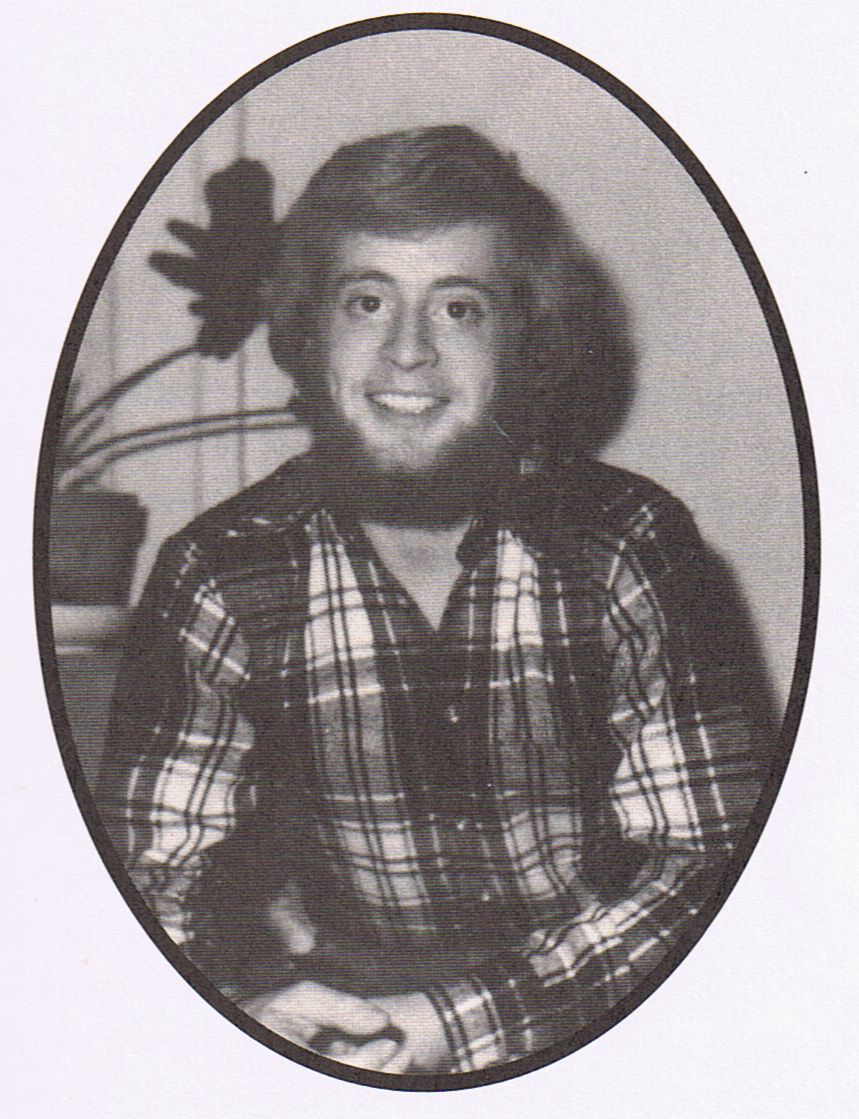
Bet Power (1950 - ) archivist, activist

Of Polish descent, Power was born and raised in Chicago. Power's father, a sailor taught the child, who already thought of himself as a boy, carpentry, baseball, bowling, billiards and poker. He played sports with his elder brother's friends without being outed as a girl.

At age 6 he witnessed a women pedestrian killed in a car accident. His mother started abusing him, attacking her husband and mutilating herself. At 13 Power was obliged to wear a dress for confirmation, and after that for church and the Catholic all-girls school.

Power became a street kid who did alcohol and other drugs. By 16 he passed well enough to get into leather bars and drag-show clubs. He marched for civil rights and ran from the police riot at the 1968 Democratic National Convention. He was part of the Workers World Party.

He went to a therapist and fell in love with her, but she was homophobic, and rejected him with prescriptions of antidepressants and antipsychotics. She urged Power's mother to have him committed. He was diagnosed as having a "narcissistic personality disturbance with anxiety and recurring panic attacks". He managed to avoid taking the compulsory pills, and started talking about a boyfriend. Six weeks after this he was released. He became an activist in the anti-psychiatry movement.

In 1972 he found a butch lesbian psychologist who told him that he was a butch, that he did not need therapy and should get involved at the Lesbian Feminist Center. There he found support to get off drugs, lose the 50 pounds he had gained from the prescription drugs, and to eat vegetarian. He was grateful but did not really think that he fitted in. The Chicago Lesbian Feminist Center housed the New Alexandria Lesbian Library (NALL) and Power became a volunteer there. He also had his first lovers and completed an MA in comparative literature and sociocultural processes, and got a job as a proof reader with a magazine publisher.

In 1977 the Chicago Lesbian Feminist Center closed and Power rescued the books and magazines from the NALL. He broke with his bio-family in 1979. They denied all the abuse, and Power had not only made it up, he was also queer. He, his lover, and the NALL collection moved to Huntington, and later Northampton, Massachusetts. He got a job in an ad agency in Hartford. Connecticut.

Lovers came and went. Bet drank heavily in "dyke, gay and trannie bars". In 1982 he tried to stop drinking. In 1983 he kicked in the bedroom window of an ex-lover, and was briefly in jail. He went to an alcoholism counselor, and also did a past-life regression with a psychic counselor. He was told that he had always, in every past life been a man, and in his previous life had been a Japanese scientist who was executed for treason after helping the US develop the atom bomb. He admitted his alcoholism and started going to Alcoholics Anonymous. He also came out both as trans and as into Sado-Masochism.

In 1986 the NALL received a letter from Louis Sullivan containing his pioneering Information for the Female-to-Male Crossdresser and Transsexual. Bet finished reading it in two hours. It gave him a vocabulary to describe himself, and now he knew that he was not the only FTM transsexual. He contacted Louis, and a few weeks later flew to San Francisco to meet him. They wrote and phoned each other frequently until Lou's early death in 1991. By then Bet had met his wife and his job was going well, and he did not feel that he could move to San Francisco to continue Lou's work.

He was no longer involved in the lesbian community. They were uncomfortable with his maleness, and also with the fact that he directed a monthly support group for lesbian, bi and trans into S/M. He decided that the NALL collection was not just a lesbian collection, and renamed it as the Sexual Minorities Archives.

He visited a gender counselor to decide if he wanted to medically transition, as his wife was
encouraging him to do. Despite knowing only one FTM crossdresser in all of New England, in 1992 he founded, on his forty-second birthday, the East Coast Female-to-Male Group (ECFTMG). It grew slowly but eventually was able to split into separate groups in the major New England cities.

He settled as being non-hormonal and non-operative. Despite some employment discrimination, he has managed to achieve creative director—vice president positions in advertising and marketing. His wife left him for a cis man in 1995.

In 2007 Power was diagnosed with granulomatosis polyangiitis, and now needs surgery every six months to keep breathing. He has not worked since. He is living on disability.

The house that contains the Sexual Minorities Archives is rented, and the owner wishes to sell. Power does not have the money to buy it, but has organized a fundraising campaign.

He is also contemplating a legal name change to Ben.
  • Leslie Feinberg. Transgender Warriors: Making History from Joan of Arc to Rupaul. Beacon Press, 1996: 155.
  • Bet Power. "My Wonderful Askewness". In J. Ari Kane-Demaios & Vern L. Bullough (eds) Crossing Sexual Boundaries: Transgender Journeys, Uncharted Paths Prometheus Books, 2006: 57-74.
  • Andre Perez. "Interview with Bet Power". Transgender Oral History Project, May 12, 2008. Online.
  • Fred Contrada. "Bet Power shines bright amid his Sexual Minorities Archives". MassLive, July 15, 2014. Online.
Facebook     GoFundMe

11 September 2013

Nzinga Mbandi (1583 - 1663) queen.

Nzinga was the favourite daughter of her father Kiluanji, the ngola (chief or king) of the Ndongo. When her brother Mbande deposed their father, he also had Nzinga's child murdered, and she fled.

In the 1620s as the Portuguese were expanding their slaving expeditions to the area, taking out ten thousand slaves a year, and the Ndonga were negotiating for their independence and to be a supplier rather than a victim tribe. In 1621 Mbande asked his sister to return and to negotiate with the invading Portuguese, represented by João Correia de Sousa. This she did, dramatically emphasizing her equality with de Sousa by sitting on one of her minions as de Sousa took the only chair.  She was also baptized as a Catholic taking the alternate name of Ana de Souza.

However the Portuguese kept none of their promises, and Mbande either committed suicide or was poisoned by Nzinga. Nzinga became regent, but had Kaza, Mbande's son killed for impudence, and then herself reigned as ngola wearing male clothing. She renounced her Catholicism and formed an alliance with Kasanje against the Portuguese, and conquered the Jagas who were further inland.

In a book published in 1670, a Dutch sea captain by the name of Fuller describes Nzinga:
'In man's apparel ... hanging about her the skins of beasts, before and behind, with a Sword about her neck, an Axe at her girdle, and a Bow and Arrows in her hand, leaping to the custom, now here, now there, as nimbly as the most active among her attendants, all the while striking her Engema, that is, two Iron Bells'.
Nzinga was by then in her 60s. Captain Fuller was the captain of her bodyguard in the late 1640s - he is describing her preparations for ritual human sacrifice.
She kept a pool of fifty or sixty young men, instead of husbands, who were in turn allowed as many wives as they pleased. She had a smaller select group of young men whom she dressed in women's clothes. This emphasized the claim that she had been transformed by her male clothing.

Captain Fuller, after mentioning her ritual sacrifices and cannibalism, goes on to describe her as
'a cunning and prudent Virago, so much addicted to arms that she hardly uses other exercises; and withal so generously valiant that she never hurt a Portuguese after quarter given, and commanded all her slaves and soldiers alike'.
As the Ndongo had moved inland, the Portuguese followed, stretched too far and the Dutch were able to capture Luanda in 1641. Nzinga formed an alliance with the Dutch, and made an agreement with them to sell her prisoners of war. Aided by a few hundred Dutch soldiers, Nzinga's forces were able to defeat the Portuguese in 1643, 1647 and 1648. However later in 1648, the Portuguese were able to recapture Luanda.

The Ndongo retreated inland as before, but the Portuguese held Nzinga's sister and Nzinga agreed to deal with them, and to return to Catholicism. In 1659 she signed a new treaty with the Portuguese.

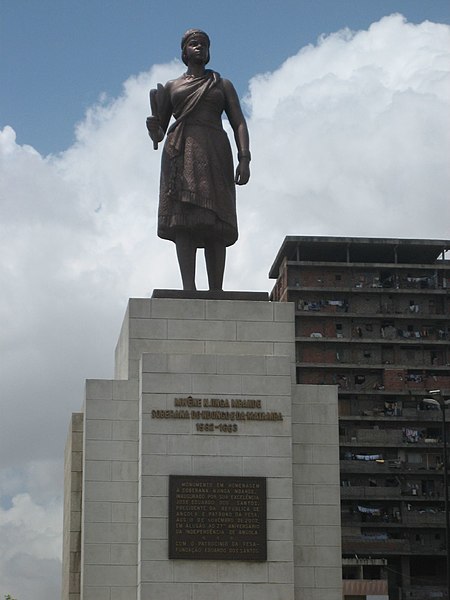
The modern-day statue to Nzinga in Luanda
She died at age 80, a remarkable age for the time.

After her death the Portuguese were able to seize control, and restore the shipping of slaves to Brazil.

Nzinga is honoured as a hero in modern Angola.
  • Antonia Frazer. The Warrior Queens. London: Mandarin Books, New York: Anchor Books 1988: 238-46.
  • Leslie Feinberg. Transgender Warriors: Making History from Joan of Arc to Rupaul. Beacon Press, 1996: 34.
  • Jone Lewis. "Anna Nzinga". Women's History. http://womenshistory.about.com/od/medrenqueens/p/nzinga.htm.
EN.WIKIPEDIA PT.WIKIPEDIA

25 March 2013

Virginia Prince: Part V - Transgenderist dowager


Part 1 – Youth and First marriage
Bibliography
Part II – Second Marriage
Part III – Femmiphilic activist
Part IV – Full-time Living
Part V – Transgenderist dowager
Jargon terms and general comments

In 1985 Virginia and Christine Jorgensen appeared in Lee Grant's documentary, What Sex Am I?    Dorothy Marie Shepherd, Arnold's first wife, died the same year.

This was also the year that the Clarke Institute in Toronto published Gender Dysphoria which laid out the dichotomy between heterosexual autogynephilics and 'homosexual transsexuals'. While this corresponded to Prince's insistence that homosexuals and femmiphics were, to use her term, "separate breeds of cat" there is no record that I have found of either Kurt Freund and Ray Blanchard of the Clarke on one side or Virginia Prince on the other discussing how femmiphilia and autogynephilia are different or similar, although later writers see them as two aspects of the same thing.

Frederick Whitam published his Male Homosexuality in Four Societies in 1986. He argues that homosexuality and transvestic homosexuality are as natural as heterosexuality and occur in all societies, and homosexuals in general tend to patterns of early cross-gender behavior. He sees heterosexual transvestites as a different category and protests their appropriation of the word 'transvestite'. "Some heterosexual transvestites, not wanting to be identified as being homosexual, have insisted that they are the 'true transvestites' and take a demeaning attitude towards drag queens and female impersonators". (p80) We now had three solitudes that should have been talking to each other, but did not.

IFGE (International Foundation for Gender Education) was founded by Merrisa Sherrill Lynn in 1987, initially as an outgrowth from Boston's Tiffany Club. Although proclaimed as a group for both transsexuals and transvestites, they built in a heterosexual transvestite bias by creating a Virginia Prince Award, and, apparently with no sense of irony, actually awarded the first one to Virginia Prince. The next two went to Merrisa Sherrill Lynn and Ariadne Kane.

Richard F. Docter published his Transvestites and Transsexuals: Toward a Theory of Cross-Gender Behavior in 1988. He gathered data from 110 male transvestites. He found that even after excluding those who were exclusively gay, 28% of the rest had some sexual experience with men. He purports a 5-part typology for heterosexual transvestites: fetishism, fetishistic transvestism, marginal transvestism, transgenderism and secondary transsexualism. He conceives these as stages which an individual can progress through. He has a 4-part typology for homosexual transvestites: primary transsexualism, secondary transsexualism, "so-called drag queens" and female impersonators. This is not a progression in the same sense. He treats Prince as one source among many and does not indicate that he knows her personally. Certainly he does not stick to her usage of the term 'transgender', although he credits Prince with coining it in her Understanding Cross Dressing, 1977 (but without giving a page reference and Google Books Search is unable to find it). He notes that his ‘transgenderism’ category corresponds to Benjamin's Type IV, Nonsurgical Transsexual. According to the diagram on p25, it is an heterosexual variation as in Prince, but Docter discusses only one example, a then 22-year-old Everett/Angela who is androphilic, sexually active and will probably shortly have transsexual surgery. (p21-5)

Robert Stoller died in a traffic accident in 1991. His wife returned the tapes and transcription of their 29 years of sessions to Virginia, who later passed them on to Docter for his biography.

By 1992, Yvonne Cook-Riley (who was awarded the Virginia Prince Award in 1995) was lobbying for the use of ‘transgender’ within IFGE, and would later, with willful ignorance, claim that she and Prince had created the ‘transgender community’.

In 1993 Vern and Bonnie Bullough returned to Los Angeles after his retirement. Vern again taught at Northridge as an adjunct professor until 2003. Their new book, Cross Dressing, Sex, and Gender, while totally ignoring Reed Erickson and April Ashley, reducing Lou Sullivan to an erotic cross dresser, and refusing to give Jacqueline Dufresnoy's female name, builds up the importance of Prince. They claim that Prince was the only transvestite organizer of note from 1952 to the 1980s. They do see through Prince's claims: "Prince's quest for respectability led her to exclude cross dressers who were homosexuals, sadomaschists, women, prostitutes, or even partial cross dressers. Because the psychiatrists accepted Prince's definition of transvestism and incorporated it into the DSM-III-R, behavioral scientists, including the authors, blindly followed the accepted definition by studying club members as if they were the universe of cross dressers." (p302) They follow with a summary of Frederick Whitam's work in the third world, but do not name any European or North American gay transvestites. The organizing work by Sylvia Rivera in New York or of Rachel Pollack or later Yvonne Sinclair in London is certainly not mentioned, and, as I have mentioned before, there is a recurring pattern in Bullough's work of not mentioning either transvestites or transsexuals who have a male lover or spouse. The Bulloughs, despite knowing Prince personally, do not claim the she coined 'transgender', or even associate her with the word at all. They do use the word when referring to Ariadne Kane. The Bulloughs note "Originally, we planned to publish Virginia/Charles's original name, but she regards this part of her past a closed book she would rather not reopen." (308n5)

The internet forum, alt.transgendered, was launched 1992, did not even mention Prince until 1995 when Kimberleigh Richards, editor of Cross-Talk, entered to promote Prince as a pioneer of ‘transgendered’, but with almost no success.

Prince sold most of the remaining copies of Transvestia and the copyright on her major books to Sandy Thomas, an old colleague. There are now available along with Thomas' transvestite fantasy titles from Lulu.com.

By 1996, the claims by Cook-Riley and Richards that Prince had coined ‘transgender’ were becoming widely known, and were repeated without citation in Leslie Feinberg’s Transgender Warriors: “But the word transgender is increasingly being used in a more specific way as well. The term transgenderist was first introduced into the English language by trans warrior Virginia Prince. Virginia told me, ‘I coined the noun transgenderist in 1987 or ’88. There had to be some name for people like myself who trans the gender barrier’ (p x) “. This is her only appearance in the book: Feinberg does not care to demonstrate Prince as a ‘trans warrior’. This seems to be the major source from which people claim that Prince coined the word. However there is no record of Prince using the word in 1987/8. This led to mainstream, albeit uncritical, acceptance of the claim.1

The same year, Prince published “Gender Fundamentalists” in Richards’ Cross-Talk, where she rejected the inclusions that IFGE and Feinberg had been putting out in her name and reasserted her separatism and her transgenderphobia. "It is strange but true that the ones who are most vocal, most in print and most publicly active are the transsexuals. Their main point of attack is Tri-Ess because of the policy (which in their anointed wisdom they like to term "exclusionary") of selecting heterosexuals only, which conflicts with what they proclaim to be the only right way for a group to be ... open to all comers." Prince is complaining that transsexuals are trying to include her and her group in an umbrella.

Bonnie Bullough died, just before the publication of Gender Blending edited by herself, Vern and James Elias. The tome is inclusivist except for the contributions by Prince and Kimberleigh Richards. In "Seventy Years in the Trenches of the Gender Wars" Prince actually claims: "As a matter of fact, I coined the words 'transgenderism' and 'transgenderist' as nouns describing people like myself who have breasts and live full time as woman, but who have no intention of having genital surgery". However she does not say where, and she objects to the inclusivist usage of ‘transgender’. She plays with the idea of adopting  ‘transposeur’, although she never returned to this term. She is also emphatic that she is a "congenital heterosexual" (perhaps having forgotten her claim to be a woman). She re-asserts her objection to the notion of "fetishistic cross-dressing", and asserts again that she is a pioneer of men's liberation.

On the other hand in 1999, in a meeting with Vanessa Foster: "She was bemused by my use (and the community's) of the word transgender, and how the story affixed its authorship to her, even though she'd referred to it as transgenderist as a self-descriptor once she'd moved from occasional crossdressing to living as female, though not transsexual (she was quick to correct that!)".

In 2000 Prince sold four sets of Transvestia, photographs and personal papers to Rikki Swin. They were initially in the Rikki Swin Institute in Chicago, and are now at the University of Victoria. Other files and papers were donated to the Special Collections Department at California State University, Northridge.

In 2003, Michael Bailey's The Man Who Would Be Queen, revived the Freund-Blanchard notion of autogynephilia to much alarm and controversy, but still there was no dialectic with the notion of femmiphilia
Virginia with Richard Docter
In 2004, Richard F. Docter, who had become a friend of Prince and the Bulloughs, at the urging of Vern, wrote and self-published his biography of her. Bullough provided a Preface. Unlike her reluctance in Bullough's book a decade earlier, Prince was now willing that her original name of Arnold Lowman, not mentioned outside her inner circle since the court appearance in 1961, should be used. While Docter had developed a 5-part typology in his Transvestites and Transsexuals, 1988, he does not locate Prince within it, although in chapter 13 he does discuss Step a: from being a fetishistic cross dresser to being a transgender women and then Step b: from being a woman in public to having the gender identity of a woman.

From 2005 the so-called Harry Benjamin Syndrome movement was developed. The European branch had little to say about Virginia Prince: Charlotte Goiar's bête noire is rather Carla Antonelli. The US HBS people following Diane Kearny set up Prince as that which they are not. It is therefore ironic that in several respects they follow Prince more than they do Benjamin:
  • they deny that there is a continuum from transvestite to transsexual
  • they disassociate from trans women who pass less well, and whom they regard as fetishistic
  • they disassociate from gays and lesbians
  • they disassociate from the transgender umbrella
  • They are also more like Prince than Robert Stoller in talking only of Gender but not Gender Identity.
     
Vern Bullough died in 2006. In his final book, Crossing Sexual Boundaries, co-edited with Aridane Kane, Bullough still does not use Prince's original name. His take on the term 'transgender' has now altered to: "In fact, Virginia was a main source of the popularization of gender as applied to cross-dressing. She and Ariadne popularized the term transgender, which has been a more encompassing term than cross-dresser."

Prince lived till 2009 and the age of 96, lastly in a retirement home in Los Angeles, and according to her friend, Richard Docter, she developed a taste for she-male pornography. She also dabbled in astrophysics and led a discussion group on being and consciousness in her retirement complex. She willed her body to the UCLA medical school. (Hill:39)
____________________________________________________________
    1. This is comparable to the way that Agnes Gonxha (generally known as Mother Teresa) was uncritically treated as a saint after being endorsed by Malcolm Muggeridge.

17 June 2012

Jack Bee Garland (1869 - 1936) journalist.

Elvira Virginia Mugarrieta was born in San Francisco, the second of five children of Jose Marcos Mugarrieta and Eliza Garland. Mugarrieta, an officer in the Mexican Army and then the first Mexican consul in San Francisco, was fired for political reasons, and never getting his back pay, remained in the city as a Spanish teacher and translator.

The child Elvira was a tomboy. Her father died when she was sixteen, and she was sent to a convent school. She escaped that by marrying a friend of her brother. They traveled together for some months and then separated. Elvira then traveled alone, frequently dressing as a young man, and frequently passing, except that he claimed to have lost his voice in an accident, and communicated by writing.

Although he was then twenty-eight, as a man he was taken to be eighteen. In 1897 he spent time in Stockton, California. Rumor went around that there was a woman in town posing as a man, and the police allocated resources to find the person. When they found her, she explained that she passed as a man to travel and to work, and that the law allowed this as no crime was intended.

As 'Babe' Bean, she became a local celebrity: she was invited to join the local Bachelor Club, and made a small living writing for The Stockton Evening Mail which supplemented his private income. Some women protested that Bean was receiving special treatment in that the rest of them would surely be arrested if they wore trousers in public. Babe wrote to the local paper encouraging them to dress as they pleased, and pointed out a few current bargains on men's clothes.

In May 1898 Babe was injured when his horse and buggy encountered a span of runaway horses. After this he did talk.

Following the Philippine Revolution, 1872-8, and the Spanish-American War of 1898, the US claimed the Spanish Empire as their own and switched from supporting to opposing Philippine Independence. In October 1899 Babe as Jack Bean, managed to get on a troop ship to the Philippines. At first he was a young man working his way across. But when he ran into problems she revealed her sex and was put off in Hawai'i. Admired by the troops for being spunky Bean was smuggled back on the ship and finally smuggled off in Manila. By this time Bean was a minor celebrity and although still dressed as a man, and often passing, Bean was generally known to be a woman. She wrote for the newspapers, and usually traveled with the 29th Infantry Regiment. She also worked as a nurse and a translator for the soldiers. When she fell ill of exhaustion after a year in the Philippines, the troops made a collection and sent her home. Jack’s story appeared in the 21 October 1900 edition of San Francisco’s Sunday Examiner Magazine as by Miss Babe Bean.

On return to San Francisco Bean conformed to female dress for a short while, and was listed in the 1900 census as Elvira living with her mother Eliza. However feeling a need to prowl the city after dark and to write about it, he reverted to male dress.

In 1903 San Francisco passed a new law banning all wearing of opposite sex clothing, and so Elvira disappeared and became Jack Garland (his mother's maiden name) on a permanent basis - neither Elvira nor Jack appeared on any later census. Jack took a particular interest in the poor and outcast, and would often give them money for food.

After the 1906 San Francisco earthquake, he worked as a male nurse for the Red Cross. He continued to make a small living as a journalist, and still had his private income.

In 1936, at age sixty-six he collapsed on the sidewalk and died of peritonitis. At the autopsy he was once again revealed to be a 'woman'. His family did not respect his choice of gender and he was buried in a white satin dress.

Pioneer trans activist Louis Sullivan wrote the major biography of Jack Garland.

*Not the Ontario politician, nor the New South Wales politician, nor the boxer. The Jack Garland Airport, North Bay, Ontario is named after the Ontario politician.
  • Babe Beam. "My life as a soldier". San Francisco Examiner, Oct 21, 1900.
  • “Death of Woman Shows She Lived as Man 40 Years”. The Woodville Republican, Dec 26, 1936. http://news.google.com/newspapers?nid=999&dat=19361226&id=5RYlAAAAIBAJ&sjid=BBMGAAAAIBAJ&pg=1505,940608.
  • San Francisco Lesbian and Gay History Project. “ ‘She Even Chewed Tobacco’: A Pictorial Narrative of Passing Women in America”, in Martin B. Duberman, Martha Vicinus, and George Chauncey. Hidden from History: Reclaiming the Gay and Lesbian Past. New York: New American Library, 1989: 189-192.
  • Louis Sullivan. Male to Female: the Life of Jack Bee Garland. Alyson Publications, Inc. 1990. 
  • Leslie Feinberg. Transgender Warriors: Making History from Joan of Arc to Rupaul. Beacon Press, 1996: 84.
  • Emile LaRocque. The manipulation of Victorian gender ideals : the lives of Elvira Virginia Mugarrieta, Babe Bean, Beebe Beam, and Jack Bee Garland. Proquest/UMI 86 pp 2006.
  • William A. Henkin. “Across The Great Divide: A Review of From Female to Male: The Life of Jack Bee Garland”. Sexuality.Org. Online.
  • Liz Highleyman. “Jack Bee Garland (aka Babe Bean). Lavender, 341. Online
  • Peter Boag. Re-Dressing America's Frontier Past. Berkeley: University of California Press, 2011: 52-3
  • “MUGARRIETA Elvira Virginia 1869-1936”. byrnefamily. http://byrnefamily.net/genealogy/getperson.php?personID=I12547&tree=Garland.

EN.WIKIPEDIA
____________________________________________________________

Several of the accounts, including Boag, incorrectly claim that Garland sailed to Manila as part of the Spanish-American War.  This is quite wrong as that war had finished.  It was part of the next, the US crushing of Filipino Independence.

In his article for the San Francisco Examiner, Garland wrote: “A newspaper woman and the daughter of an army officer, all my ambition and interest and inclination naturally gave me the fever to go to Manila when things were at their liveliest there”.  He was of course the daughter of a Mexican army officer, an officer who had served in the US-Mexican War of 1846-8, or as Mexico calls it, la (primera) intervención estadounidense en México.  Jose Marcos Mugarrieta saw action at several battles against the US including at Mexico City, 1846. So it is certainly ironic that his daughter wrote jingoistic prose identifying with the US invasion of another country.   Sullivan does not discuss this angle.

In 1897, in Stockton, Babe Bean declared that there was no law against transvesting. There was no US or California law, and I know of no Stockton law.  However San Francisco has passed such a law in 1863 and San Jose did so in 1882.  We mentioned the San Francisco law when discussing Ferdinand Haisch and the San Jose law re Milton Matson.  Apparently the San Francisco police did not apply the 1863 law against Garland, perhaps because they knew his parents.  It would seem however that he regarded the new law of 1903 as a signal that Elvira should now disappear completely.

In the 1890s there were, of course, no trans support groups, no male hormones and the major social construction, of what Garland was, was ‘inversion’ that regarded trans and homosexual as the same thing.  During the best documented period of his life, from 1897 to 1903, he was known as female-bodied, and was regarded as a spunky girl rather than as a man.  This raises a question of which pronouns to use.   He was generally perceived as a woman, even when in male clothing, until after 1903, and Sullivan who before that date switches back and forth between ‘he’ and ‘she’, switches definitely to ‘he’ only after that date.

08 September 2011

Max Wolf Valerio (1957 - ) poet.

Anita Valerio was born in New Mexico to a father of Spanish descent and a Kainai (Blackfoot) mother from Alberta. She was active in the American Indian Movement as an adolescent, and visited the Pine Ridge Reservation when it was under siege by the FBI after the Wounded Knee occupation.

She was a punk rocker and a poet, was an out lesbian for 14 years, and contributed a chapter to the influential feminist anthology, This Bridge Called My Back.

At age 32, the transition to Max began: he identified with a quote from Carl Jung: “Free will is the ability to do gladly that which I must do”.   On the effect of testosterone:
"I came into transition feeling very strongly that I was not going to 'buy' into what I thought were 'masculine' or male behaviors, many of which I found repugnant . I had that feminist background you know! I also just thought that so many of these feelings or behaviors were caused only by socialization. The revelation of the testosterone for me, was that the truth was so much more complex. Ultimately, this gradual change in perception was very humbling. I had to find that I was wrong, and that many of these feelings are fed by testosterone and not simply by socialization as I had thought."
During transition and after, Max was friends with Viviane Namaste, Mirha-Soleil Ross, Margaret O’Hartigan, Anne Ogborn and Gianna Israel.

Max lives in San Francisco and after doing genealogical research found that he is also part Sephardic Jewish and part northern European. He is a poet, essayist and actor, with a taste for the transgressive. He has worked with beats and punk bands.

Max's autobiographical book, The Testosterone Files, was a Lambda Finalist in 2006.

Max is featured in the documentaries Female Misbehavior, 1992, You Don’t Know Dick, 1996, and Gendernauts, 1999, Unhung Heroes, 2002.
“Certainly, in the beginning, I missed being identifiably queer, although I also hung out a lot at first with gay men, and often, people mistook me for gay. It was a long process of adjustment though, to accept being seen as just another straight guy. Although, I think I still give off something of the bohemian and the punk, it never really goes away. And, in the transworld, my views are often iconoclastic and quite contrary to the accepted ‘line’...
 My gender freakiness is now more stealth, and as such, I think it actually has even more power to upset people and open them to new possibilities. When people find out I am a transman, they find it to be extremely shocking and yes, it ruptures their view of the strict binary. In some ways, being just an ordinary appearing man is even more disruptive of their perspective. They expect me to look androgynous and since I do not, their minds are completely blown. So, there is provocative power in my seeming ’normalcy’. Believe me, I love that! I still do love being provocative. (Boyd)”
His day job is software sales.
  • ·         Anita Valerio. “It's In My Blood, My Face- My Mother's Voice, The Way I Sweat”. In Cherrie Moraga (ed). This Bridge Called My Back: Writings by Radical Women of Color. New York: Persephone Press, 1983.
    ·       Leslie Feinberg. Transgender Warriors: Making History from Joan of Arc to Rupaul. Beacon Press, 1996: 142.
    ·         Max Valerio, “Emerging Fragments”. HaLapid, Spring 2000. www.cryptojews.com/EmergingFragments.htm.
    ·         Max Valerio. “ ‘Now That You’re a White Man’: Changing Sex in a Postmodern World -- Being, Becoming, and Borders”. In Gloria Anzaldúa & AnaLouise Keating (ed). This Bridge We Call Home: Radical Visions for Transformation. Routledge, 2002.
    ·         Max Valerio. The Testosterone Files: My Hormonal and Social Transformation from Female to Male. Seal Press 280 pp 2006. Excerpts at: http://susiebright.blogs.com/susie_brights_journal_/2007/07/on-testosterone.html.
    ·         Faye Flam. “Transsexual describes female-to-male transformation.”. The Seattle Times, May 3, 2006. Online  
    ·         Helen Boyd. “Five Questions With ....Max Wolf Valerio”. en|Gender, Nov 29, 2006. www.myhusbandbetty.com/2006/11/29/five-questions-with-max-wolf-valerio.
  • www.maxwolfvalerio.com      Alchetron  
________________________________________________________________________________

Trans men differ in how they react to testosterone.  However if the effects are as Max says, does this mean that hormonally changed trans men are a different gender variation from those who transitioned in earlier decades and centuries when hormones were not available?


09 June 2011

Leslie Feinberg (1949 - 2014) author, activist.

Leslie’s preferred pronouns are ze and hir.

++=added later 

See also: A re-reading of Leslie Feinberg's Transgender Warriors.  

Diane Leslie Feinberg was raised by Jewish working class parents first in Kansas City, Missouri, then in Arizona and Buffalo, New York. She left home as a teenager. Her parents debated signing papers to have her incarcerated, and even speculated that Leslie was possessed by an evil spirit.

Leslie Feinberg, 1973, Transgender Warriors, p19
Leslie originally did factory work, and explored the butch scene in New York State, Pennsylvania and Ontario. In the early 1970s she tried to femme her appearance in applying for a job, and was taken for a man in drag.

Therefore he tried to pass as a man, and got a job as a art-gallery guard. He started taking male hormones, grew a beard and had breast reduction. After a demonstration of the US class system when Nelson Rockefeller visited the art gallery, he quit and got a job as a dishwasher. Here he met fellow workers who were in the Workers World Party.

Leslie found a home in the party and, although passing as male, felt able to come out as trans. Ze felt alienated by the feminist and gay/lesbian orthodoxies of the early 1970s which condemned butch and femme lesbians, and drag queens. In 1980 World View, the publishing arm of the Workers World Party, ze published Journal of a Transsexual about hir non continuance as a transsexual.

Ze caught a tick bite in the 1970s and has suffered from untreated Lyme Disease and other problems ever since.

Feinberg became a high-ranking member of the Workers World Party, and managing editor of Workers World newspaper. Hir wife since 1992 is the lesbian poet-activist Minnie Bruce Pratt. Feinberg took out legal papers defining certain biologically-related persons as not part of hir family following their hostility.

Ze put out a Marxist analysis of transgender liberation in 1992, Transgender Liberation: A Movement Whose Time Has Come. This was the first publication with 'transgender' in the title (although Richard Ekins had established his Trans-Gender Archive six years earlier), and foreshadowed the dialectic to come by using the word as an umbrella term, as a term of choice for one who declined surgical completion and as a rejection of the gender binary. Ze also addresses society’s negative reaction to non-standard gender expression in transgender and other persons. Ze used the pamphlet as the basis for hir slide show which ze showed all over the US.

Ze followed it with hir first novel, Stone Butch Blues, 1993, about a transgender person growing up in Buffalo's butch-femme culture in the 1960s, which while not actually autobiographical draws on much of the author's life in that the protagonist starts a transition to male, and then withdraws and identifies as transgender. Stone Butch Blues won the Stonewall Book Award for Literature.

With the success of this novel, Leslie, along with Riki Anne Wilchins and Kate Bornstein, became the major media example of transgender. Stryker describes Feinberg as 'one of the chief architects of the new transgender sensibility'.

In 1994, in the introduction to the second edition of her The Transsexual Empire, Janice Raymond discussed Feinberg along with k.d. lang and RuPaul as part of finding non-surgical transgenderism also non-acceptable. In particular she finds Stone Butch Blues deficient in its political analysis of gender.

That same year Feinberg, along with fellow trans activist Jamison Green, challenged the womyn-born-womyn policy of the Michigan Womyn’s Music Festival by asking to enter.

Leslie almost died in 1996 while suffering from endocarditis, when ze was refused medical care after the doctor noticed hir non-standard gender and ejected ze from the hospital.  When ze was finally accepted in another hospital, they insisted on putting hir in the women's ward, to some furor.

Ze published two non-fiction works on transgender: Transgender Warriors, 1996, a survey of trans persons in history, which also contains autobiography, and ++ controversially a few short sentences on Virginia Prince: “But the word transgender is increasingly being used in a more specific way as well. The term transgenderist was first introduced into the English language by trans warrior Virginia Prince. Virginia told me, ‘I coined the noun transgenderist in 1987 or ’88. There had to be some name for people like myself who trans the gender barrier’ “.  Outside Tri-Ess and IFGE this seems to be source of the misinformation that Prince coined the term. ++
  
Trans Liberation, 1998, was based on talks that ze gave in 1997 as hir health was slowly recovering.  Both books are interspersed with first person account by a variety of trans activists including Cheryl Chase and Sylvia Rivera.  Both books were published by Beacon Press, which is somewhat notorious among trans activists as it was the publisher of both Janice Raymond and Mary Daly.

Ze published a further novel, Drag King Dreams, 2006, about an aging trans man and a mixed group of trans person reacting to the killing of one of them, and to police harassment.  Ze also published a book in support of Cuba in 2008. Ze has been writing a column ‘Lavender & Red’ in the Workers World newspaper since 1995, which ze describes as a book in progress. It focuses on trans, gay and lesbian rights in the USSR, the USA and Cuba.

Ze regards hirself as polygendered and prefers non-gendered pronouns. While masculine in appearance, ze does not try to be fully male. Ze lobbied gay organizations to add ‘Bisexual’ and ‘Transgender’ to their names (GLBT rather than GL), and appeared at Camp Trans in 1999.

Ze has been acutely ill since 2007, and has been taking photographs rather than writing. Feinberg's younger sister, the author Catherine Ryan Hyde, had reconciled somewhat with ze, but then published a novel with a transgender character that has re-opened the gap between them. While her trans man character cannot be read as a portrait of Leslie, it does show how little she understands ze.

Leslie died November 2014, succumbing to complications from multiple tick-borne co-infections, including Lyme disease, babeisiosis, and protomyxzoa rheumatica, after decades of illness.  Hir last words were: “Remember me as a revolutionary communist.”
  • Diane Leslie Feinberg. Journal of a Transsexual. World View 21 pp 1980.
  • Leslie Feinberg. Transgender Liberation: A Movement Whose Time Has Come. World View Forum, 1992.
  • Leslie Feinberg. Stone Butch Blues. Ithaca, NY: Firebrand Books 1993. Los Angeles: Alyson Books 320 pp 2003.
  • Janice Raymond. “The Politics of Transgenderism”, the Introduction to the Second Edition of The Transsexual Empire. Teachers College Press. 1994. Also in Richard Ekins & Dave King (eds). Blending Genders: Social Aspects of Cross-Dressing and Sex-Changing. London & New York: Routledge 1996: 218-221.
  • Leslie Feinberg. Transgender Warriors: Making History from Joan of Arc to Rupaul. Beacon Press 218 pp 1996. Paperback: Transgender Warriors: Making History from Joan of Arc to Dennis Rodman. Beacon Press 218 pp 1997.
  • Leslie Feinberg. Trans Liberation: Beyond Pink or Blue. Beacon Press 160 pp 1998.
  • Interview by Mark Gabrish Conlon. ""Leslie Feinberg: 'Poly-Gendered' Author, Activist Speaks Out". Indymedia, 19.06.2003. http://sandiego.indymedia.org/en/2003/06/6567.shtml.
  • Leslie Feinberg. Drag King Dreams. Carroll & Graf 280 pp 2006.
  • Leslie Feinberg. Rainbow solidarity: in defense of Cuba. World View Forum, 2008.
  • Susan Stryker. Transgender History. Seal Press. 190 pp 2008: 123.
  • Diane Torr. Sex, Drag, and Male Roles: Investigating Gender as Performance. University of Michigan Press, 2010: 91-2
  • Leslie Feinberg. "While a hostile relative re-writes my life: ‘Who is, and is not, my family’". Questioning Transphobia, Jan 14, 2011. www.questioningtransphobia.com/?p=3568.
  • Catherine Ryan Hyde. "In response to a recent issue". www.catherineryanhyde.com/blog/2011/1/14/in-response-to-a-recent-issue.html.
  • Leslie Feinberg. Lavender & Red. Workers World, 1995-2011. www.workers.org/lavender-red.
  • Leslie Feinberg. Transgender Warrior. www.transgenderwarrior.org.
  • Minnie Bruce Pratt. “Leslie Feinberg”. www.mbpratt.org/mylove.html
  • Minnie Bruce Pratt. "Transgender Pioneer and Stone Butch Blues Author Leslie Feinberg Has Died", Advocate, November 17 2014.  www.advocate.com/arts-entertainment/books/2014/11/17/transgender-pioneer-leslie-feinberg-stone-butch-blues-has-died.

EN.WIKIPEDIA   AMAZON.COM    IMPERIAL COURT TRANS HERO   
____________________________________________________________

When writers such as Suzan Cooke, Cathryn Platine and Ashley Love rant about Transgender, Inc and the transgender conspiracy, I cannot but wonder what they have against Leslie Feinberg.

As some trans voices advocate abandoning support for gender expression, it is useful to go back and read Feinberg with hir repeated support for the concept.

Transgender Warriors is a light book.  However it does serve well the purpose for which it was intended: to explain transgender to the wider world.  Feinberg’s master work is Lavender & Red which is available online.   I recommend that for the more advanced reader.

Raymond, in finding Stone Butch Blues deficient in its political analysis of gender, is really saying that she and Feinberg have different political analyses.

Click here for a cartoon included in Transgender Warriors.

03 May 2010

Mary Edwards Walker (1832 – 1919) doctor, suffragette.

Mary Walker was born and raised in Oswego, New York, the youngest of five daughters. In the early 1850s she adopted the new pants outfit associated with the name of Amelia Bloomer. She became one of the very first women doctors in the US when she graduated from Syracuse Medical College in 1855, the only woman in her class. She married in 1856, wearing men’s cloths, and she did not take her husband’s name. They set up a joint practice in Rome, New York, but separated in 1859.

With the start of the US Civil War in 1861, she volunteered on the Union side, but was only allowed to be a nurse, but after working as an unpaid field surgeon near the front lines, she became the second ever US Army Surgeon in 1863. In 1864, while treating civilians, she was captured by Confederate troops and charged as a spy. She was released as part of a prisoner exchange. In 1865 she was awarded a Congressional Medal of Honor, the only women to ever receive one.

She was an advocate for women’s dress reform and in 1866 was elected president of the National Dress Reform Association, and made speaking tour of England. In 1869 she finally obtained her divorce. She became a persistent wearer of trousers, switching from an androgynous mix to strictly male clothing later, although at all times insisting on being treated as a lady, and she never attempted to pass as male. She stood by the earlier suffrage position that the US Constitution gave women the vote, and she opposed the majority of suffragists who switched tactics to campaign for a female suffrage law.

She argued that women’s clothes kept them “unnaturately excited, or in a condition to be excited sexually”. Her solution to the sexual double standard was for men to be continent. She condemned all anal and oral sexual acts, and also masturbation.

In 1887 she began the first of several mid-western tours in dime-museum sideshows. She built up a collection of over 1000 pictures and letter of cross-dressing individuals. She corresponded for many years with the German transvestite Otto Spengler.

In 1902 a medical journal article referred to “Dr. M- W--, of Washington" as “the most distinguished sexual invert in the United States".

In 1917 the US Congress revoked her Medal of Honor (along with 900 others) as she had not been in ‘actual combat with an enemy’, but she refused to return it and continued to wear it until her death. She died of old age at 86, and was buried in her black suit.

A Liberty ship was named after her in the Second World war. US President Carter restored her medal in 1977. The US Postal Service issued a 20¢ Mary Walker stamp in 1982. The medical facilities of SUNY Oswego are named for her as is a US Army Reserve center in Walker, Michigan.
  • Mary Edwards Walker. Hit. New York: American News, 1871.
  • Mary Edwards Walker. Unmasked, or The Science of Immorality. To Gentlemen. Philadelphia: Wm. H. Boyd, 1878.
  • R. W. Shufeldt, "Dr. Havelock Ellis on Sexual Inversion," Pacific Medical journal (San Francisco), vol. 45 (1902), p. 201.
  • Charles McCool Snyder. Dr Mary Walker: the Little Lady in Pants. Arno Press, 1976
  • Allison Lockwood. 'Pantsuited pioneer of women's lib, Dr. Mary Walker'. Smithsonian. 7 March 1977.
  • Leslie Feinberg. Transgender Warriors: Making History from Joan of Arc to Rupaul. Beacon Press, 1996: 111.
Women in History    EN.WIKIPEDIA     FTM Contributions to Medicine, Psychology, Science and Engineering     OutHistory. ____________________________________________________________

The FTM page implies that she was a trans man, but limited by the technology of the time.  I don’t see this.  While she liked men’s clothing, there is no implication that she wanted to be a man.  Unlike many female-born persons in the 19th century she did not attempt to pass as male.  Had she done so, she would have been able to vote.

23 April 2010

Petric J. Smith (1940 – 1998) window dresser, real-estate agent, Methodist minister.

Elizabeth Cobbs was raised in Birmingham, Alabama. Her mother’s sister’s husband, Robert Chamliss was active in the Ku Klux Klan, and sometimes took his relatives to Klan activities.

At age 15, having been told that she was to be a housewife and could not go to college, Elizabeth eloped with her boyfriend and returned home pregnant. Her marriage broke up after four years. She worked in the window-display department for a department store.

On 4 September 1963 a bomb exploded at the Sixteenth Street Baptist Church and four young girls died in the explosion. Elizabeth heard Chambliss say in response to a television report on the bombing: "It wasn't supposed to hurt anybody. It didn't go off when it was supposed to". Elizabeth was one of many interviewed by the FBI, but the case was closed by J. Edgar Hoover in 1968.

In 1970 Elizabeth married again, and started selling real estate. In 1975 she began to study to be a United Methodist minister, and was their first female minister in Alabama.

When the Alabama Attorney General Bill Baxley reopened the bombing case in 1976, she became a star witness at her uncle’s trial in 1977. He was convicted and sentenced to life in prison.


She was divorced for the second time in 1978, and after many death threats and telephone harassment, she left Birmingham and took another name. In Texas, Cobbs  underwent counseling and was referred to a Gender Clinic.  As Petric Smith, he completed legal and surgical transition in 1981, and then returned to Birmingham and became a gay and lesbian, anti-racist and women’s rights activist.

Chambliss died in prison in 1985.

Petric published his autobiography in 1994, mentioning his gender change only in a very short epilogue. He named other people who were probably involved in the bombing.

He died of lung cancer at age 57.

In 2001 and 2002, based partly on Smith’s book, two other perpetrators were convicted.
  • Elizabeth H. Cobbs/Petric J. Smith. Long Time Coming. Crane Hill Publishers. 1994.
  • Leslie Feinberg. Transgender Warriors: Making History from Joan of Arc to Rupaul. Beacon Press, 1996: 140.
Lesbian Gay Bisexual Transgender History Month UK     TSsuccesses.

02 October 2009

Martine Rothblatt (1954 - ) lawyer, broadcast executive, biotechnologist, transhumanist.

Martin Rothblatt was born in Chicago and raised in San Diego and Los Angeles. After travel in Europe, the middle East, Kenya and the Seychelles, he thought about world satellite communications and did a degree at UCLA in communication studies with a thesis on direct broadcast satellites.

He then did a combined law-MBA degree, also at UCLA, during which he published five articles on the law of satellite communications, and prepared a business plan for the Hughes Space and Communications Group on providing communications to Latin America. He worked in broadcasting and astronomy with regard to the Federal Communications Commission.

In 1982 he married an African-American woman and they had four children.

From 1986-90 he was the CEO of Geostar Corporation. In 1987, he was largely responsible for the new treaties re space-based spectrum allocations. In 1990 he created WorldSpace and Sirius Satellite Radio.

By 1993 she was transitioning, using the name Marla Aspen. She wrote for Transgender-Tapestry, and participated in the International Bill of Gender Rights adopted by the Second International Conference on Transgender Law and Employment Policy. In 1994, as Martine Rothblatt, she completed transition. In 1995 she published Apartheid of Sex, in which she argued that legal gender should be abolished, that unisex language should be used, and that persons should be free to change their sex as they please.

She also played a leading part in the International Bar Association’s project to develop a draft Universal Declaration on the Human Genome and Human Rights. This was adopted by UNESCO in 1997, and by the UN General Assembly in 1998.

Her youngest daughter was diagnosed with life-threatening pulmonary hypertension. GlaxoSmithKline had a new drug for the disease but was not developing it because the market is too small. So Martine left WorldSpace and Sirius Satellite Radio in 1997 and founded United Theraputics, which purchased the development rights.

She also studied for a PhD in medical ethics at the Barts and The London School of Medicine and Dentistry, Queen Mary, University of London. This was gained in 2001 based on her dissertation on the conflict between private and public interests in xenotransplantation. This was published as Your Life or Mine, 2003. Also in 2003 she published Two Stars for Peace, which proposes that both Israel and Palestine become States in the USA.

She is active in transhumanism and technological immortality. She was also a founding member of the Order of Cosmic Engineers which seeks to build a techno-utopia.

She is featured in the film Stock Shock about what happened to the stock price of Sirius XM (as Sirius Satellite Radio became after a merger) after her departure. From a high of $9 a share it dropped to 5 cents in March 2009.
  • Martine Aliana Rothblatt. The Apartheid of Sex: A Manifesto on the Freedom of Gender. New York: Crown Publishers, 1995. 
  • Leslie Feinberg. Transgender Warriors: Making History from Joan of Arc to Rupaul. Beacon Press, 1996: 147.
  • Viviane K. Namaste. Invisible Lives: The Erasure of Transsexual and Transgendered People. Chicago: University of Chicago Press, 2000: 124-130.
  • Zina Moukheiber. “Eight hard years after her daughter's lungs seized, Martine Rothblatt hopes a new drug can save her--and others”. Forbes Magazine. 01.07.02. www.forbes.com/forbes/2002/0107/138_print.html.
  • Martine Aliana Rothblatt. Your Life or Mine: How Geoethics Can Resolve the Conflict between Public and Private Interests in Xenotransplantation. Aldershot, England: Ashgate, 2004.
  • Martine Aliana Rothblatt. Two Stars for Peace: The Case for Using U.S. Statehood to Achieve Lasting Peace in the Middle East. New York: iUniverse, 2003.
  • Sandra Mohr (dir), Stock Shock. Scr: Liz Bolwell & Sandra Mohr. With Martine Rothblatt. US 72 mins 2009.
martinerothblatt.com        EN.WIKIPEDIA. ______________________________________________________________


16 June 2009

Allyson Allante (1955 - ) performer.

Raised in Long Beach, Long Island, New York, Allyson Anderson was 14 when she was at the Stonewall Tavern on June 27, 1969, and apprehended on the first night of the riots.


She took her name from two Lana Turner films: the daughter Allison in Peyton Place, 1957, and Holly Anderson in Madame X, 1966. She became Mrs Allante by marriage. She has been married to men three times.

In more recent years she has been active in the Stonewall Veterans Association, and has been elected Queen and president of the Imperial Queens and Kings of New York.

She was the only real Stonewall transgender person to appear in the 1996 Stonewall film.

In 1997 she was the only trans person to speak before the New York City Council on Domestic Partnership Law.
  • Leslie Feinberg. Transgender Warriors: Making History from Joan of Arc to Rupaul. Beacon Press, 1996: 92-3.
  • Jean Marie Stein. “From Stonewall the Rebellion to Stonewall the Movie & All Parts in Between”. Transgender Tapestry. Summer 1997. Online at www.stonewallvets.org/QueenAllyson.htm
StonewallVeterans
______________________________________________________________________

She is not mentioned in either Martin Duberman’s nor David Carter’s book on Stonewall.

02 May 2009

Marsha P. Johnson (1944 - 1992) activist, drag mother.

Malcolm Michaels, Jr. grew up in Hoboken and Elizabeth, both in New Jersey. Malcolm would transform to Marsha on the commuter train into New York.


In 1966, Marsha moved to Manhattan for good. She was well-known in New York drag and arts scenes from the 1960s to the 90s. Sometimes she worked as a waitress, but usually she worked the streets. She was known for helping other transvestites and street people, was regarded as a drag mother, and in particular was a mentor to the young Sylvia Rivera. She panhandled and was often on roller skates. She was deeply religious and had visions.

In the early days she was known as Black Marsha, but then dropped the ‘Black’, and became Marsha P. Johnson. The P. as she loved to explain, including on one occasion to a judge, stood for “Pay it no mind”. The judge laughed and let her go.

She participated in the Stonewall riots in 1969, where she was observed dropping a heavy weight onto a police car. She was co-founder with Sylvia of STAR (Street Transvestite Action Revolutionaries) and was active in STAR House which attempted to feed the homeless and the street transies.


She was also a performer and a member of Hot Peaches, and did a London tour with them. She never got a female passport, and had to do male drag to go through immigration. She was photographed by Andy Warhol.

By 1979 she acknowledged several attempts on her life by johns, eight nervous breakdowns and innumerable arrests – after one hundred she stopped counting.

Marsha was rightly regarded as generous through the decades, but when Malcolm took over he could be quite nasty, and might even pick a fight with someone who said hello to him.

Marsha was probably murdered: her body was found floating in the Hudson River shortly after the 1992 Pride March, but the police declined to investigate.

Antony Hegarty’s band, Antony and the Johnsons, is named in tribute to Marsha.
    • Bob Kohler. “Rapping with a Street Transvestite Revolutionary: An Interview with Marcia [sic] Johnson” in Karla Jay and Allen Young. Out of the closets: voices of gay liberation. New York, Douglas Book Corp. 1972. New York : Pyramid Books, c1974. New York: Jove Publications, 1977.
    • Martin B Duberman. Stonewall. New York : Dutton, c1993. New York: Plume, xix,330 pp. 1994: 67-8,188,190,191,192, 204,235,237,251-5,259. 
    • Julian Fleisher. The Drag Queens of New York: An Illustrated Field Guide. New York: Riverhead Book. 1996: 35-6, 39,59-62. 
    • Leslie Feinberg. Transgender Warriors: Making History from Joan of Arc to Rupaul. Beacon Press, 1996: 130-1.
    • David Carter. Stonewall : the riots that sparked the gay revolution. New York : St. Martin's Press 2004. New York: Griffin 2005: 61, 65-6,162,188, 261.
    • Susan Stryker. Transgender History. Seal Press. 190 pp 2008: 86.
    • Amy Coleman. “The legendary Marsha P.Johnson…The Queen Mother”. www.amy-coleman.com/cab.htm#marshap.
    • “Marsha” TransyHousewww.transyhouse.org/Marsha.htm
    • Michael Kasino (dir).   Pay It No Mind: Marsha P. Johnson, with Marsha P. Johnson, David Carter.  US 54 mins 2012.
 EN.Wikipedia      IMPERIAL COURT TRANS HERO     TRANS.ILGA


20 July 2008

Ernest Boulton (1849 - ? ) and Frederick William Park (1848 - 1881) performers.

Ernest Boulton was the scion of a family of Stockbrokers in the London suburb of Peckham.

He had shown an extraordinary aptitude for playing female characters - even from his sixth year. He often performed in private theatricals; the parts he assumed were always female, and his performances were always popular and successful. He also played the piano and sang excellently. He always had photographs taken.

When in his late teens, Ernest was introduced to Frederick William Park, who had similar interests, and they toured theatres as a double act using the female names: Stella Clinton, sometimes Mrs Graham, and Fanny Winifred Park. The reviews in the local papers were favourable. At one performance Stella received as many as fourteen bouquets. Both Stella and Fanny were frequently invited to supper at country houses after the show, and if requested went in their stage clothes. Local photographers pictured them for postcards which were in great demand. Stella was a pioneer of the new glamour drag.

When not touring they were frequently seen, dressed en femme, at such places as the Oxford and Cambridge Boat Race, the Surrey Theatre in Blackfriars Road (where the Royal Ophthalmic Hospital now stands), the Alhambra Theatre in Leicester Square, and the Burlington Arcade where higher-priced prostitutes were known to ply their trade.

A Hugh Mundell met both Boulton and Park, in male attire, at the Surrey and was convinced that they were women dressed as men. He gave them advice on how to be more convincing: they should swing their arms more. He met them again at the same theatre when they were dressed as women. He gave them a rose each. Stella passed him a note saying that they were men dressed as women. Hugh thought this a capital joke, and he and another man took the two women for a meal at the Globe, near the Haymarket.

Charles Reeves, superintendent of the Alhambra Theatre, where they frequently went over a period of three years, objected to their appearance and to the attention they attracted. He had them turned out more than once.

Stella and Fanny, with Martin Luther Cumming, C.F. Thomas, and Amos Gibbings, rented a room at 13 Wakefield Street which they used as a changing room, and for storing clothes. The landlady, Mrs Stacey, her daughter and some of the other lodgers were quite aware of what was going on as the two impersonators were quite open about what they doing. A Mr Cox flirted with Stella but when he later encountered Mr Boulton in Covent Garden he cursed him.

William Chamberlain of the detective police force encountered Stella and Fanny on several occasions. On 28 April 1870 Chamberlain arrested them as they left the Haxell's Strand Hotel, where they had attended a ball organized by Amos Gibbings. They were taken to the Bow Street police station where the police surgeon examined their anuses for evidence of 'pedication'. They appeared the next day in magistrates' court dressed as they had been at the time of arrest. They were charged with 'conspiring and inciting persons to commit an unnatural offence'. The case came to trial in May of the next year.

In the interim, Lord Arthur Clinton, the third son of the fifth Duke of Newcastle, who was charged as an accessory, died at the age of thirty of scarlet fever aggravated by anxiety over the charge. The case was regarded as important. Both the Attorney General and the Solicitor General appeared for the prosecution. The 'unnatural offence', that is homosexuality, was not proved. Other than this, the prosecution was stuck for a crime. Dressing as a woman was not in itself a crime, and public mischief - a common charge against cross-dressers - would be no more than a misdemeanour. The jury returned after fifty-three minutes to declare the accused not guilty.

Both Boulton and Park left the country and continued their lifestyle in New York. Boulton appeared as Ernest Byne on the same bill in New York as the famed male-impersonator Annie Hindle and is regarded as a pioneer of glamour drag.  Park appeared as Fred Frinton, however without success, and he died at the young 5age of 33.

Stella and Fanny were featured in a survey of homosexuality published in 1881, The Sins of the Cities of the Plain.
  • Roger Baker. Drag: a history of Female Impersonation on the Stage. A Triton Book. 1968: 122-6.
  • Ronald Pearsall. The Worm in the Bud: the World of Victorian Sexuality. Weidenfeld & Nicolson. 1969: 461-6.
  • Peter Farrer (ed). Men in Petticoats: a Selection of Letters from Victorian Newspapers. Karn Publications 1987: 4-9.
  • Leslie Feinberg. Transgender Warriors: Making History from Joan of Arc to Rupaul. Beacon Press, 1996: 88-9.
  • Laurence Senelick. The Changing Room: Sex, Drag and Theatre. Gender in performance. London, New York: Routledge, xvi, 540pp. 2000: 302-6, 321n37,n44.
  • Rictor Norton. "Fanny and Stella," extract from My Dear Boy: Gay Love Letters through the Centuries. 2000. Online at: http://rictornorton.co.uk/fanny.htm.
  • Lee Jackson. “Men Posing as Women”. The Victorian Dictionary. www.victorianlondon.org/sex/mencrossdressing.htm.