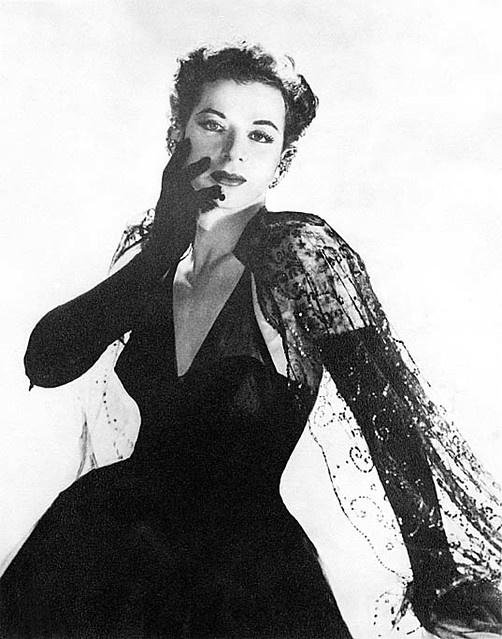
This site is the most comprehensive on the web devoted to trans history and biography. Well over 1800 persons worthy of note, both famous and obscure, are discussed in detail, and many more are mentioned in passing.

There is a detailed Index arranged by vocation, doctor, activist group etc. There is also a Place Index arranged by City etc. This is still evolving.

In addition to this most articles have one or more labels at the bottom. Click one to go to similar persons. There is a full list of labels at the bottom of the right-hand sidebar. There is also a search box at the top left. Enjoy exploring!

Showing posts with label forces drag shows. Show all posts

26 May 2021

Bobbie Spong (191? - 1944) performer, WWII Prisoner of War

Spong was the son of the licencee of the Six Bells, Kings Road, Chelsea. On 7-8th December 1941 he was a private in the Royal Army Ordnance Corps stationed in Singapore. On that day Japanese forces attacked Thailand, Dutch East Indies, the UK colonies of Hong Kong, Singapore and Malaya. and the US colonies of the Philippines and Hawai’i.

The 60,000 British empire forces in Singapore and Malaya finally surrendered 15 February 1942, what Churchill called "the worst disaster and largest capitulation in British history". Most UK and Australian troops, and later Dutch civilians, were imprisoned in the Selarang Barracks, near to Changi, an existing prison at the east end of Singapore. The Barracks also became referred to as Changi. 850 died in captivity, others were transported to work as forced labour in Japan or on the Thai-Burma railway (which included a bridge over the river Kwai).

Morale was inevitably bad, and the officers encouraged sports and theatricals. One of the first were The Mumming Bees concert parties, and it was at these that Bobbie Spong, who had already made somewhat of a name as a performer, first became well-known. Bobbie impersonated comedienne Beatrice Lillie, film star Marlene Dietrich and female impersonator Douglas Byng. From there Spong branched out into comedy sketches and revues, almost always in female parts. Even the Japanese and Korean guards came to watch. One night her appearance was greeted by a roar of applause that was heard across the island. 

Somehow Spong had managed to bring into the prison camp a full set of female clothing including corsets. He was allowed to grow his hair to a feminine length. Bobbie often stayed in role offstage. In particular she would tour the hospital wards and sing for those too sick to attend the performances. She was so convincing that when she sat on a patient’s bed they would blush and attempt to cover their nakedness. Late in 1943 when Private Spong returned to the Chungkai camp in Thailand from a work-camp up the line, and converted to Bobbie for a show, she was so convincing that the Japanese officers stopped the show and demanded proof of her manhood. Both Japanese and Korean guards often asked Bobbie to give a private performance in their quarters. This she did, graciously accepting fruit and cigarettes, and then would quickly flee back to her own quarters.

On Christmas Day 1943, Bobbie - in a light green and orange frock and hat - was in the hospital to give out cigarettes. Later that day she was at the mock horse races where everybody dressed up the best that they could. She kissed the winners of the races. The day ended with Bobbie under a large tree singing from the Douglas Byng repertoire.

The theatre at Chungkai.  Bobbie sitting front right.


On 29 April 1944 the shows were cancelled because the Japanese had taken all the theatrical paraphernalia for the celebration of the Emperor’s birthday. Bobbie was part of a burlesque football match that was hastily arranged instead.

West London Press, 32/10/1952 p1
Bobbie’s final appearance was in mid-May 1944 at Chungkai camp. Spong then shocked everyone by volunteering for a work detail in Japan because her best friend had been drafted for it. Departure was 8 June. By then Spong had had his hair cut, but managed to pack twenty frocks in his rucksack. 1300 POWs were crammed into an unmarked transport ship. The ship was spotted, torpedoed and sunk by a US submarine - very few survived.

  • “Pledge Renewed”, West London Press,October 31, 1952: 1.
  • Sears Eldredge. “Wonder Bar: Music and Theatre as Strategies for Survival in a Second World War POW Hospital Camp” in Gilly Carr & Harold Mytum (eds). Cultural Heritage and Prisoners of War: Creativity Behind Barbed Wire.Routledge, 2012.
  • Sears Eldredge. “ ‘We Girls’: Female Impersonators in Prisoner-of-War Entertainments on the Thailand-Burma Railway”. Popular Entertainment Studies, 5, 1, 2014: 74-99.
  • Sears A Eldredge. “The Uncomparable Bobbie” in Captive Audiences / Captive Performers: Music and Theatre as Strategies for Survival on the Thailand-Burma Railway 1942-1945. Macelester College, 2014: 533-8.


11 October 2020

Two photos of the Australian army in the 1940s

 These two photographs are found in 

  • Yorick Small.  Sex, Soldiers and the South Pacific, 1939-45: Queer Identities in Australia in the Second World War.  Palgrave Macmillan, 2015. 


16 April 2013

A review of Kris Kirk & Ed Heath - Men in Frocks, 1984

There are three books on trans people in the UK in the 1980s: this book, Richard Ekins' Male Femaling and Liz Hodgkinson's Body Shock.  I have all three side by side on my shelf.  Each book focuses on a different group:  Hodgkinson on SHAFT, Ekins on the Beaumont Society and Kirk and Heath on the TV/TS group.  Somehow this results in no one person appearing in more than one book, although in reality there was migration among the three groups - for example we have seen that Janette Scott moved from the executive of the TV/TS group to the executive of the Beaumont Society.

Christopher Pious Mary Kirk (1950 – 1993) was a journalist for Gay News in the early 1980s. Later he was an openly gay music journalist writing for Melody Maker, The Guardian and other publications. In 1984 he published Men In Frocks, with photographs by his lover Ed Heath. In 1986, Channel 4 television broadcast a documentary-drama about Kris Kirk entitled A Boy Called Mary. In 1988 Kris and Ed moved to rural Wales to open a bookshop, but three years later Kris found that he had Aids. He went blind in 1992, and died in 1993. Other works: A Boy Called Mary: Kris Kirk's Greatest Hits, 1990 - a collection of his music journalism.

  • Kris Kirk with photographs by Ed Heath. Men In Frocks. London: Gay Men's Press 1984.


Note: this book was written in the early 1980s and thus, inevitably, it does not conform to the expectations of the 2010s.   The title was perhaps ill-chosen even then.   Kris, several times in the book has to apologize that a person (Poppy Cooper, Roz Kaveney, Letitia Winter) is not a man in a frock, they having become a woman.  However the book is of major historical interest, and many of its observations are still valid.


Introduction

Kris asks where you would have looked if you wanted to wear drag in the 1940s?
"Well, if you were lucky enough to be on one of the few gay grapevines - and the right gay grapevine at that - you might hear of a secret party in somebody's private home where you could slip on a frock on arrival and slip it off again when you left.  There was little else. ... So what happened between then and now? What triggered off the rise of drag in Britain?"  
His answer is that
"The evolution of modern drag goes hand in glove with the increased visibility of those gay men who not only enjoy debunking the traditional male image, but also enjoy doing it in public."
Vivian Namaste has claimed that the pioneering for trans people was mainly done by sex workers, but has declined to provide a supporting narrative for her claim.  Kris' claim for the pioneering by gays is found in this book.

The Chorus Queens

Following the Second World War a venue of sorts did open up for the isolated few who wanted something other than the stereotyped male role.  In California Louise Lawrence was introducing trans women to each other, as was Marie AndrĂ© Schwidenhammer in Paris.  However in Britain the only option was the soldiers-in skirts revues, and of course to get into those you had to have some inclination, if not actual talent, towards singing and dancing, although you did not have to have actually served in the forces. The first such show was actually a US import, Irving Berlins' This is the Army, which played the London Palladium for four nights in 1944.  The going wage in the British versions was £6 or £7 a week and half of that went on draughty digs where they sometimes had to share four-to-a-bed.  We have already noted Poppy Cooper whose path to womanhood was via these revues. Other performers included Terry Gardener and Canadian Loren Lorenz.  Shelley Summers did drag while with HM forces in Burma until 1947 (for which he got sergeant's stripes) but did not join any soldiers-in-skirts revue because of family, but did become a drag performer in the 1960s.  While most books on either theatre or on cross-dressing barely pay any attention to these shows, Kris points out that while Lena Horne could not fill the Theatre Royal in Leeds, Men in Frocks played to capacity houses; Sophie Tucker's box-office record at the Golders Green Empire held for years until it was broken by Forces Showboat.  There was a significant difference from the drag acts of the 1930s such as Bartlett & Ross or Ford & Sheen and the pantomime dames all of whom had been doing cod drag, that is being funny.  Terry Gardener, who was in the first We Were in the Forces in 1944, explained:
"The general idea of the first show was to put men into dresses to make them look dreadful, but that soon started to change because the audience liked the prettiest ones best" - which much suited the performers. 
Most were gay:
 "Heterosexuals? In the choruses?  I can't say I ever met any.  I guess it was possible" - Loren Lorenz. 
 Men who were not queens were 'hommes' ('omnies' in Polari).  A surprising number of omnies wanted to bed the queens, but
"If you ever suggested to an homme in those days that he was homosexual, even bisexual, he would have killed you" - Poppy Cooper.

Did somebody say: what about Gillies, Dillon, Cowell?  They don't fall within the pervue of this book.  Not only were none of them gay, and to be a trans patient of Gillies you had to be the child of either one of England's top doctors or of a Baron.  Anyway he stopped after two patients.  Hoi polloi need not apply.  

Gay Paree and the Sea Queens

By the mid-1950s the forces drag shows had run their course, and the audiences were no longer coming - many of them had acquired televisions.  There were other things happening that were a bit of a surprise to the queens: those who took being female more seriously.  There were stories in the press: Christine Jorgensen, Bobbie Kimber, Roberta Cowell.  

Basically the show queens had nowhere to turn to.  The few exceptions were Terry Gardener who partnered with Barri Chat and found work in regular variety shows, as did Phil Starr and Terry Dennis.  Danny Carrol changed his name to La Rue and in 1955 started a residency at Winston's Club in Mayfair that lasted for six years.  Mrs Shufflewick pursued an idiosyncratic career on the wireless and also did eight seasons at the Windmill Theatre - many of her audience took her to be a woman. However Roy Alvis, not finding any drag work, became a meat porter at Smithfield Market until the pub drag boom in the late 1960s.  Some like Poppy Cooper went to Paris where Le Carrousel and Chez Madam Arthur were hiring.  Tommy Osborne remembers
"I liked Paris, but I wasn't too happy in the show.  I was a singer and I used to go out there and belt out the numbers big and loud and forget about being in drag, but most of the audience was there purely for the sensation of seeing boys with tits.  The boys were all incredibly beautiful.   But they just couldn't do anything, bless them."   
1953-4 was a particularly good time to not be in England.  In addition to the Coronation, David Maxwell-Fyfe, Home secretary 1951-4, and John Nott-Bower, Commission of Scotland Yard(1953-8), under US pressure and in the shadow of the Guy Burgess defection to Moscow, started a purge of homosexuals.  In 1953, the actor John Gielgud, the writer Rupert Croft-Cooke and the MP William Field were all convicted.  In 1954 Edward Montagu, Lord of Beaulieu, the writer Peter Wildeblood and Michael Pitt-Rivers were convicted and imprisoned.  On release Rupert Croft-Cooke moved to Morocco, and drag entertainer Ron Storme worked in Tunisia.  

The other destination for show queens was the merchant navy.  Lorri Lee recalls:
"The sea was an ideal life for queens in those days.  There were hundreds of us, literally.  Competition was very stiff if you wanted an homme.  ... The Sea Queens were all drag queens and had a frock tucked away, just in case.  We did shows on a little stage on the ship: the crews got the dirty version, while the passengers got the cleaned up version."  
On layovers in London, a popular place to stay was Stella Minge's.  Other sea queens were Loren Lenz and Yvonne Sinclair.

However there were drag gatherings in Britain that were not bothered by the police, such as Blackpool at Easter, and the Vic-Wells Costume Balls (Old Vic and Sadler's Wells) although it had signs posted saying "No Drag Allowed", and later the Chelsea Arts Ball, which had a similar sign.

The Pub Queens

There was very little pub drag before 1960 except for a few tolerant, mainly straight, pubs in the East End, such as the Bridge House (which later became a heavy metal/punk/goth pub) in Canning TownThrough the 1960s the number of pubs doing drag increased.  Roy Alvis returned to doing drag, although he was arrested by the police for doing so more than once.   Gay men started going to drag shows in straight pubs in that that was a good way to meet gay men.

The drag scene was helped by the various youth homeovestic fashions - the Teddy Boys, The Mods, the Rockers - which opened up clothing options so that short-back-and-sides, jacket and tie were no longer so overwhelmingly demanded
.  The iconography was upended in the mid 1960s, following the Beatles and the Stones when long hair on men became acceptable.  Swinging London came and went, as did the Permissive Society.   Drag was never central to either but it benefited from the further loosenings of required dress.  The first edition of Roger Baker's  book Drag: a history of female impersonation on the stage came out in 1968.

In London, the Union Tavern, the Vauxhall Tavern and Black Cap became established as drag venues.  A similar situation happened in Manchester, where the Union Tavern was the place.   Danny La Rue opened his own club in 1964, performed for royalty and for a while was Britain's highest paid performer.  Gays who were not queens were arguing in public for changes in the law, and the law really was changed in 1967 as part of a liberal package from the Labour Party which included abortion and divorce law reform.  While a significant number of the drag performers did continue their journey and become women, the majority did not.

On p48 Kris notes that

"Whatever their reason for donning drag in the first place, dragging up soon became 'just a job' for most of the regular Pub Queens.  One of the many ironies of professional drag is that, for many performers, what began as a giggle or as a pleasure soon became a chore.  And then drag queens come to realise what women have always known: that the fun of dressing up quickly evaporates when you feel obliged to do it." 
Another change in the 1960s was the innovation of miming to records.  The act Alvis and O'Dell are credited with being the first when they mimed to Susan Maughan singing Bobby's Girl, a 1962 single that went to number 3 in the UK and number six in Norway.  Alvis and O'Dell were then one of the hottest acts in town -- until every body else got a tape recorder.

Kris. a gay man who loves drag, but was unhappy about what the pub scene had become,  finishes the pub chapter with a regretful survey:

"I have spoken to drag performers who have been genuinely hurt at the suggestion that they are satirising women because they feel  - however mistakenly - that they are paying homage to their female idols; and while there are Diana Rosses and Shirley Basses in this world I cannot see how they will ever be dissuaded of this.  ... There are also drag acts like Dave Dale who consider themselves to be character actors who do caricatures of both men and women.  There are acts who are still doing the pregnant bride routine which they were doing twenty years ago.  And there are acts which prey on the basest instincts of their audience, perpetuating the notion that women smell like fish and that black men swing from trees.  What the latter acts do is unforgivable and I prefer to reserve my venom for them and those unthinking audiences of gay men who appear to share their brute misogyny and racism."
The Ball Queens

The problem with the Chelsea Arts Ball was that officially drag was not permitted, and if you did not pass well, or drew attention, there was a risk of being ejected.  By the mid-1960s there were balls that were really drag balls.  After trying different locations the Porchester Hall was selected as the place.  Prominent among the organizers were Jean Fredericks and Ron Storme.  At first most of those who went thought of themselves as drag queens,   A fair number of them didn't bother at first with female underwear, and in fact would rush home afterwards to change and then go out to pick up a bloke. But then they realized that there are lots of men who went to went to the balls to pick them up, and that these men expected them to be wearing stockings and frilly knickers. (1)

As the balls continued, those better described as transvestites or transsexuals starting coming.

"The drag queens thought the TVs were peculiar for wanting to dress like an ordinary woman does, and the TVs thought it peculiar that the queens like to go over the top.   In those days you could always tell them apart by the clothes.  -- Ron Storme

TV and TS (2)


In this chapter Kris discusses the differences between DQ, TV and TS.  The stereotypes, and that many do not fit the stereotypes.  He concludes:

"If there is any one lesson to be learned from studying this field it is that the individual is individual.  People define themselves and the self-definition must always takes priority over the received wisdom.   I have met self-defined draq queens whom others would describe as TV either because they enjoy 'passing'; or because they 'dress' so often that it could be seen as a compulsion; or because they wear lingerie, either to turn men on or to make themselves feel sensuous.  I have met drag performers who have grown to dislike drag, and men who insist on being called 'cross-dressers' because they dislike what the word 'drag' stands for, and men who wear part-drag in order to create confusion and doubt amongst others, but who would never wear full drag because that would defeat their object.  I know self-defined TVs who are gay or bisexual or oscillating, some of them having learned to cross this sexuality barrier through their cross-dressing.  I have met TVs  who dress like drag queens and drag queens who dress like TVs, and TVs whose cross-dressing has encouraged them to question their 'male role', which in turn has made them examine their idea of 'femininity'.  And perhaps most important of all, I have learned how marshy a terrain is the middle ground between our earlier clear-cut distinction between transvestites and transexuals."

Theatrics

Until 1968 theatres had to obtain a license for each production from the Lord Chamberlain.  This was of course inimical to innovation.  John Osborne's A Patriot For Me at the Royal Court Theatre in 1965 was banned because of the drag ball scene – it became a private theatre club to continue the performance.  The previous year, Douglas Druce, whose imitation of Elizabeth Windsor was regarded as stunning, was invited to close the first half at a show called Sh... at the New Century Theatre in Notting Hill Gate.  This was met by great applause, in that Druce had got HRH absolutely right.  The next night the Lord Chamberlain in person appeared and would close the theatre if the scene were not cut.  (3)

The Lord Chamberlain also did not approve of any drag shows.  Chris Shaw managed to get some staged by disguising them as Old Tyme Music Hall.

The 1970s, however, were very different. Tim Curry got the role of his life in The Rocky Horror Show which opened in 1972.  Lindsay Kemp opened Flowers, based on Genet's Our Lady of the Flowers at the Edinburgh Festival in 1974.  The Cocteau inspired Grande Eugene appeared at the Roundhouse.

The US histories tell us how San Francisco's Cockettes were such a flop in New York.   The same thing happened to the Ballet Trocadero and the Cycle Sluts from the US and the Australian Simon and Monique's Playgirls Revue when they came to London.  However Hot Peaches were successful and an inspiration to the Brixton Faeries and Bloolips.   Divine played the warden in Women Behind Bars, 1976. Hinge and Bracket started their career.


The Rad Drag Queens

London Gay Liberation Front was established in 1970.   At first there was no drag.

"It started with jellabas and kaftans and long hair and flowers ... then we discovered glitter ... and the nail varnish.  Later some of us - a quarter of the men, I'd say, at some time or other - would get a nice new frock for the next Gay Lib dance.  Then a few people began wearing it to meetings.  It just evolved." -- Michael James.
It then became street theatre, notably the Miss Trial demo outside the Old Bailey in support of the women who were on trial for disrupting the Miss World contest, and then the disruption of the 1971 Christian Festival of Light. Some GLF queens wore drag because it felt right, some for fun and some for political reasons.   

Generally the queens were living in communal squats and in poverty in Brixton and in Notting Hill, and wore drag all day every day. They aligned themselves with lesbians against the masculine gay men who were dominating the GLF meetings. When the women finally split from GLF in February 1972, the Rad Fems began to dominate at the All-London meetings at All Saints Hall in Powis Square, which was a bit intimidating for newcomers.

However the RadFems also demonstrated against the launch of the feminist magazine Spare Rib, which allowed The Sunday Times to run an article on the irony of feminist men telling women how they should behave. The fledging Gay News used this to disassociate from what they referred to as 'fascists in frocks'. The initial issues of Gay News were hostile to GLF in general and even more so to the queens.


There was also a Transvestite, Transsexual and Drag Queen group which met separately.


And Now?

The 1970s and 1980s had a lot of drag on record and stage: David Bowie and Boy George.  The punks initially went to gay bars because they weren't accepted anywhere else, and some of the gay bars evolved into punk bars.   The New Romantics and the Blitz crowd came and went.

Kris provides a profile of many who were active in the 1980s.

Endpiece


"In general, people do not like complexity.  That is why when they come across something like transvesting they look to science to provide them with cut and dried answers.  But science, for all its valuable contributions to understanding, has little to tell us about the human spirit.  To learn about that you have to talk to and observe human beings.  If the people in this book are saying anything at all with one voice, it is that there is no overall psychological compulsion for cross-dressing. There is nothing that the men we have spoken to have in common except that they dress in the clothes associated with the opposite sex.  They are the most extraordinarily  wide range of people, they see all sorts of different reasons for why they dress, and they dress in all sorts of ways.  We are left, as we always knew that we would be, with more questions than answers.  This might appear confusing, but of course confusion is what drag is all about.  And confusion can be a very valuable tool, because when people are confused, they are sometimes obliged to think.  And perhaps the more they think about it, the more they will find an understanding of why men sometimes discover a wish or a need to play sometimes at being 'not-men'."

_________________________________________________________________________________

(1) Indifference to underwear can be argued either way 1) that it is a marker of a lack of a female gender identity; 2) that it is marker of a non-erotic gender identity. Either way it is not confined to self-identified drag queens -- see Felicity Chandelle.  Also some cis women insist on sexy underwear, while other choose what is practical.

(2) We have already seen Virginia Prince's unlikely claim to have coined the abbreviations TV and TS.   I think that their use here demonstrates  that they are the obvious abbreviations and were arrived at independently by different people.

(3) This of course is long before Helen Mirren essayed the part.

April Ashley, while androphilic, is not featured here because she did not go to any of the places discussed.

None of the people in this book appear in any book by Vern Bullough.  It was realizing that that led me to perceive the systematic exclusion of gay/androphilic trans persons from Bullough's work.


Probably Ray Blanchard would regard these persons as "homosexual transsexuals" as he uses the term, although many of them defy his stereotyping.  However he never does discuss work by other writers outside a small circle of psychologists.   The one person in the world who does self-identity as a "homosexual transsexual" in the Blanchardian sense, ie Kay Brown, is not such that she would would be featured in this book even if she were British.  In the autobiographical accounts that she has published there is no mention of participating in gay events, nor does she express similar sentiments to the ones found in this book.


Like - well actually very unlike - Darryl Hill's Trans Toronto, this book is an oral history.  Hill seems to think that all his interviewees must be confidential.  In some cases there is such a need, but some of Hill's interviewees are well known to trans readers.  He should have given them the option to be identified by their full name.  Also they are encouraged to talk using their own term rather than just to affirm or dissent from theory points.

09 February 2013

Poppy Cooper (192?–1988) bus conductor, performer

Cooper was working as a bus conductor in Preston, Lancashire in the late 1940s, where he was generally known as a pansy.

On a trip to Morecambe, he was able to catch Forces Showboat – The All-Male Revue at the Alhambra Theatre. "I thought that it was fabulous. The girls were so glamorous and the dresses looked gorgeous. In fact the costumes were a load of tat close to, but the lights were so wonderful in those days." He went backstage to see if there was a chance of a job.
"In those days I had quite a lot of blonde hair with a big quiff, and I reminded them of a queen who had just left because Loren shouted, 'Darling, we've got another Lucretia here – come and varder this one' ". 
Poppy was told to come back tomorrow with a wig and drag, and went down the market to make the needed purchases.

Men in Frocks p17
The going wage was £6 or £7 a week and half of that went on draughty digs where they sometimes had to share four-to-a-bed. However such shows were the only place at that time that a male-bodied person could dress female.

By the mid-1950s, the all-male revues had run their course and no longer attracted audiences.  Poppy popped over to Paris and was employed at Le Carrousel.
"There was more freedom there and you could go out onto the streets in drag if you wanted to, or go out with men to a restaurant after the show. …. French, Belgiums, Germans – they loved the travesti. The English seem different."
Poppy completed her transition to being a woman in the 1970s, and later did a striptease act using the name Tuxedo.

++When she retired from the stage, she set up home in south-west London with a lover who stayed with her till the end.   She passed away in her sleep.
  • Kris Kirk & Ed Heath. Men in Frocks. London: GMP, 1984: 13, 15-7, 19-20, 24, 27,29-31.
  • "Obituary - Poppy Cooper".  Glad Rag, 40, 1988.
  • Paul Baker & Jo Stanley. Hello Sailor!: The Hidden History of Gay Life at Sea. London: Longman, 2003: 37,85.

01 May 2012

Sascha Brastoff (1918 – 1993) performer, designer, artist.

Samuel Brostofsky danced several seasons with the Cleveland Ballet while still a teenager, where he was encouraged to change his name to Sascha. He was awarded an art scholarship to the Cleveland School of Art, where he studied ballet and art.

He moved to New York City where he worked as a window dresser at Macy’s department store. A gifted ceramicist, at age 24 he had a successful show of his terra cottas, and sold items to major New York museums.

With the US entry into World War II he enlisted in the Army Air Corps, and served in the Special Services Events Division, where he designed costumes and scenery for USO shows. He was known for his impersonation of Carmen Miranda, which he repeated in the play and later film Winged Victory 1944 where his costume was designed by Howard Shoup out of a mix of cartridge belts and bananas.  Serving alongside was Howard Shoup who later became a noted costume designer in Hollywood.

Howard and Sascha fell in love, became a couple and lived together until Howard’s death in 1987  shared a house from 1946 to the 1970s, initially because of the post-war housing shortage.    After the war Sascha was signed to a design contract with 20th Century Fox by Darryl Zanuck, where among others he designed for the real Carmen Miranda.

In 1947 he opened a decorative ceramic factory in Los Angeles, and soon his wares were selling to actors and studio executives, especially after millionaire Winthrop Rockefeller fell in love with Sascha  Sascha's work and financed him so that he could move to larger premises and employ a staff. Sascha became one of the top ceramic artists in the US. He was one of the originators of 1950s functional design. He did design contributed sculptures for the 1956 film, Forbidden Planet.
 
Every year Howard would design a costume for Sascha to wear to the Los Angeles Artists and Models Ball. Sascha continued his Carman Miranda act and was featured so dressed in Harpers Bazaar magazine in 1952. The real Carmen Miranda was reported to have said:
“I don’t like zis boy: he looks more like me zan me”.

Sascha 1950
When not being obviously the other Carmen Miranda, Sascha passed quite effectively as a woman.  Bowers tells how Sascha enjoyed giving blow jobs to young men whom he encountered at parties, a favor he also did for the Santa Monica chief of police.

Sascha left his beloved studio in 1962 and concentrated on pastel and oil painting, and experimented with magnesium sculpture. In 1967 he was commissioned to create the 13 foot by 7 foot gold plated crucifix (and altar pieces) for St. Augustine By-The-Sea Episcopal Church in Santa Monica. Then Sascha and Howard did the design for the Esplanade Mall in Santa Monica.

In the 1970s Sascha created jewelry for Norman Merle Cosmetics, bathroom accessories for Melard, Inc, and silver for Franklin Mint. In the 1980s he was restrained by poor health.

He died of prostate cancer at age 75.
  • Steve Conti. Collector's Encyclopedia of Sascha Brastoff: Identification & Values. Collector Books, 1995.
  • William J. Mann. Behind the Screen: How gays and lesbians shaped Hollywood, 1910-1969. Viking, 2001: 240-3.
  • Kimberly Limbergs. In Search of Sascha Barstoff“”. Movie Morelocks.com, May 12, 2011. http://moviemorlocks.com/2011/05/12/in-search-of-sascha-brastoff.
  • Steve Conti. “Sascha Brastoff - a mid-century modern DaVinci”. Art & Design Matters. www.accessoryhut.com/articles_saschabrastoff.asp.
  • “Sascha Brastoff & Carmen Miranda”. Empire of the Image. www.empireoftheimage.com/sascha.html
  • Scotty Bowers with Lionel Friedberg. Full Service: My Adventures in Hollywood and the Secret Sex Lives of the Stars. Grove Press, 2012 : 231-4.
 IMDB     WIKICOLLECTING      


03 January 2012

Hedy Jo Star (1920 - 1999) showgirl, costumier, business woman.

Carl Rollins Hammonds was born in Prague, Oklahoma, the eldest of seven children. He grew small breasts as a teenager, and his mother took him to several doctors including a ‘brain specialist’, but would not consent to exploratory surgery. She was told that Carl would not live past 35, or that he would go insane.

From age 17 Hammonds worked as a half-man-half-woman in carnival, and then as an ‘exotic dancer’, and took the name Hedy Jo Star.

Hedy was drafted in 1942, and was in the press after making a fuss about not cutting her long hair. She served as a female impersonator in the US Army shows.

After the war, she returned to carnival life. She was a friend and colleague with Tony Midnite, and both of them made costumes for other people. Hedy was the owner-manager of the Hollywood State Revue, a troupe of female dancers, one of whom was Vicki Marlane. They played state fairs in summer, and in winter Hedy worked as a hypnotist in nightclubs.

Just after Christine Jorgensen was in the news in 1954 Hedi wrote her autobiography, I Changed My Sex!, which was only a slight exaggeration.

In 1956 she saw a female endocrinologist in New York.
“My face was covered during the examination with a sheet. Then my doctor and her colleagues examined me. Later my doctor explained to me that what she was planning to do was illegal under New York law, which is the reason the other specialists she consulted wished to remain anonymous.”
The doctor put Hedy on estrogen and arranged breast-enhancement. Despite testimony from twelve physicians that Hedy should have gender surgery, the New York State Medical Society refused permission because of the mayhem laws.

In 1958 Hedy, by then two years on estrogen, applied to the Johns Hopkins Hospital. She received an answer by letter three months later:
“We do realize that you are psychologically more comfortable in your role as a female and perhaps it would be wise for you to continue as you have done in the past”
 but her request was refused on the grounds of her not being intersex, and that the surgery “might in actuality constitute mayhem”.

A few years later she saw Dr Harry Benjamin who referred her to Elmer Belt in Los Angeles. She was saving up for this when, early in 1962 and just before Belt discontinued doing genital surgery, a friend referred her to a doctor in Chicago who, after an examination, phoned the Methodist Hospital in Memphis, Tennessee, and she had an appointment. The Memphis doctor and four colleagues examined her and then warned her that the operation was extremely dangerous, that she might not survive, and if so may not be able to walk. However the operation was done the next day. Hedy prayed to God “not to let her live to leave the operating table if she was doing wrong and going against His will”. One of the doctors punctured her urinary track and corrective surgery was needed. She was in hospital for 45 days.

Novel Books, associated with The National Insider republished her 1955 autobiography, and she wrote an advice column for the National Insider which also was later published as a book.

Hedy married a doctor from Boston, Dr Ralph Bucinskas (1943 - 2003). They moved to Las Vegas where she developed her career as a costumier. One of her first clients was the impersonator, Kenny Kerr, then just starting his career. She was known for her expensive costumes for dancers, strippers, female impersonators, clowns, burlesque and circus performers, and for Elvis Presley and Anne Margaret.

She died at age 79.
_________________________________________________________________________________

Some say that her birth name was Joseph Starke.  This is repeated by Ward Hall in his comment on the article in Tribe.   When his comment was reprinted in Side Show World, this datum was removed.   Roy Richmond is Hedy’s nephew and he is able to assure us that this rumor is untrue.

Does anybody have any idea who the female endocrinologist in New York in 1956 was?

Likewise who was the surgeon in Memphis in 1962?  Did he ever do another sex change operation?

Why does nobody mention that I Changed My Sex! precedes Hedy’s operation by 7 years?

Notes towards the social construction of intersex:  Teenage Carl grew small breasts and his mother, being freaked out by that took him to a series of doctors.   However in 1958 the doctors at Johns Hopkins found that Hedy did not meet their definition of intersex.

There are comments in some sources about Hedy having America's first complete sex change even though she did not have genital surgery until 1962.  The implication here is that Christine Jorgensen did not have vaginoplasty in Denmark, and not until a date in the 1960s that is not specified in most sources.  However to even bring up this claim is to totally ignore a) all the persons who had surgery with Elmer Belt b) those who had already gone to Dr Burou in Casablanca c) those who had had surgery in Europe e.g Tamara Rees in the Netherlands in 1954 and Sally Berry in Sweden in 1953-8.

Sandy Stone mentions Hedy Jo Star in her "The Empire Strikes Back", with the quote: "I wanted the sensual feel of lingerie against my skin, I wanted to brighten my face with cosmetics. I wanted a strong man to protect me."   This kind of stereotyped femininity  was expected of 1950s women, cis and trans alike, but nowadays is rather suspect and is even liable to be labeled 'autogynephilic', even in androphilic early transitioners as Hedy definitely was.

20 May 2010

Ross Hamilton (1889-1965) female impersonator.

Ross Hamilton was raised in Pugwash, Nova Scotia.

In the Great War he enlisted as a private and worked as an ambulance driver in France. He was then selected to be part of the Dumbells, an army entertainment unit that became the most famous of the 30 or so Canadian army shows. Although formally part of the regular army, the show was entirely funded and organized by the YMCA.

Ross had a remarkable soprano voice, and his Marjorie character was an opera diva. He continued this act with the Dumbells Canadian and US tours until 1932.

In 1939 he was re-engaged with the rank of lieutenant to organize entertainment units. In 1940 his act was was featured as a talent show in a National Film Board production about new recruits, Letter From Camp Borden.  However he was caught doing more with the new recruits than he was supposed to. He was quietly discharged by the medical board ‘for reasons other than medical’.

He continued as an entertainer and retired to Nova Scotia. He died of heart disease.

20 March 2010

Jimmy Slater (1898 - 1998) impersonator.

Jimmy was raised in Yorkshire. He started performing with seaside concert parties just before the Great War, and served in the war doing much the same.

After the war he was part of Splinters, the ex-soldiers impersonation revue.He left before the first of the three Splinters films, 1929, 1931 and 1937,

He later had a solo career, mainly in the north of England. In addition to his drag show, he produced revues, seaside shows and pantomimes. He was still performing in the 1960s.

He also ran a costume supply business. He retired to Cleethorpes.


*Not the corporate raider, the trade unionist or the hockey player.

01 June 2009

Danny La Rue (1927 - 2009) drag star.

Daniel Patrick Carroll was born in Cork. Although Irish, he served in the Royal Navy at the end of the Second World War where he first started doing drag shows.

He had a brief career as an actor of male roles after service in the Navy, but achieved success as Danny La Rue in impersonation. He progressed from repertory theatre to cabaret in London’s West End. He became a star appearing in smart London nightclubs, and in 1964 opened his own club.

He was the most successful drag artiste in Britain, and among Britain’s highest paid performers in the 1960s, although hardly known in the States. His act emphasises that he is a man in drag with giveaway comments, and, in the old tradition, his wig comes off at the end.

More at home in pantomime and revue, La Rue is not really an actor, and his attempts at film, Every Day’s an Holiday, 1965, Charley’s Aunt, 1969, Our Miss Fred, 1972, Come Spy with Me, 1977, have been failures.

He appeared before the Queen in 1969, 1972 and 1978. A notable success was the live version of Hello Dolly, which opened in Birmingham in 1982 and then transferred to the Prince of Wales Theatre in the West End. This was the first time that Dolly had been played by a man, and also the first time that a man played the female lead in a major musical.

He was awarded an OBE in 2002.

He spent most of his career emphasizing that he was a “normal heterosexual”, but in recent years has been more candid that he was in fact gay. He lived many years with his manager, Jack Hanson, until Jack died of a stroke.

‘La rue’ has been absorbed into Cockney rhyming slang to mean ‘a clue’.

In 2006 he suffered a mild stroke, and he died in 2009 at age 81 after suffering from cancer.
  • Peter Underwood. Life's a drag!: Danny la Rue & the drag scene. London: Frewin 192 pp 1974. London: Star Books 160 pp 1975.
  • “Danny La Rue”. This is Your Life. 18 Apr1984. Thames Television.
  • Danny La Rue & Howard Elson, with a foreword by Donald Sinden. From Drags to Riches: My Autobiography. London: Viking 360 pp 1987. Bath: Chivers 1988. Penguin Books 1988.
  • Jimmy Tarbuck. “Biography” www.dannylarue.com. 2006
  • David de Alba. De Alba on La Rue. http://members.cox.net/portabello/La-rue.htm.

05 February 2008

Exile in Siberia

In the Great War it was the convention that, among prisoners of war, officers were separated from other ranks, and, unlike the other ranks, were not obliged to work. In fact they were paid a small wage (this was largely discontinued in Russian camps after the Revolution). This left them time and opportunity to put on theatricals. The German and Austrian officer prisoners in the Siberian camp of Achinsk were in a White-Russian controlled area and were not freed until the Soviet Government took over the area in 1920.

The officers produced no fewer than 88 different stage productions before liberation.

The star in Achinsk was Emmerich Laschitz (189? - ?), described as "Siberia's most famous female impersonator”, who played female leads in many of the productions, and especially in Oscar Wilde’s Salome (which would not be seen in England until 1931). Like other camp stars, he lived in drag off stage, and had a circle of admirers who washed and ironed his clothes. He received passionate love letters from other prisoners.

08 September 2007

Donna Delbert (1913-1991) Fire Eater

Delbert Eugene Hill, from Philadelphia, was a fire eater, who also did bits of magic tricks and some whip cracking. He went to England in 1942 as an entertainer in the US Air Force Special Services. Part of his act was in a grass skirt and coconut-shell bra as "Dirty Gertie from Bizerti". He kept performing during air-raids, and with this reputation was invited to a Royal Command Performance, 4 July 1944.

In 1945, he was re-assigned as a latrine orderly, and ran away. He disguised as Donna Delbert, "America's Outstanding Lady Magician and the Only Lady Fire Eater in the World". Female magicians were very rare, and Donna was quickly booked. She said that she was the widow of a tank gunner killed at Normandy. Between tours she worked at the Lambert & Butler factory as a tobacco-packer, where it was thought that she was a bit mannish, probably a lesbian.

The role lasted four years. Donna had two girlfriends who were in the know. One was jealous of the other, and shopped Delbert to the police. In prison back in the US, Delbert got a star turn in the inmate talent show, and wrote to The Performer telling the truth, and show-biz cronies wrote back.

Afterwards he returned home to Philadelphia, usually performing as a man, but sometimes as “Donna Delbert: The Celebrated English Magician & Fire Eater”. With time, however neither Delbert nor Donna was in as much demand, and they sold ice cream, worked in a Magic Fun Shop and even ran a diner.


They finally died of cancer in their mid-70s, and were buried in an unmarked grave.

  • Roger Baker. Drag: a history of Female Impersonation on the Stage. A Triton Book. 1968: 189.
  • Raymond Teller. “My Search for Donna Delbert”. SinCity - The Web Home of Penn & Teller. www.nytimes.com/1994/04/24/magazine/my-search-for-donna-delbert.html.
  • Matt Lake.  Weird Pennsylvania: Your Travel Guide to Pennsylvania's Local Legends and Best Kept Secrets. Sterling, 2009: 110-111.