

07 August 2016
Kay Kwarta (1928 – 1999) engineer, salesman, monkey keeper
Casimir Kwarta, a first-generation Polish-American, trained as an engineer. In
1960 he met Ursula, a recent immigrant from Poland, although by origin a
Berliner whose first husband had been the Polish artist, Ryszard Kryszczuk, whom
she had hidden to protect from enlistment in the German army in the Nazi period.
Casimir and Ursula married in 1963.
They felt pity for monkeys, then frequently found in pet stores, and bought several. Word got out and individuals, the Society for the Prevention of Cruelty to Animals and zoos asked them to take more. They became a chapter of the National Simian Society. Ursula’s favorites were woolly monkeys from Brazil and capuchins. They renovated the garage with large cages, but a few lived in their house in St James, Long Island.
The monkeys could cause chaos by opening jars, and hanging jewelry and even car keys in the trees. Each monkey had a name that s/he responded to. In the wild woolly monkeys live 40 years or so, but in the northern climate only 20. The Kwartas and their monkeys were featured in an article in the New York Times in November 1978.
Casimir, who had become a sales representative with an electronics company subsidized the sanctuary which barely broke even. Ursula worked around the clock looking after the monkeys.
 Casimir was trans, and Ursula gave full support. They ran a trans social
group from 1980-1988 that was listed in TVTS Tapestry and elsewhere.
Casimir, as Kay, was on hormones prescribed by Dr David
Wesser.
Casimir was trans, and Ursula gave full support. They ran a trans social
group from 1980-1988 that was listed in TVTS Tapestry and elsewhere.
Casimir, as Kay, was on hormones prescribed by Dr David
Wesser.
In 1982, budding journalist James Boylan (the future Jennifer Boylan) had become friends with a trans woman photographer she refers to as ‘Casey’ - although she did not then realize that Casey was trans. They visited the Kwartas for an article for American Bystander, and Casey realized that Kwarta was trans, especially when she discovered the hormones in the bathroom.
In 1989, Casimir retired and they desired somewhere warmer. They eventually found a place in South Carolina with privacy and room for lots of animals. In addition to the monkeys, they had dogs, horses, chickens and a parrot.
Casimir died in 1999 at age 71 from a brain tumor. Ursula died in 2008.
The Kwartas are not listed among the notable residents of St James in Wikipedia.
A note re the anecdote in Jennifer Boylan’s autobiography. She renames the Kwarta’s as D’Angelo, and relocates them to Philadelphia. She also claims to have read Kay and claims it was she who spotted the hormones in the bathroom cabinet.
They felt pity for monkeys, then frequently found in pet stores, and bought several. Word got out and individuals, the Society for the Prevention of Cruelty to Animals and zoos asked them to take more. They became a chapter of the National Simian Society. Ursula’s favorites were woolly monkeys from Brazil and capuchins. They renovated the garage with large cages, but a few lived in their house in St James, Long Island.
The monkeys could cause chaos by opening jars, and hanging jewelry and even car keys in the trees. Each monkey had a name that s/he responded to. In the wild woolly monkeys live 40 years or so, but in the northern climate only 20. The Kwartas and their monkeys were featured in an article in the New York Times in November 1978.
Casimir, who had become a sales representative with an electronics company subsidized the sanctuary which barely broke even. Ursula worked around the clock looking after the monkeys.
 Casimir was trans, and Ursula gave full support. They ran a trans social
group from 1980-1988 that was listed in TVTS Tapestry and elsewhere.
Casimir, as Kay, was on hormones prescribed by Dr David
Wesser.
Casimir was trans, and Ursula gave full support. They ran a trans social
group from 1980-1988 that was listed in TVTS Tapestry and elsewhere.
Casimir, as Kay, was on hormones prescribed by Dr David
Wesser.In 1982, budding journalist James Boylan (the future Jennifer Boylan) had become friends with a trans woman photographer she refers to as ‘Casey’ - although she did not then realize that Casey was trans. They visited the Kwartas for an article for American Bystander, and Casey realized that Kwarta was trans, especially when she discovered the hormones in the bathroom.
In 1989, Casimir retired and they desired somewhere warmer. They eventually found a place in South Carolina with privacy and room for lots of animals. In addition to the monkeys, they had dogs, horses, chickens and a parrot.
Casimir died in 1999 at age 71 from a brain tumor. Ursula died in 2008.
-
Francis X Clines. “Couple Do Everything Humanly Possible to Provide for
Monkeys”. New York Times, Nov 13, 1978. www.nytimes.com/1978/11/13/archives/couple-do-everything-humanly-possible-to-provide-for-monkeys-humans.html.
-
Jennifer Finney Boylan. She's Not There: A Life in Two Genders.
Broadway Books, 2004: 64-6.
-
Sandi Chaney. “A Winding Road: Manning’s Kwarta has life story full of
twists, turns”. Sumter Item, Dec 30, 2003. Online
Reprinted as “Ursula Kwarta”. Find a Grave, Jul 30, 2011. www.findagrave.com/cgi-bin/fg.cgi?page=gr&GRid=74196539.
- ‘Casey’. Email to Zagria, July 2016.
The Kwartas are not listed among the notable residents of St James in Wikipedia.
A note re the anecdote in Jennifer Boylan’s autobiography. She renames the Kwarta’s as D’Angelo, and relocates them to Philadelphia. She also claims to have read Kay and claims it was she who spotted the hormones in the bathroom cabinet.
06 August 2016
Ira B Pauly (1930–) psychiatrist, sex-change doctor
(All quotations from Anderson 2015, unless otherwise specified).
Ira’s father was a successful bookmaker who raised his three sons and a daughter in Beverly Hills, Los Angeles. Ira was the youngest, and the first in the family to go to university. He graduated from the University of California, Los Angeles in 1953. He was a noted rugby and US football player. In the latter, he was on the UCLA winning team of 1953, and Pauly was the B’nai B’rith 1953 Los Angeles Jewish Collegiate Athlete of the Year.
In 1961 he was doing a rotation in the consultation service when he was called to urology to counsel a trans man who was in for a hysterectomy. He attempted research in the hospital library but found material on transsexualism only in French and German. He had patients who were willing to do longhand translations for him.
He then discovered a paper by Cauldwell.
He had been in the Reserve Officers’ Training Corps (ROTC) at UCLA and would normally have done military service at the end of his education, but he had developed glaucoma, and the army no longer wanted him. In 1962 he obtained a position at the University of Oregon Medical School.
He completed "Male Psychosexual Inversion: Transsexualism. A Review of 100 Cases" in 1963, but it was not published until 1965. He concluded that that gender surgery had positive results and that trans patients should be supported by medical professionals in their quest to live as the gender of their identity. He then received a thousand requests from doctors around the world for offprints of his article. It also resulted in a job interview at Johns Hopkins, but Oregon doubled his salary to keep him.
++His presentation at the American Psychiatric Association in 1964 led to a sensationalized article in the National Insider that while quoting him that the desire to change is found in childhood, it then blames alcoholic fathers who punished their children, and that "It apparently gave them a reason to escape from responsibility and from being a man".
However, Harry Benjamin, in his 1966 The Transsexual Phenomenon, quotes Pauly as saying:
 homosexuality.
He was one of the first doctors to point out that transsexuals tell the doctor what he wants to hear. He called them “unreliable historians”. (Benjamin, 164/76)
Pauly also saw private patients.
Paul McHugh, who would close down the gender identity clinic at Johns Hopkins after 1975, was dean of the University of Oregon Medical School until 1975.
In 1975 Pauly’s student Thomas Lindgren, wanting something more objective than a patient’s self-history, developed a body-image scale where patient’s rated how they felt about different parts of their body. Not surprisingly pre-op transsexuals rated their genitals worse than their arms or legs. However it was also used for anorexia and other conditions, including those wanting homeogender surgery.
In 1978 Pauly became chair of the University of Nevada Medical School. He was a founding member of the Harry Benjamin International Gender Dysphoria Association, (now WPATH) in 1979, and served as president of the Harry Benjamin International Gender Dysphoria Association from 1985 to 1987.
In the late 1980s, Louis Sullivan was lobbying the American Psychiatric Association and the Harry Benjamin International Gender Dysphoria Association and the gender identity clinics to recognize the existence of gay trans men. Pauly was one of the few psychiatrists to respond, and made a three-hour video interview with him.
Pauly retired in 1995, did sabbatical work in New Zealand, and returned to work in the state hospital in Reno, Nevada and became medical director for the Northern Nevada Adult Mental Health Service.
In 2004, Pauly was inducted into the Southern California Jewish Sports Hall of Fame.
He retired again in 2010.
______________________
For some reason Harry Benjamin calls Pauly “Ira S Pauly”.
The EN.Wikipedia article is almost the same as the TSRoadmap article.
At the end of Maija Anderson’s interview, Pauly is asked what he thinks about Alan Hart, the famous trans doctor from Portland, Oregon, who transitioned in 1917. Despite having lived in Portland for 16 years where Hart is remembered, he replies: “No. I wish I had seen that. Where was it published again”, and then “And as far as I knew, the first published female to male, as we referred to it, was the patient I described in the New York Hospital”. Obviously he does not spend much time reading trans history.
Ira’s father was a successful bookmaker who raised his three sons and a daughter in Beverly Hills, Los Angeles. Ira was the youngest, and the first in the family to go to university. He graduated from the University of California, Los Angeles in 1953. He was a noted rugby and US football player. In the latter, he was on the UCLA winning team of 1953, and Pauly was the B’nai B’rith 1953 Los Angeles Jewish Collegiate Athlete of the Year.
“I applied to medical school. And even though my, I had a pretty good GPA, probably 3.4, 3.5. But the guys that were getting in had 3.8 and 4.0s. But you know, because by then I had become known as a football player, I was the first one to get accepted at UCLA, I was told. So that didn’t hurt. They were looking for people who were so-called well-rounded.“ (Interview with Maija Anderson p2)He graduated from the UCLA School of Medicine in 1958. After doing a surgical internship at UCLA, he was accepted for a psychiatric residency at Cornell Medical Center in New York. He married in 1960, and he and his wife had four sons.
In 1961 he was doing a rotation in the consultation service when he was called to urology to counsel a trans man who was in for a hysterectomy. He attempted research in the hospital library but found material on transsexualism only in French and German. He had patients who were willing to do longhand translations for him.
He then discovered a paper by Cauldwell.
“And then there was a brief article by someone named Harry Benjamin. And in those days, it was in a somewhat obscure journal. I don’t quite remember which journal it was. But it had his address. And it was an address that was about five blocks away from the hospital that I was working at. So I looked up his name in the phone book and told him that I was a psychiatry resident, and I had a little experience with a transgender, transsexual patient. And was there any way I could come over and talk to him, because I had read—he was an endocrinologist. And a lot of these folks, the first step in the physical transition is taking the contrary hormone.” (Interview with Maija Anderson p6)For much of that year, he attended Benjamin's Wednesday afternoon clinic.
“So every Wednesday afternoon, through the generosity and mentorship of Harry Benjamin, I was able to see probably more transsexual patients than any psychiatrist in North America. … As I got to know the patients, they uniformly described being happier into the gender role that they felt they were in from the very beginning. And that the only thing that needed to be done as far as treatment was concerned was to get the body on board with the gender of their choice.“ (Interview with Maija Anderson p6)Pauly set out to aggregate 100 cases from the literature and from among Benjamin’s patients.
He had been in the Reserve Officers’ Training Corps (ROTC) at UCLA and would normally have done military service at the end of his education, but he had developed glaucoma, and the army no longer wanted him. In 1962 he obtained a position at the University of Oregon Medical School.
He completed "Male Psychosexual Inversion: Transsexualism. A Review of 100 Cases" in 1963, but it was not published until 1965. He concluded that that gender surgery had positive results and that trans patients should be supported by medical professionals in their quest to live as the gender of their identity. He then received a thousand requests from doctors around the world for offprints of his article. It also resulted in a job interview at Johns Hopkins, but Oregon doubled his salary to keep him.
++His presentation at the American Psychiatric Association in 1964 led to a sensationalized article in the National Insider that while quoting him that the desire to change is found in childhood, it then blames alcoholic fathers who punished their children, and that "It apparently gave them a reason to escape from responsibility and from being a man".
However, Harry Benjamin, in his 1966 The Transsexual Phenomenon, quotes Pauly as saying:
“Because of his isolation, the transsexual has not developed interpersonal skills, and frequently presents the picture of a schizoid or inadequate personality.” (p71-2/33).Speaking to the American Psychiatric Association in May 1964, Pauly said:
“The transsexual attempts to deny and reverse his biological sex and pass into and maintain the opposite gender role identification. Claims of organic or genetic etiology have not been substantiated. … Although psychosis is not frequent in the schizophrenic sense, in its most extreme form, transsexualism can be interpreted as an unusual paranoid state, characterized by a well-circumscribed delusional system in which the individual attempts to deny the physical reality of his body. The term Paranoia Transsexualis has been suggested as an appropriate descriptive term for this syndrome. Psychosexual inversion is seen as a spectrum of disorders, from mild effeminacy to homosexuality, transvestism, and finally transsexualism, each representing a more extreme form, and often including the previous manifestation.” (quoted in Benjamin, 162-3/76)He proposed the term ‘pseudotranssexual’ for those who sought transition to justify their

He was one of the first doctors to point out that transsexuals tell the doctor what he wants to hear. He called them “unreliable historians”. (Benjamin, 164/76)
Pauly also saw private patients.
“But these folks were, among other things, very grateful because they had great difficulty getting a physician to empathize with their situation, let alone treat them. And prescribe hormones and refer them to the surgeon for surgery. So the word got around. So I probably treated everybody in the Portland area on a one-to-one basis.” (p12)Oregon had no surgeon performing transgender surgery, so at first patients were referred to San Francisco, and then to Dr Biber in Trinidad, Colorado. Pauly did his own endocrinology prescriptions. In that period he also attempted to treat gay persons wishing to become heterosexual.
“And there was the occasional transgender person that wanted to go back to accept himself in the gender role that was consistent with what his body said. And some of us tried to help out in that regard. But I personally tried to do that with a couple of patients. And the only thing I really accomplished was to kind of push them into a psychosis. So that, by trial and error, I learned that I certainly didn’t have the ability to help them with that problem.” (p19)In 1969 he contributed two papers to Green & Money’s Transsexualism and Sex-Reassignment, one on trans women, one on trans men; each includes four case studies, and an overview.
Paul McHugh, who would close down the gender identity clinic at Johns Hopkins after 1975, was dean of the University of Oregon Medical School until 1975.
In 1975 Pauly’s student Thomas Lindgren, wanting something more objective than a patient’s self-history, developed a body-image scale where patient’s rated how they felt about different parts of their body. Not surprisingly pre-op transsexuals rated their genitals worse than their arms or legs. However it was also used for anorexia and other conditions, including those wanting homeogender surgery.
In 1978 Pauly became chair of the University of Nevada Medical School. He was a founding member of the Harry Benjamin International Gender Dysphoria Association, (now WPATH) in 1979, and served as president of the Harry Benjamin International Gender Dysphoria Association from 1985 to 1987.
In the late 1980s, Louis Sullivan was lobbying the American Psychiatric Association and the Harry Benjamin International Gender Dysphoria Association and the gender identity clinics to recognize the existence of gay trans men. Pauly was one of the few psychiatrists to respond, and made a three-hour video interview with him.
Pauly retired in 1995, did sabbatical work in New Zealand, and returned to work in the state hospital in Reno, Nevada and became medical director for the Northern Nevada Adult Mental Health Service.
In 2004, Pauly was inducted into the Southern California Jewish Sports Hall of Fame.
He retired again in 2010.
- Ira B Pauly. "Female Psychosexual Inversion: Transsexualism. Read before the American Psychiatric Ass., St. Louis, May 1963.
- Arnold Wells. “Exclusive! MD Reveals The Fourth Sex! Not Male, Not Female, And Not Homosexual”. The National Insider, 5, 3, July 19, 1964. Online.
- Ira B Pauly. "Male Psychosexual Inversion: Transsexualism. A Review of 100
Cases". Archives of General Psychology, 13, 1965:172-181.
-
Ira B Pauly. “The current status of the change of sex operation”.
Journal of Nervous and Mental
Disease, Nov;147, 5, 1968:460-71.
-
Ira B Pauly. “Female Transsexualism”. Archives of Sexual Behavior,3,
1974:487-526.
-
Harry Benjamin. The Transsexual Phenomenon. Julian Press, 1966. Warner
Books Edition 1977, with a bibliography and appendix by Richard Green. PDF
(with different pagination): 71-2/33, 162-3/76, 164/76, 179/84, 181/84.
-
Ira B Pauly. “Adult Manifestations of Male Transsexualism” and “Adult
Manifestations of Female Transsexualism”. In Richard Green & John Money
(ed). Transsexualism and Sex-Reassignment. Baltimore: The Johns Hopkins
Press, 1969: 37-87.
- Joanne Meyerowitz. How Sex Changed: A History of Transsexuality in the United States. Cambridge, Ma, London: Harvard University Press, 2002: 123, 124, 125, 174.
- Amy Bloom. Normal:
Transsexual CEO's, Cross-Dressing Cops, Hermaphrodites with Attitude, and
More. Vintage, 2014: 18-22.
- Maija Anderson. Interview with Ira B. Pauly, MD. Oregon Health & Science University, Oral History program, Februray 18, 2015. Online
______________________
For some reason Harry Benjamin calls Pauly “Ira S Pauly”.
The EN.Wikipedia article is almost the same as the TSRoadmap article.
At the end of Maija Anderson’s interview, Pauly is asked what he thinks about Alan Hart, the famous trans doctor from Portland, Oregon, who transitioned in 1917. Despite having lived in Portland for 16 years where Hart is remembered, he replies: “No. I wish I had seen that. Where was it published again”, and then “And as far as I knew, the first published female to male, as we referred to it, was the patient I described in the New York Hospital”. Obviously he does not spend much time reading trans history.
04 August 2016
Announcement re year-end review
Announcement
At the end of each year from 2008 to 2015 I did a year-end review of trans persons and events around the world. Each year it became bigger, and it has really become too big a task for one person. I hereby give notice that I will not be doing such a year-end review this year, or in future.
I will do some bits, especially the list of new books, but not the comprehensive survey that I have previously done.
At the end of each year from 2008 to 2015 I did a year-end review of trans persons and events around the world. Each year it became bigger, and it has really become too big a task for one person. I hereby give notice that I will not be doing such a year-end review this year, or in future.
I will do some bits, especially the list of new books, but not the comprehensive survey that I have previously done.
26 July 2016
Terri Williams (Moore) (1941 – 1976) dancer, wife, murdered
Frank Felice, from Detroit, moved to Lansing, Michigan in
1972, where she became Terri Williams.
She first came to police attention when a murder investigation led to a gay bar and she was able to be a witness. In 1974 Williams told the police about a man who had stayed in her apartment and spoke of a triple murder in Florida as part of a jewel robbery. Williams, in his male persona, was flown to Florida to testify, and a conviction and death penalty followed.
However by that time, Terri was ready for surgery and had a series of transgender operations 1974-5 in Lansing, Michigan performed by a professor at Michigan State University. Terri was then outed by a local television reporter under the impression that penile inversion was a new development. A Michigan state legislator brought up the issue and questioned the use of public funds for such procedures. This became a furore when the appropriations bill for the state medical school came up.
The same reporter later found her engaged to be married, but this broke up and Terri moved to Denver late 1975 to start over.
She had few job prospects and became a topless dancer. While working at that job she met Richard Moore, and they were married May 14, 1976. Apparently Terri did not discuss her history with Richard, but Mr and Mrs Moore briefly visited Lansing, and met Terri’s friends.

It was noted that Richard’s mood changed rapidly, and he even spoke of killing his wife. Mr and Mrs Moore left early to return to Denver.
Terri’s body was found on June 1 close to Interstate 80 outside Newton, Iowa with her two dogs, only one of them alive. Terri had been shot. In her purse they found her marriage license, and her note book listed friends in Lansing and in Denver, and the make, red Mercury, and license number of Richard’s car.
The police quickly put the story together and watched for the car to turn up at Richard’s address in Denver. He was arrested and charged with murder. During jury selection he suddenly attempted to confess and plead guilty. A competency proceeding was conducted and he was found competent to stand trial.
At the trial, Richard Moore denied that his wife was transsexual, but said that she had had her tubes tied. He also said that he was the country singer, Johnny Cash, that the police had bugged his car, and that the key policemen were imposters. His father testified that Richard had become mentally ill years before, and had spent two months in a mental hospital in Pueblo, Colorado.
He was found guilty of murder and sentenced to life imprisonment. He appealed on the grounds that his removal from the courtroom after several verbal outbursts violated his constitutional right of confrontation. He also claims trial court abused its discretion in admitting murder scene and autopsy photographs and should have instructed, on its own motion, on diminished capacity. The appeal court affirmed the original conviction.
Nobody claimed Terri’s body, and so she was buried in Newton.
__________________________
The surgery at Michigan State was pioneering, and Terri was one of the first transsexuals in Michigan. I do not understand why she is not included in this LGBT Heritage Timeline for the state, especially as it is hosted by Lynn Conway’s university.
Penile inversion was new in Michigan in 1975, but had been developed by Georges Burou 20 years earlier, and Stanley Biber in Trinidad, Colorado had been doing such operations since 1968.
She first came to police attention when a murder investigation led to a gay bar and she was able to be a witness. In 1974 Williams told the police about a man who had stayed in her apartment and spoke of a triple murder in Florida as part of a jewel robbery. Williams, in his male persona, was flown to Florida to testify, and a conviction and death penalty followed.
However by that time, Terri was ready for surgery and had a series of transgender operations 1974-5 in Lansing, Michigan performed by a professor at Michigan State University. Terri was then outed by a local television reporter under the impression that penile inversion was a new development. A Michigan state legislator brought up the issue and questioned the use of public funds for such procedures. This became a furore when the appropriations bill for the state medical school came up.
The same reporter later found her engaged to be married, but this broke up and Terri moved to Denver late 1975 to start over.
She had few job prospects and became a topless dancer. While working at that job she met Richard Moore, and they were married May 14, 1976. Apparently Terri did not discuss her history with Richard, but Mr and Mrs Moore briefly visited Lansing, and met Terri’s friends.
It was noted that Richard’s mood changed rapidly, and he even spoke of killing his wife. Mr and Mrs Moore left early to return to Denver.
Terri’s body was found on June 1 close to Interstate 80 outside Newton, Iowa with her two dogs, only one of them alive. Terri had been shot. In her purse they found her marriage license, and her note book listed friends in Lansing and in Denver, and the make, red Mercury, and license number of Richard’s car.
The police quickly put the story together and watched for the car to turn up at Richard’s address in Denver. He was arrested and charged with murder. During jury selection he suddenly attempted to confess and plead guilty. A competency proceeding was conducted and he was found competent to stand trial.
At the trial, Richard Moore denied that his wife was transsexual, but said that she had had her tubes tied. He also said that he was the country singer, Johnny Cash, that the police had bugged his car, and that the key policemen were imposters. His father testified that Richard had become mentally ill years before, and had spent two months in a mental hospital in Pueblo, Colorado.
He was found guilty of murder and sentenced to life imprisonment. He appealed on the grounds that his removal from the courtroom after several verbal outbursts violated his constitutional right of confrontation. He also claims trial court abused its discretion in admitting murder scene and autopsy photographs and should have instructed, on its own motion, on diminished capacity. The appeal court affirmed the original conviction.
Nobody claimed Terri’s body, and so she was buried in Newton.
-
Eddie Krell, “Honeymoon Murder of the Transsexual Bride” Inside
Detective, September, 1976: 40. PDF
-
“STATE of Iowa, Appellee, v. Richard A. MOORE, Appellant“. March 21, 1979. Leagle
- Katrina Rose. “The Honeymoons That Will Murder Transsexuals’ Rights” ENDABlog, 24 July 2011 https://endablog.wordpress.com/2011/07/24/the-honeymoons-that-will-murder-transsexuals-rights/
__________________________
The surgery at Michigan State was pioneering, and Terri was one of the first transsexuals in Michigan. I do not understand why she is not included in this LGBT Heritage Timeline for the state, especially as it is hosted by Lynn Conway’s university.
Penile inversion was new in Michigan in 1975, but had been developed by Georges Burou 20 years earlier, and Stanley Biber in Trinidad, Colorado had been doing such operations since 1968.
14 July 2016
6 Trans persons with a more famous kin.
See also Another 4 trans persons with a more famous kin
Shaun Woodward, who had married an heiress to the Sainsbury Supermarket fortune, was a front-bench Conservative MP in 1999, when he refused to agree with the Conservative Opposition’s continuing support for Thatcher’s Section 28 which prohibited any discussion of LGBT topics in schools, which the Labour Government was proposing to repeal. He was sacked from the Front-Bench, and then he crossed the floor to join the Labour Party. It was an open secret that his sibling, Lesley, had become a woman seven years earlier, and the Conservative press then outed her with front-page stories, waiting on her doorstep to take photographs. Guardian BBC New Statesman Shaun Woodward was later given the safe Labour seat of St Helens South, and held several Cabinet positions. The Conservative safe seat that he had previous held, was taken by a young David Cameron. Mr & Mrs Woodward separated in 2015 after 28 years and four children. Shaun was then reported to be in a relationship with Luke Redgrave, grandson of actor Michael Redgrave. Daily Mail
Shaun Woodward, who had married an heiress to the Sainsbury Supermarket fortune, was a front-bench Conservative MP in 1999, when he refused to agree with the Conservative Opposition’s continuing support for Thatcher’s Section 28 which prohibited any discussion of LGBT topics in schools, which the Labour Government was proposing to repeal. He was sacked from the Front-Bench, and then he crossed the floor to join the Labour Party. It was an open secret that his sibling, Lesley, had become a woman seven years earlier, and the Conservative press then outed her with front-page stories, waiting on her doorstep to take photographs. Guardian BBC New Statesman Shaun Woodward was later given the safe Labour seat of St Helens South, and held several Cabinet positions. The Conservative safe seat that he had previous held, was taken by a young David Cameron. Mr & Mrs Woodward separated in 2015 after 28 years and four children. Shaun was then reported to be in a relationship with Luke Redgrave, grandson of actor Michael Redgrave. Daily Mail
 The
lover of New York rock singer/composer Lou
Reed in the mid-1970s was the half-Mexican-native Rachel who
had been a regular at Max’s Kansas City and the 82
Club. Rachel appears on the inner sleeve of Sally Can’t
Dance,1974, and the title track of Coney Island Babe, 1976
is dedicated to her. The cover of Walk on the Wild Side: The Best
of Lou Reed, 1977 is of photographs of the two of them. The title
track of Street Hassle, 1978 is about her.
The
lover of New York rock singer/composer Lou
Reed in the mid-1970s was the half-Mexican-native Rachel who
had been a regular at Max’s Kansas City and the 82
Club. Rachel appears on the inner sleeve of Sally Can’t
Dance,1974, and the title track of Coney Island Babe, 1976
is dedicated to her. The cover of Walk on the Wild Side: The Best
of Lou Reed, 1977 is of photographs of the two of them. The title
track of Street Hassle, 1978 is about her. Susan
Faludi,
journalist and author of Backlash:
The Undeclared War Against American Women,
Stiffed:
The Betrayal of the American Man
and TheTerror Dream.
Her
father was born István Friedman in Hungary, survived the Holocaust,
moved to New York as Steven Faludi where he worked as a photographer.
At
age 76, after moving back to Hungary and after
a
forced-femininity phase,
Faludi Sr became Stefánie Faludi and had surgery in Thailand with
Dr Kunaporn.
Susan
wrote about this from her perspective. Kay
Brown, New
Statesman, WSJ,
Amazon.
Susan
Faludi,
journalist and author of Backlash:
The Undeclared War Against American Women,
Stiffed:
The Betrayal of the American Man
and TheTerror Dream.
Her
father was born István Friedman in Hungary, survived the Holocaust,
moved to New York as Steven Faludi where he worked as a photographer.
At
age 76, after moving back to Hungary and after
a
forced-femininity phase,
Faludi Sr became Stefánie Faludi and had surgery in Thailand with
Dr Kunaporn.
Susan
wrote about this from her perspective. Kay
Brown, New
Statesman, WSJ,
Amazon.  Molly Haskell, film
critic, author of From
Reverence to Rape: The Treatment of Women in the Movies, Love
and Other Infectious Diseases, Holding
My Own in No Man's Land: Women and Men and Film and Feminists.
Her brother, a married financial advisor, transitioned at age 59 as Ellen. Molly wrote about it from her perspective. NYMag,
NYTimes,
Amazon
Molly Haskell, film
critic, author of From
Reverence to Rape: The Treatment of Women in the Movies, Love
and Other Infectious Diseases, Holding
My Own in No Man's Land: Women and Men and Film and Feminists.
Her brother, a married financial advisor, transitioned at age 59 as Ellen. Molly wrote about it from her perspective. NYMag,
NYTimes,
Amazon
Helen Boyd, wrote two books, My Husband Betty: Love, Sex, and Life with a Crossdresser and She's Not the Man I Married: My Life with a Transgender Husband and a chapter in Crossing Sexual Boundaries about her spouse, Betty. Blog, Amazon
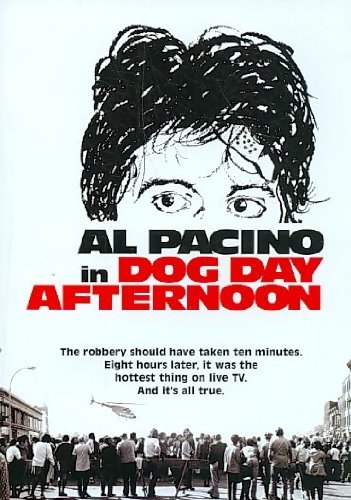
John Wojtowicz attempted to rob a bank in Brooklyn in August 1972, and gave his reason as paying for surgery for his lover, Liz Eden. This was filmed as Dog Day Afternoon, 1975, with the lover called Leon, and presented as a mid-70s gay stereotype, who has been informed by the shrinks that he is a woman trapped in man's body. Wojtowicz sold his story to Warner Bros. for $7,500 and 1% of the net profit. He had to sue (from prison) to get it. He gave Liz $2,500 for the operation, which she had in 1973. Liz also sued Warner Brothers for libel.
See also trans persons with a famous father.
07 July 2016
Carla Sawyer (192? - ?)
In 1949, Carla was arrested in Los Angeles under the 1922 municipal
anti-masquerading law. This was a year before two lesbians, in separate cases,
challenged the Los Angeles anti-masquerading law, and in both cases the courts
declared that cross-dressing alone did not constitute guilt under the ordinance
unless there was further intent to conceal one's identity. However the police
force and the local politicians simply ignored these two rulings.
Carla later wrote “I didn’t think there were any other transvestites in the world, until after my arrest”. Because of publicity in the press she received letters from and met others. From these she learned of the possibility of changing sex.
A few years later Louise Lawrence encouraged her to write to Harry Benjamin.
This led to her being involved in a study of transsexuals by Federick G Worden & James T Marsh. In 1954 Carla participated hoping that it would lead to approval for her surgery. However they interviewed her without bothering to read the six-page letter she had provided, and did not provide the desired approval.
Carla then had an encounter with Robert Stoller, then new to the field, who attempted to reverse her ‘sexual tendencies’.
Finally Benjamin helped her obtain surgery in Mexico.
On p187 Meyerowitz says that Sawyer had surgery in Mexico, but on p163 she talks of the difficulty of her surgery with Elmer Belt.
_________________________________________
Carla later wrote “I didn’t think there were any other transvestites in the world, until after my arrest”. Because of publicity in the press she received letters from and met others. From these she learned of the possibility of changing sex.
A few years later Louise Lawrence encouraged her to write to Harry Benjamin.
This led to her being involved in a study of transsexuals by Federick G Worden & James T Marsh. In 1954 Carla participated hoping that it would lead to approval for her surgery. However they interviewed her without bothering to read the six-page letter she had provided, and did not provide the desired approval.
Carla then had an encounter with Robert Stoller, then new to the field, who attempted to reverse her ‘sexual tendencies’.
Finally Benjamin helped her obtain surgery in Mexico.
-
Federick G Worden & James T Marsh. “Psychological Factors in Men Seeking
Sex Transformation: A Preliminary Report”. Journal of the American Medical
Association, 157, 15, April 9 1955: 1292-8.
- Joanne Meyerowitz. How Sex Changed: A History of Transsexuality in the United States. Cambridge, Ma, London: Harvard University Press, 2002: 156, 157, 163, 187.
On p187 Meyerowitz says that Sawyer had surgery in Mexico, but on p163 she talks of the difficulty of her surgery with Elmer Belt.
_________________________________________
Subscribe to:
Posts (Atom)