This site is the most comprehensive on the web devoted to trans history and biography. Well over 1800 persons worthy of note, both famous and obscure, are discussed in detail, and many more are mentioned in passing.

There is a detailed Index arranged by vocation, doctor, activist group etc. There is also a Place Index arranged by City etc. This is still evolving.

In addition to this most articles have one or more labels at the bottom. Click one to go to similar persons. There is a full list of labels at the bottom of the right-hand sidebar. There is also a search box at the top left. Enjoy exploring!

18 September 2012

Druids’ Hall, 26 July 1854

The hall, owned by the Ancient Order of Druids, was let over a period of 18 months during the Crimean War to a Mr Harris.  On the night of 26 July 1854, the event was a bal masqué.

Joseph Brundell of the city police had been on duty over the 18 months near Druids’ Hall and had noticed men attending in female attire.  He reported this to his sergeant, and was told not to interfere unless he saw ‘disgusting conduct’ in the public street.

Inspector Teague reported the next day:
From information I received relative to the frequent congregation of certain persons for immoral practices at the Druids'-hall, I proceeded thither in company with Sergeant Goodeve about 2 o'clock this morning. I saw a great many persons dancing there, and among the number were the prisoners, who rendered themselves very conspicuous by their disgusting and filthy conduct. I suspected that the prisoners and several others who were present in female attire were of the male sex, and I left the room for the purpose of obtaining further assistance, so as to secure the whole of the parties, but when we got outside Campbell came out after us, and, taking us by the arms, was about to speak, when I exclaimed, "That is a man," upon which he turned round and ran back immediately to the Druids'-hall. I returned and took Campbell into custody and observing Challis, whom I have frequently seen there before, behaving with two men as if he were a common prostitute, I took charge of him also.
John Challis, 60, wearing 'the pastoral garb of a shepherdess of the golden age', and George Campbell, 35, a lawyer, “completely equipped in female attire of the present day”, were arrested with on the charge of disguising themselves as women with the purpose of exciting others to commit an unnatural offence.

Madeleine Vincent said, she attended to the refreshment department in the ballroom, and saw the prisoners there, but saw nothing disgusting in their conduct, and never told the police that she had. She had said their conduct was disgraceful because they made such a noise, but that was the only impropriety she saw or complained of.

The landladies of all the different lodgings occupied by Challis during the last 12 months came forward and stated that they always considered his character irreproachable; but that he had a sort of mania for masquerades.
Sir R.W.Carden [magistrate] -  I was informed by your own bail that your object in visiting Druids'-hall was to see vice in all its enormity, in order that you might correct it from the pulplit, and he said that was the excuse you made for going to such places.

Campbell - It is a quite a mistake. I certainly did wish to see a little of London life without mixing with its abominations.

Sir R.W.CARDEN - And you thought that dressing yourself in women's attire was the best way of avoiding those abominations? I must say it was a very imprudent course . . . . I certainly hope you now see the folly of indulging in such extraordinary freaks, as you term them, and that you deeply feel how degrading it is to a man of education . . . to be placed in such a position. . . . However, under the circumstances, I am willing to believe it was nothing more than an act of the grossest folly, and that you now sincerely repent your imprudent conduct.
  • The Times, 27 July, 1 August, 2 August.  1854.  Online at: www.victorianlondon.org/sex/mencrossdressing.htm.
  • Thomas Boyle. Black Swine In The Sewers Of Hampstead: Beneath The Surface Of Victorian Sensationalism. London: Hodder & Stoughton 1989. New York: Viking 1989: 11.
  • H. G. Cocks. Nameless Offences Speaking of Male Homosexual Desire in Nineteenth-Century England. London: I.B. Tauris, 2003: 69-70.

16 September 2012

Florencia Trinidad (1976 - ) actress, performer.

Roberto Carlos Trinidad was born in Resistencia, Chaco. His mother died when he was two, and the family moved to Buenos Aires. Roberto started transition at age 17, first as Karen and then, at her boyfriend’s suggestion, as Florencia.

She did a degree in fashion design at the Universidad Nacional del Nordeste, and worked as a designer and promoter. In addition she met Cris Miró who helped her get started in show business, and she replaced Cris at the Tabaris theatre using the name Florencia De La Vega, later shortened to Florencia De La V. as there is a lawyer of the same name.

This led to small parts in telenovelas and variety shows on Argentinean television. Her biggest role has been in Los Roldan, 2004, a hit across the Americas, where she played a transvestite in a family that inherits a company and a mansion from an old woman whom they had helped when she was on the verge of suicide.

Since 2005 she has written a column for the magazine Paparazzi.

In 2010 she was legally recognized as female, and changed her legal name, the first to do so in Argentina. She married a dentist, her partner since 1998, in 2011, and she and her husband had twins via a surrogate later that year.
 ES.WIKIPEDIA  EN.WIKIPEDIA    IMDB

14 September 2012

Bert Martin (1879 - ? ) farm worker, inmate

Berta Martin was born in Nodaway County, Missouri. As cousin Nancy Martin put it when interviewed in 1900: “she had many attributes of a male person and other peculiar characteristics”. Nancy attributed this strangeness as “owing to her mother having been badly frightened by a bear while hunting berries in Missouri a few months before the child was born”. From prison Martin remembered that as a youngster she felt that she was “not more than half a woman”.

Image from Nebraska State Historical Society
Martin grew up and became a man, Bert. He worked for a cattle-dealing firm, until he arrived at a farm in Ashland, Nebraska. He signed on as a farmhand, and soon the farmer’s daughter Lena was found to be pregnant.  In late 1899, Bert and Lena were married, and the next February they had a child, Dewey.

In 1900 Bert was arrested and convicted of horse stealing. After eleven months in the Nebraska penitentiary, his cell-mate spoke to a guard that he suspected Martin of being a woman. The officials investigated, redressed Martin accordingly and transferred him to the women’s section. The press and public wondered how this could have happened as all new arrivals at the prison were required to strip for a bath and an inspection. The prison physician became the butt of many jokes, and journalists dug up the information that the new arrivals were allowed a towel for modesty’s sake. Several of the press accounts refer to the prisoner as Lena.

Early in 1902, the Governor of Nebraska, Ezra Perin Savage, called the prisoner “a sexual monstrosity, unfit for association with men or women ... and that prison morals imperatively demanded its removal”. He commuted Martin’s sentence to 18 months on condition that she promised to be honest, and had him released immediately.

Bert’s marriage to Lena ended. Lena’s parents moved to Iowa , and took Dewey with them. Bert remarried in about 1907 and they they had at least two children.
  • “Horse Thief was a Thief-ette”. The Nebraska State Journal, Oct 4, 1901.
  • “Convict a Woman”. Lima Times Democrat, Oct 4, 1901.
  • “Woman Convicted as Man: Her Sex Discovered Only After She Had Remained in the Penitentiary Eleven Months”. Daily Iowa State Press, Nov 1, 1901.
  • “Pardons Disguised Woman”. Fort Wayne News, Jun 23, 1902. All the above online at: http://yesteryearsnews.wordpress.com/2010/07/22/horse-thief-was-a-thief-ette.
  • Peter Boag. Re-Dressing America's Frontier Past. Berkeley: University of California Press, 2011: 60, 86-9.
____________________________________________________________

None of Nodaway County, Ashland and Nebraska penitentiary list Bert Martin as a prominent resident on their Wikipedia pages.

12 September 2012

Cris Miró (1965 - 1999) performer, dentist.

Gerardo Virguez, the son of a retired military officer, studied dentistry at the Universidad de Buenos Aires. He also performed in nightclubs and discos, sometimes as a travesti, Cris Miró.

He he was discovered and was offered a position as a showgirl at the Tabaris theatre. He was a
woman on and off stage, and the producers said nothing. When it later came out that Cris Miró was not a woman, Cris became the first Argentinian travesti to become a star.

Cris was in the 1991 film, Dios los cría, and La peste, 1992. He was tempted to work in Spain, when he was cast again in a show at the Maipo theatre.

In 1997 he developed medical problems, and he died aged 31.
ES.WIKIPEDIA  

09 September 2012

Vita Sackville-West (1892 - 1962) writer, aristocrat.

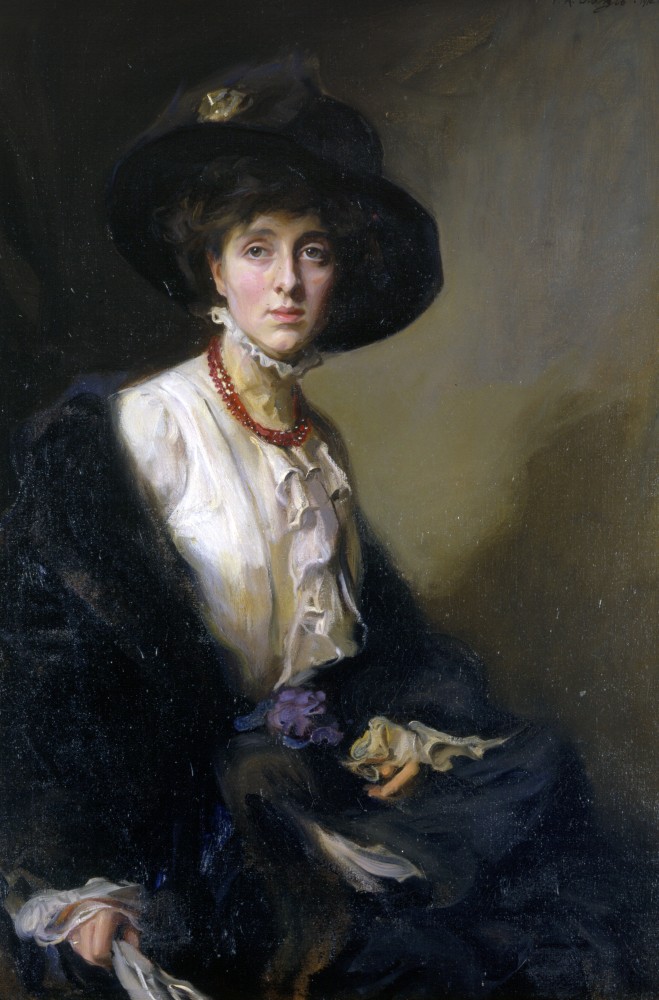
Vita Sackville-West by Philip de László, 1910
Victoria Mary Sackville-West was born at Knole House in Kent, the only child of Lionel Sackville-West, and his cousin Victoria, the daughter of his uncle, also Lionel, the 2nd Baron Sackville and Pepita, a Spanish dancer. Victoria Mary was usually known as Vita, to distinguish her from her mother. In 1908 the elder Lionel Sackville-West died, and his eldest son, Ernest claimed the Barony, but the English courts declared that he and his siblings were all illegitimate. The younger Lionel thus became the 3rd Baron Sackville.

In 1913 Vita married Harold Nicolson, the 3rd son of the 1st Baron Carnock, of HM Diplomatic Service, which made her the Honourable Lady Nicolson. It was Nicolson’s duty in August 1914, to hand Britain’s declaration of war to the German ambassador. He served at the 1919 Paris Peace Conference and was appointed Companion of the Order of St Michael and St George.

In the closing months of the Great War and for some years afterwards Vita conducted a passionate affair with her childhood friend Violet Keppel, daughter of the old king’s mistress.  Violet would soon marry Denys Trefusis. Vita took the name Julian, and put a khaki bandage around her head, which in the immediate aftermath of war was not uncommon, and browned her face and hands. She was successful in this persona - being tall was an advantage. Julian and Violet travelled to Cornwall, Paris and southern France. The two husbands pursued in a private plane, and the press picked up on the story.

In 1924, Vita published Challenge, a novel, based on their affair, with herself as Julian Davenport the leader of a revolution on a Greek island. His cousin Eve (Violet) joins him as his lover but becomes jealous of his attachment to the island. The book was published in the States only, for Vita’s father found the portrayal obvious enough to identify his family. In the real world, Julian and Violet broke up because the latter had sex with her own husband.

Vita and Harold remained in a loving marriage relationship despite, or because, they both conducted same-sex relations with others. They had two sons. Both their fathers died in 1928. Knole and the Sackville Barony went to Lionel’s brother Charles.

Vita as Orlando, 1928
In the late 1920s, Vita had an affair with Virginia Woolf, who immortalized Vita by imagining her as the gender-switching protagonist of the novel Orlando, 1928.

In 1926 and again in 1933 Vita won the Hawthornden Prize for her long narrative poems. She is the only person to win the prize twice.

In the early 1930s Vita had an affair with Gwen St Aubyn. In the novel, Dark Island, she wrote herself into both the jealous husband, Venn, and his secretary, Christina, as they compete for Shirin, Vita’s real-life name for St Aubyn.

In the 1930s Vita and Harold acquired Sissinghurst Castle in Kent. Sissinghurst is now owned by the National Trust and its gardens are the most visited in England. Gordon Langley Hall, the child of servants on the estate later emigrated to the US where she made a very public transition as Dawn Langley Simmons.

Vita at Sissinghurst 1955
In 1947 Vita was made a Companion of Honour for her services to literature. The same year she began a weekly column in The Observer called “In your Garden”. In 1948 she became a founder member of the National Trust's garden committee. She also published books on travel and literary topics.

In her last novel, No Signposts in the Sea (1961), she denies what we now know her for by having the main character, Laura, muse:
“Perhaps a relationship between two women must always be incomplete--unless, I suppose, they have Lesbian inclinations which I don't happen to share. Then, or so I have been given to understand, the concord may approach perfection.”.
Her fifty-five books include seven collections of poems and stories, twelve novels, and twenty-two works of nonfiction.

She died of stomach cancer in 1962. Harold died six years later.
  • Vita Sackville-West. Challenge. New York: George H. Doran 1924. London: Collins 1974
  • Virginia Woolf Orlando: A Biography. London: Hogarth Press 1928.
  • Vita Sackville-West. The Dark Island. Hogarth Press, 1934.   
  • Nigel Nicolson. Portrait of a Marriage. New York: Atheneum, 1973.
  • “Virginia Woolf and Vita Sackville-West”.  http://kaykeys.net/passions/virginiawoolf/virginiaandvita.html


 GLBTQ    EN.WIKIPEDIA  WORLDCAT  AMAZON.CO.UK


____________________________________________________________

The Wikipedia article comments “The Sackville family custom of following the Salic rules of agnatic male primogeniture prevented Vita from inheriting Knole on the death of her father”.  It was hardly a family custom, it was standard practice. The Wiki authors imply that she would have inherited Knole and the barony otherwise.  However if the custom were not observed,  Pepita’s son, Ernest would have been the 3rd Baron.

Like Dorian Gray, Vita kept the 1910 portrait by Philip de Laszlo in her attic, although not with the same results.

Vita dabbled with transvestity in her 20s but then gave it up.  If she were not so famous in literary circles we would not be considering her as a transvestite.

Dawn Langley Simmons used the name Pepita, precisely because it was the name of Vita's grandmother.

04 September 2012

Roberto Farina (1925–) plastic surgeon.

Roberto Farina was professor of plastic surgery at São Paulo Medical School.

In 1971 he performed the first transsexual operation on Waldirene Nogueira. In 1975 she applied for rectification of her entry in the São Paulo Civil Registry. Her application was denied, and the incident drew attention to her physical condition.

In 1976 João Nery was referred by Dr Cesar Nahoum and clandestinely Dr Farina performed a mastectomy and hysterectomy.

Attention to Waldirene Nogueira led to Dr Farina being charged, convicted and sentenced to two years imprisonment for serious bodily injury. This interrupted Farina’s intention to perform phalloplasty on João Nery. On appeal in 1978, the judge ruled that the surgery was the only way to assuage the patient’s suffering, the board of the Hospital das Clínicas de São Paulo was in favour of the surgery, and no deception was practiced by Dr Farina. A year later, the 5th Câmara do Tribunal de Alçada Criminal de São Paulo confirmed the appeal and ruled that such surgery was not forbidden by Brazilian Law or by the Code of Medical Ethics.
  • Roberto Farina. Cirurgia plastica e reparadora. Sao Paulo: Grafica Sao José, 1965.
  • Roberto Farina. Transexualismo: do homem à mulher normal através dos estados de intersexualidade e das parafilias. São Paulo, Brazil: Escola Paulista de Medicina, 1982.
  • “Discrepancies Surround Story About War Criminal’s Body: Plastic Surgeon Compares Photos”. The Victoria Advocate, June 10, 1985. http://news.google.com/newspapers?nid=861&dat=19850610&id=OCZSAAAAIBAJ&sjid=vTUNAAAAIBAJ&pg=1167,4978469.
  • Roberto Farina. Cirurgia plástica urogenital. Loja: Livraria Editora Santos, 1987.
PT.WIKIPEDIA

01 September 2012

John (1918 - ?) truck driver.

Frank was raised in a Baltimore orphanage. It was known that he was ‘physically abnormal’, and at age 7 he was diagnosed with hypospadias and undescended testicles, and taken to the Johns Hopkins Hospital. The doctors, including Hugh Hampton Young, found a vagina, uterus, left ovary and Fallopian tubes, and decided that the child was definitely female. What had previously been seen as his penis was now declared to be an enlarged clitoris.

The child’s guardians were informed and Frank became Frances. Two years later Frances returned to Johns Hopkins with the complaint that she felt pressure to keep her clitoris hidden. It was mentioned that she had a “terrible habit” of masturbation. It made sense to the doctors that her clitoris should be removed, and they did so remarking that it was the size of a penis of a boy of the same age.

Frances next returned four years later at age 16, complaining of a mass in her lower abdomen. She had announced that when she turned 18 she would assume male attire and learn a mechanical trade. She was already 5’11” (1.8 m) and 125 lb (57 kg). She had beard growth on her chin and the ‘mammary regions were entirely masculine’, although her pubic hair was female in distribution. This time surgery found testicular tissue. Given that the damage had been done four years earlier, they excised all the testicular tissue and a rudimentary vas deferens.

The patient was last heard of in 1935. He had changed his name to John, and was working as a truck driver. He was reportedly happy.
  • Hugh Hampton Young, Genital Abnormalities, Hermaphroditism & Related Adrenal Diseases. Baltimore: The Williams & Wilkins company, 1937: 84-91.
  • Elizabeth Reis. Bodies in Doubt: An American History of Intersex. Baltimore: Johns Hopkins University Press, 2009, Paperback 2012: 93-5.
--------------------------------------------------------------------

 Dr Young finishes his account by speculating: 'If implantation of ovaries ever becomes successful in the human should this be done?'  He was still not accepting John's decision to be a man.  I think that we can assume that he knew about the failure to implant ovaries into Lili Elvenes (Elbe) as the English translation of Man into Woman had been available since 1933.