This site is the most comprehensive on the web devoted to trans history and biography. Well over 1800 persons worthy of note, both famous and obscure, are discussed in detail, and many more are mentioned in passing.

There is a detailed Index arranged by vocation, doctor, activist group etc. There is also a Place Index arranged by City etc. This is still evolving.

In addition to this most articles have one or more labels at the bottom. Click one to go to similar persons. There is a full list of labels at the bottom of the right-hand sidebar. There is also a search box at the top left. Enjoy exploring!

13 March 2012

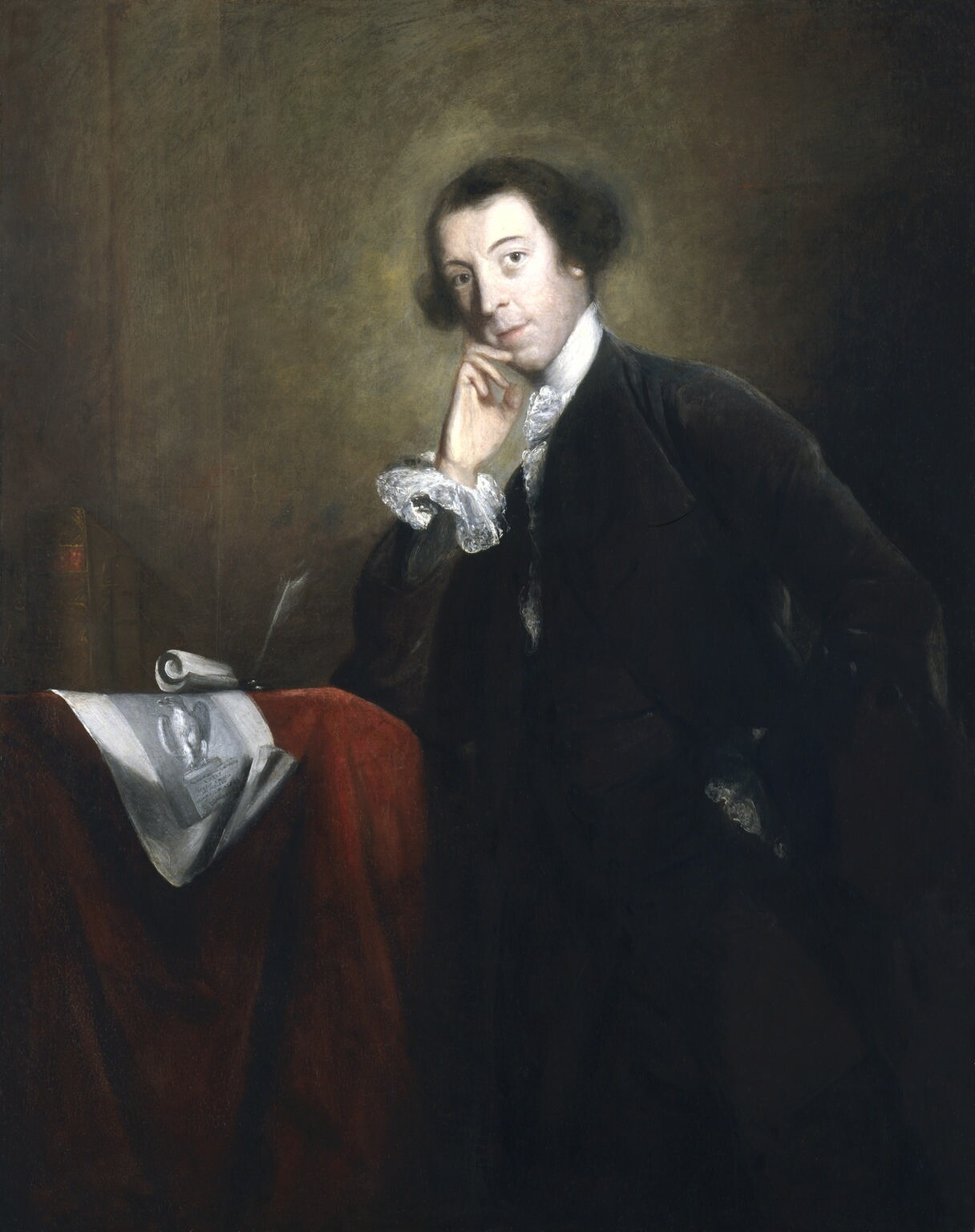
Horace Walpole (1717 - 1797) Member of Parliament, writer.

Horace was the youngest son of Prime Minister Robert Walpole (1676-1745) and a cousin of the future naval hero, Horatio Nelson (1758-1805). He was educated at Eton and King’s College, Cambridge, although he left without a degree. His mother died in 1737.

His father arranged three sinecures for him with a total income of £3,400 a year. Despite that, he took off for a two-year Grand Tour of Europe with his friend from Eton, Thomas Gray, the future poet. They fell out in Florence, and made their own way. Horace never married nor was ever said to have a mistress. Historians are divided about whether he should be regarded as gay.

On return in 1741 Horace was given the Parliamentary seat of Callington, Cornwall. He held the seat for thirteen years without ever visiting the constituency.

Horace liked to dress as an eroticized older woman, a role that he wore at masquerade balls. In 1742 he wrote to Horace Man: “I was last week at the masquerade dressed like an old woman, and passed for a good mask”, and Lady Hervey described him as afterwards standing for a hour in “stays and underpetticoats’ before his footman. (Correspondence, I(17), 359).

Robert Walpole died of gout in 1745 and left Horace the office of Collector of the Customs, worth £1,000 a year. Walpole and Gray resumed their friendship in 1745, the year of the Jacobite Rising.

In 1751 Horace’s elder brother, Edward (1706-84), was indicted for buggering a servant, based on the say so of a gang of blackmailers.  He was able to obtain a verdict of not guilty and proceeded to prosecute three of the gang for conspiracy to extort. They were sentenced to the pillory and to 2-4 years imprisonment.

Horace was Member of Parliament for Castle Rising 1754-7, and then for King’s Lynn till 1768.

Walpole is credited with coining the word ‘Serendipity’ in 1754 after reading Michele Tramssino’s The Three Princes of Serendip. By this time, despite being ectomorphic and eating little, he had started to suffer from gout.

He is the author of The Castle of Otranto, which is taken to be the first Gothic Novel. The first edition, 1764, was published anonymously on his own printing press.

In 1770, Horace was one of the first to receive the gossip from Paris that Charles d’Eon was a woman.

Walpole was a lifelong Whig supporting the Hanoverian Monarchy. He was quoted as saying: “This world is a comedy to those that think, and a tragedy to those that feel”.

Robert Walpole had been created Earl of Orford in 1742. The title passed to his eldest son, also Robert in 1745, and then to his son who died unmarried in 1791, and, Edward having already died with only illegitimate daughters, the title fell to his uncle Horace, who also had no issue.

After Mary Wollstonecraft published her A Vindication of the Rights of Man in reponse to Edmund Burke's Reflections on the Revolution in France, Walpole put her down as "a hyena in petticoats" for attacking  Marie Antoinette, in that she like most commentators deplored Burke's theatrical pity for the french Queen.  He was saying that it was unnatural for a woman to write a book.

In his later years, Horace became so infirm that his secretary wrote his letters.

The apparent canard that Edward Hyde, Lord Cornbury, dressed as Queen Anne while Governor of New York and New Jersey 80 years before, was told by Walpole in an evening of gossip in 1796.

Walpole died of gout aged 79. He left voluminous correspondence which was published in 44 volumes, and are frequently consulted by historians of the period. He left his wealth to Anne Damer, a sculptress who was known for her cross-dressing.
  • Horace Walpole. The Castle of Otranto A Story. London: Printed for Tho. Lownds, 1765.
  • Arthur J Viseltear. “The Last Illnesses of Robert and Horace Walpole”. The Yale Journal of Biology and Medicine, 56, 1983: 131-152.
  • Terry Castle. Masquerade and Civilization: The Carnivalesque in Eighteenth-Century English Culture and Fiction. Stanford, Calif: Stanford University Press, 1986: 64, 73-4, 354.
  • Rictor Norton. Mother Clap's Molly House: The Gay Subculture in England, 1700-1830. London: GMP, 1992: 95-6, 139, 234-5.
  • Gary Kates. Monsieur D'Eon Is a Woman: A Tale of Political Intrigue and Sexual Masquerade. New York: Basic Books, 1995: 9, 180, 182, 256.
  • Patricia Updegraff Bonomi. The Lord Cornbury Scandal: The Politics of Reputation in British America. University of North Carolina press, 1998: 14-16.

 EN.WIKIPEDIA     GLBTQ    GAYFORTODAY  
_________________________________________________________________________________

Was Walpole a transvestite?  Even though the verb form, to transvest, was a well established word in eighteenth-century English, the question would not make sense to eighteenth-century Londoners.  Transvesting was something that one did, not what one was.   Even though they were starting to talk of a sodomist as a type of person superceding the previous usage that sodomy was something that one did, without an implication of being a type of person, the same progression had not happened with transvesting as such, even though some who transvested were by then regarded as 'mollies'.  However there is no record of Walpole being in a molly house, and his being an aristocrat it is almost unthinkable that he would be regarded as a molly.

11 March 2012

Amelia Gourlay (183? - 1871) soldier, thief, murderer.

Georges Michande was a soldier with the Chasseurs d’Afrique in the early 1860s. He was noted as a barrack-room entertainer, and also as a thief. He was also fluent in Arabic. Eventually he strangled a sergeant and disappeared with the regimental pay. It was assumed that he perished in the desert, but there was a rumour that he seduced an Algerian dancing girl, murdered her and took her clothes. As a dancing girl Michande proceeded to Algiers, and from there to France. In Paris Michande became Amelia Gourlay and made a living as a singer.

In 1865, Jacques Letoard, a young bank clerk stole a large amount of money which he converted to £1,000 (£75,000 in modern money) and back again to Francs so that it could not be traced. During a taxi ride his tall, fair female companion popped out to enter a café. She never came back and the driver discovered that M. Letoard was dead, strangled.

Two years later, an elderly Italian named Corso arrived at a hotel in Lyons with a tall dark lady. The next morning the gentleman was found strangled, and the lady and his money had disappeared.

In May 1870, some weeks before the outbreak of war, Amelia was arrested on suspicion of soliciting. As she was unable to give a satisfactory account of herself, more enquiries were made and eventually she was identified as George Michande. The woman sought after the deaths of Letoard and Corso was not found in that Amelia had reverted to her male persona. Despite the disruptions caused by the Prussian siege and occupation, she was obliged to revert again to being Michande and was executed by guillotine.
  • “George Michande. The Miscreant who lived as a Woman in order to Rob and Murder”. London Life, March 4th, 1916: 6. Reprinted in Peter Farrer. Cross Dressing between the Wars: Selections from London Life, 1923-1933. Garston: Karn, 2000: 236-8.

09 March 2012

Marshall S. Pike (1818 - 1901) performer, songwriter.

Marshall was born in Westborough, Massachusetts. By age 14 he was writing verses and music.

He started his female impersonation career in white-face and flaxen wig: in 1843 he was a member of a troupe called The Albino Family.

Thomas Dartmouth Rice had pioneered black-face performance but without cross dressing. Pike and his colleagues added the latter and became The Harmoneon Family, later The Harmoneons. As such they appeared in 1847 at the White House in Washington before President James Polk. Slide says that this makes Pike, who was playing Fanny, the first female impersonator to perform for the US President.

After his Washington triumph, Pike joined Ordway's Aeolians in Boston, and in 1857 left to form his own troupe, Pike's Harmoneons.

Pike in the 1880s
With the advent of the US Civil War, he became Drum Major of the 22nd Massachusetts Voluntary Infantry. He was taken prisoner in 1861 at the battle of Gaines’s Mill and sent to Libby Prison where he formed a Glee Club.

He was also active as a legitimate actor, and wrote more than one hundred songs.
  • Anthony Slide. Great pretenders: a history of female and male impersonation in the performing arts. Lombard, Ill.: Wallace-Homestead Book Co., 160 pp. 1986: 16.
  •  William J. Mahar.  Behind the Burnt Cork Mask: Early Blackface Minstrelsy and Antebellum American Popular Culture. Urbana: University of Illinois Press, 1999: 316.
_________________________________________________________________________________________________________

For whatever reason the Wikipedia article on Pike mentions neither that he was a black-face performer nor that he was a female impersonator.

And also, Pike is hardly mentioned in John Strausbaugh's otherwise excellent Black Like You: Blackface, Whiteface, Insult & Imitation, 2006.

07 March 2012

Rusty Mae Moore (1941– 2022) professor of international business.

Moore’s first marriage at 21 to a woman lasted for 10 years and they had a daughter; a second marriage produced two children. As a teacher of international business, Moore became associate dean at Hofstra University on Long Island. He also won a Fulbright scholarship to teach at the Fundação Getúlio Vargas, in São Paulo.

Her increasing desire to be a woman led to a marriage breakup as she entered her forties. In 1992 she met Chelsea Goodwin in a transsexual support group, and went to the New York drag clubs together. Moore was dressing as female more and more. In 1993 Rusty announced to the Hofstra officials that she would be living as a woman from the fall semester.

Until 1994 they and Julia Murray, who transitioned at the same time as Rusty, shared an apartment in Long Island. Then Rusty purchased a house in Park Slope, Brooklyn, New York. Despite abuse from the immediate neighbor, the man's wife became very friendly. In 1995 both Rusty and Chelsea flew to Belgium and had genital surgery from Dr Michel Seghers.


They welcomed half-a-dozen other trans persons including Kristiana Th’mas, a Workers’ World Party photographer and later Julia’s spouse Sylvia Rivera to share what they called Transy House.  Sylvia regarded Transy House as a continuation of the STAR House (run by Street Transvestite Action Revolutionaries) of the early 1970s. They would go as a group to the drag club, Sally’s II in Times Square, where they were considered as a ‘house’ in the Paris is Burning sense. Those at Transy House without any other employment did telemarketing for trans artists and others.


When Dr Leo Wollman died in 1998, his widow donated his papers and other material to Transy House which established the Wollman Archives of Transgender History and Culture. The next year year Lee Brewster donated his extensive library. Rusty was chairperson of Metropolitan Gender Network, and active in the New York Association for Gender Rights Advocacy and other groups.


Rusty later ran a bookstore in Pine Hills in the Catskill Park, in upstate New York.

She died age 81.


05 March 2012

Thomas Baker (1680 - 1749) milliner, playwright, molly, lawyer, schoolteacher, vicar

Baker was said to have been educated at Oxford. Between 1701 and 1708, when the London stage was in transition from the bawdyness of Restoration comedy to a new sentimental and moralistic style, four of his plays were performed in London: The Humour of the Age, 1701, Tunbridge-Walks, 1703, An Act at Oxford, 1704, revised as Hampstead Heath, 1705, The Fine Lady’s Airs, 1708.

Tunbridge-Walks was the most successful, and also the least bawdy. In the 1778-83 Encyclopedia Britannica and the 1782 Biographia Dramatica, David Baker (not known to be a relative) was of the opinion that Baker had in Tunbridge-Walks written the molly character, Maiden, based on himself, intending to place his own failings in a ridiculous light for the purpose of warning. For this reason, Trumbach regards Baker as the first molly that we know of. Maiden has what at that time were regarded as female accomplishments: he can sing, dance, play the guitar. He can also dress a woman in that he was once an apprenticed to a milliner. He likes women’s company but has never had sex with a woman. He and his friends gather in his chamber and dress and play as women. He “[loves] mightily to go abroad in Women’s Clothes,” especially to the theatre.

Baker is also credited as being Mrs Crackenthorpe who wrote in the tri-weekly satirical periodical, The Female Tatler, 1709-10. According to a rival paper, The British Apollo, Baker suffered a beating after a prominent London family was ridiculed in The Female Tatler, and Mrs Crackenthorpe ceased writing soon afterwards because of an “Affront offer’d to her by some rude Citizens, altogether unacquainted with her Person”.

After this Baker disappeared from the London literary scene. He acquired a position in Bedfordshire where he worked as a schoolmaster and vicar. After his death, said to be of the skin disease, morbus pediculosus, his successor wrote of him: “Baker was a man of strange turn, imperious and clamorous upon topics of no service towards the promoting of true religion in his parish and not a little addicted to stiff and dividing principles”.

*Not Tom Baker, also of Tunbridge Wells, the fourth Dr Who.

03 March 2012

“Transgender” in The No-Nonsense Guide to Sexual Diversity, 2001–a review

I think that the first reaction of most of my readers will be to note the book title, and as it has a Transgender chapter to ask that the book be renamed to say Sex and Gender Diversity.

Vanessa Baird is a journalist-editor with the Oxford-based New Internationalist, which is a publisher particularly concerned with what used to be called the third world, and with diversity as a human-rights issue.   This international focus is certainly the book’s strength; an healthy alternative to the far too-common North-American-Western-Europe focus.  It was quite adventurous for Vanessa to write the entire book rather to get different authors for each chapter.  Like the older type of academic Vanessa does not care to situate herself within the sex-gender spectrum.

The ‘Transgender’ chapter is a mere 17 pages.   So one cannot expect thoroughness.  One quickly notices that Baird is jumping back and forth between intersex and transgender topics.    She uses ‘transgendered’, but then so did we all in 2001.  However she still uses ‘berdache’ a full decade after 1990 First Nations Gay and Lesbian conference in Winnipeg that asked us to use ‘two-spirit’ instead.    In the 2007 revision the chapter is retitled ‘Transgender and intersex’, but she still uses ‘berdache’.

After an introductory section on the varieties of trans, Baird discusses the Guevotes (penis-at-12) families in the Dominican Republic, Imperato-McGinley’s biologistic interpretation and Gilbert Herdt’s social construction rejoinder.  She then jumps to John Money and the unfortunate boy that we now know as David Reimer.  She was writing shortly before Colapinto’s As Nature Made Him so understandably neither David nor Colapinto are named (nor are they in the 2007 revision).  Next is the genital correction of intersex children and the usual Cheryl Chase biography.  Bo Laurent is cited in a footnote, and as was usual at that time, Bo and Cheryl are not identified as the same person.  Then the possible incongruence of chromosomes, hormones, gonads, genitals and internal organs, which leads to sex testing at the Olympics and, somewhat surprising, a quote from Stephen Whittle that transsexual is a type of intersex.  Then third gender persons: berdaches, especially Nadles, and hijras, and the kwolu-aatmwol of Papua, whom it is mentioned have 5-alpha reductase deficiency, as do the Guevotes.  Then the murders of Latin American trans women, especially prostitutes.  The last section is an upbeat praise of the transgender movement with mention of those proudly out, refusing to conform to the gender binary and choosing not to have surgery.  This section is spoilt by the canard that trans women are 1 in 12,000 and trans men 1 in 30,000.  Even before the Olyslager- Conway study in 2007, that established 1 in 500, it was apparent that 1 in 12,000 was a serious underestimate.

Recognizing  the constraints of space, what is seriously missing?  I would have liked a clear statement about the difference between intersex and transsexual and perhaps a quote from an intersex activist about transsexuals who want to be regarded as intersex.  I would have thought that British India Criminal Tribes Act of 1871 which called for the registration, surveillance and control of certain tribes, including Hijras was worth mentioning, as was the the large migration of mainly Brazilian prostitutes to Paris and then Rome in the late 1970s/early 1980s.  There is no mention of Corbett v. Corbett which redefined intersex and seriously reduced trans civil rights, at least in all the English-speaking countries.   The many positive rulings by the Council of Europe and the EU happened after 2007, let alone 2001, and so are understandably not mentioned.  None of the pioneer transsexuals are mentioned, so it is a special privilege that Chase is named.  On the other hand a passing mention of a murdered Venezuelan gives not only her name, but her boy name also.  Twice!  The 2007 revision should definitely have mentioned the 2004 Gender Recognition Act as an example of trans activism, but at that time it was not obvious that similar legislation would follow in Spain, Portugal and Argentina.  In the 2007 revision she might have mentioned the Blanchard-Bailey fracas, but given the orientation to the global south it is perhaps as well to leave it out.

Conclusion:
A reasonable but not great chapter, suitable for those who know nothing of the topic.  However anyone who has read in the field will find it too simplistic.

01 March 2012

Raphael Carter (? - ) writer

Raphael Carter was raised in Phoenix, Arizona, and in 1995 moved to Minneapolis.

Zir postcyberpunk novel The Fortunate Fall, 1996, was well received and was nominated for the John W. Campbell Award for Best New Writer.

Carter, who reportedly does not identify as either male or female, wrote "The Murk Manual: How to Understand Medical Writing on Intersex” which uses humorous definitions to express the anger that intersex persons understandably feel, e.g:
“female.
1. A male intersexual when the endocrinologist is through with him. 2. A female intersexual whom the urologist has not seen yet. ...
urologists.
Those benefactors of humanity who, with considerable difficulty, distinguish intersexed infant boys from intersexed infant girls. These infants, when grown, may with equal difficulty distinguish urologists from butchers.”
The next year zie wrote "Androgyny: Rarely Asked Questions" which revives some obscure words such as Arenotelicon, Salmacian, Scrat.  Zie calls zirself androgyne, epicene, neuter.
“People are usually upset at being given a choice, at least where gender is concerned; nothing stops a conversation cold like explaining that I don't care whether people call me he or she”.
However zie points out:
“The trouble is that we humans, strange beasts that we are, use the same language for taxonomy and identity. By describing ourselves we shape ourselves. All too easily, we become slaves to our self-definitions, so that we cannot tell when they have ceased to be true.”.
Carter’s short story, ‘Congenital Agenesis of Gender Ideation’ was shortlisted for the Theodore Sturgeon Award and won the James Tiptree, Jr Award in 1998. It tells of the discovery of a genetic condition, genagnosia, whose carriers cannot tell gender, but learn social cues so that they can fake such a telling.

Between 1998 and 2002 Carter maintained the Honeyguide Web Log, the second site ever that was named a weblog.
EN.WIKIPEDIA    WORLDCAT  AMAZON.COM