This site is the most comprehensive on the web devoted to trans history and biography. Well over 1800 persons worthy of note, both famous and obscure, are discussed in detail, and many more are mentioned in passing.

There is a detailed Index arranged by vocation, doctor, activist group etc. There is also a Place Index arranged by City etc. This is still evolving.

In addition to this most articles have one or more labels at the bottom. Click one to go to similar persons. There is a full list of labels at the bottom of the right-hand sidebar. There is also a search box at the top left. Enjoy exploring!

29 January 2022

Paul B Preciado (1970 - ) philosopher

Preciado, born in Burgos in northen Spain was raised and educated as Beatriz, and having earned a Fulbright Fellowship, at the age of 28 and generally taken to be a queer lesbian, took Philosophy and Gender Theory at the New School for Social Research in New York studying with Agnes Heller and Jacques Derrida. Her doctoral topic was 

“Saint Augustine’s conversion as a process of transsexuality: when converting, Augustine moved from a luxurious desire and a booming sexual activity to an ethical imperative of chastity and sexual self-renouncement”. 

She started to think of sexual plasticity as something that exceeded modern gender politics, and wanting to get deeper into the discourse on deconstruction, 

“I took my odd Augustinian topic from the New School to the School of Architecture at Princeton University. Entering the world of architecture meant a radical deferral of my philosophical practice. Though trained in constructivist theories of gender, I had never reflected about the very materiality of the performative processes of gender construction.”. 

This emerged as a PhD in Philosophy and Theory of Architecture: Pornotopía: Architecture and Sexuality in Playboy During the Cold War. (quotes from the Introduction to the English version of Countersexual Manifesto: 2-3)

In 1998 Preciado participated in a Diana Torr drag king workshop in New York, and later took Torr to France and Spain acting as the translator in the workshops.

Preciado’s first book was Manifeste contra-sexuel (2000) written while she was Princton working on her PhD and available initially only in French. It is posited as a disruption of feminism and of queer theory, and calls theorists such as Derrida, Foucault, Butler, and Haraway to task for not going nearly far enough in their attempts to deconstruct the naturalization of normative identities and behavior, and invokes countersexuality’s roots in the history of sex toys, pornography, and drag in order to rupture the supposedly biological foundations of the heterocentric regime. It was acclaimed by French critics as “the red book of queer theory” and became a key reference for European queer and trans activism.

Six years later Preciado provided the text for a series of photographs by the gender-variable Del Lagrace Volcano.

From 2005 to 2014 Preciado dated the writer and film-director Virginie Despentes, a woman with sex-work experience.

Preciado’s next book was Testo Junkie.  In French and Spanish 2008, English 2016. Preciado discusses the taking of self-administered testosterone, and how the body is politicised by "pharmacopornographic capitalism”. Taking testosterone is both political and performance, and Preciado discusses the changes and how they interact with the relationship with Virginie Despentes, and also deals with other drugs that transform the body such as birth control, Viagra, performance-enhancing drugs, Prozac, and estrogen.

Pornotopia, the book version of Preciado’s PhD dissertion came out in French in 2010 and in English in 2014. It was awarded a 2011 Prix Sade in France.

Preciado, in his mid-40s in 2014, announced that he was transitioning, and shortly afterwards that he had taken the name of Paul.

In 2018 the English translation of Countersexual Manifesto finally came out with a foreword by Jack Halberstam.
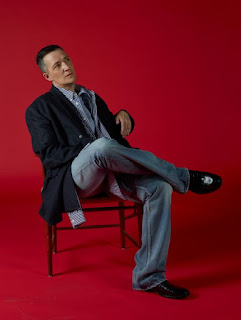

November 2019, Paul Preciado was invited to speak in front of 3,500 psychoanalysts at the annual conference in Paris of the École de la Cause Freudienne (Lacanian). Aware that most of those in attendance regarded him as a “mentally ill person” suffering from “gender dysphoria”, Preciado drew inspiration from Kafka's “Report to an Academy” in which a monkey tells an assembly of scientists that human subjectivity is a cage comparable to one made of metal bars. He touched on the homophobia and transphobia of psychoanalysis and spoke of its complicity with the ideology of sexual difference dating back to the colonial era. This he regarded as rendered obsolete by technological advances allowing us to alter our bodies and procreate differently. He called for a new psychoanalytic discourse allowing for a multiplicity of bodies without reducing the body to its sole heterosexual reproductive capability, and without legitimizing hetero-patriarchal and colonial violence. This was met with heckles and boos, and he was not permitted to finish. What he had said had been filmed on smartphones, was published online, where fragments were transcribed, translated, and published with little regard for exactitude.

Meanwhile he published An Apartment on Uranus: Chronicles of the Crossing. Despentes provided an Introduction. The book, mainly a collection of essays previously published in Libération, recounts the transformation from Beatriz into Paul B., but also considers political, cultural, and sexual transition, discussing issues from the rise of neo-fascism in Europe to the technological appropriation of the uterus, from the harassment of trans children to the role museums might play in the cultural revolution to come. 

“My trans condition is a new form of uranism. I am not a man. I am not a woman. I am not heterosexual. I am not homosexual. I am not bisexual. I am a dissident of the gender-sex binary system. I am the multiplicity of the cosmos trapped in a binary political and epistemological system, shouting in front of you. I am a uranist confined inside the limits of technoscientific capitalism.” (p29)

A year later Paul published the correct text of the unfinished address to the École de la Cause Freudienne, and followed that by Feminazis in which he discusses the insults from the “lords of colonial patriarchy”. 

“Since women speak for themselves, representatives of the old sexual regime have been so nervous that now they are the ones who are beginning to run out of words. Perhaps that is why the lords of colonial patriarchy have been digging into their necropolitical history books for insults to throw us in the face and, by curious chance, have chosen the one they always have at hand: nazi!”

Preciado was Head of Research of the Museum of Contemporary Art of Barcelona (MACBA) and Director of its Independent Studies Program (PEI) from 2011 to 2014. He has taught Philosophy of the Body and Transfeminist Theory at Université Paris VIII-Saint Denis and at New York University. From 2014 to 2017 he was Curator of Public Programs of documenta 14 exhibited in Athens and in Kassel Germany.  He participated in the LUMA Foundation, Arlès, France.

  • Beatriz Preciado translated to French by Marie-Hélène Bourcier. Manifeste contra-sexuel. Paris: Balland, 2000, 157 pp. An English version was issued 18 years later as by Paul B. Preciado translated by Kevin Gerry Dunn with a forward by Jack Halberstam. Countersexual Manifesto. Columbia University Press, 2018, xvi+216 pp.
  • Del LaGrace Volcano with text by Beatriz Preciado. Sex Works 1978-2005: From Love Bites to Postporn, Tübingen: Konkursbuch, 2006, 159 pp.
  • Beatriz Preciado, Testo junkie: sexe, drogue et biopolitique, Paris: Grasset & Fasquelle, 2008, 400 pp. English translation by Bruce Benderson. Testo Junkie: Sex, Drugs, and Biopolitics in the Pharmacopornographic Era. Feminist Press, 2013, 427 pp,
  • Beatriz Preciado, Pornotopía: arquitectura y sexualidad en Playboy durante la guerra fría, Barcelona: Anagrama, 2010, 220 pp. English translation Pornotopia: An Essay on Playboy’s Architecture and Biopolitics, Zone Books, 2014, 303 pp.
  • Paul B. Preciado with an introduction by Virginie Despentes. Un appartement sur Uranus: chroniques de la traversée.Paris: Grasset, 2019, 334 pp. English translation by Charlotte Mandell. An Apartment on Uranus: Chronicles of the Crossing. Semiotext(e), 2020, 263 pp. [8]
  • Paul B. Preciado, Yo soy el monstruo que os habla: Informe para una academia de psicoanalistas, Barcelona: Anagrama, 2020, 96 pp. English translation by Frank Wynne. Can the monster speak? a report to an academy of psychoanalysts. Semiotext(e), 2021.
  • Paul B. Preciado. Feminazis. Gato Negro, 2021.
  • Paul B. Preciado. Terreur anale. 2022.

-----

  • Diane Torr & Stephen Bottoms.  Sex, Drag, and Male Roles: Investigation Gender as Performance.  The University of Michigan Press, 2010: 165.
  • Rachel Santee. “Review: Testo Junkieby Paul B. Preciado, Translated by Bruce Benderson”. Akashic Books, September 17, 2013. Online.
  • Sarah K Hansen. “Paul B. Preciado, Testo Junkie: Sex, Drugs, and Biopolitics in the Pharmacopornographic Era”. philoSOPHIA, 6,1, 2016.
  • RL Goldberg. “Even This Review Is a Dildo: On Paul B. Preciado’s Countersexual Manifesto. LA Review of Books, February 16, 2019. Online.
  • Crispin Long. “Boundary Issues: In An Apartment on Uranus, Paul B. Preciado undermines geopolitical, technological, and gender binaries”. BookForum, July 30, 2020. Online.

EN.Wikipedia


22 January 2022

Hertha Wind (1897 - ?) office worker, Hirschfeld patient

Wind was born in Ludwigshafen am Rhein, across the river from Mannheim, and was raised with the name Adolf. 

With the start of the Great War in 1914, Adolf volunteered for the German Navy, was first assigned in the trenches in Flanders, but was then transferred to the SMS Friedrich der Große, a Kaiser-class battleship which survived the war intact. After the November 1918 Armistice the Friedrich der Grosse and most of the other German Kaiser-class ships were interned by the British Navy in Scapa Flow in the Orkney Islands, where the German Admiral had the fleet scuttled so that they could not be used by the British. The crews were interned on the islands before being returned to Germany. 

By this time Adolf had become an accomplished wrestler. After more time in the Navy, Adolf returned to Ludwigshafen, and found an office job with one of the companies that merged in 1925 to found I G Farben, which became the largest company in Europe and the largest chemical and pharmaceutical company in the world. Adolf also became well-known as a wrestler in the Mannheim area. 

In April 1923 Adolf married Elisabeth, and within two years they had two sons. In October 1928 Wind came down with a severe case of rheumatism that took months to get over. Afterwards Wind was a different person: 

“I started to take an interest in women’s clothes and dresses. I began to feel awkward at times when I mixed with my fellow men-workers.” 

Wind also took up knitting and did the family darning. Wind first wore female clothing at the Shrove-tide festival (Mardi Gras) as many men did. An attempt at suicide led to an explanation to Elisabeth. 

After an initial shock, Elisabeth was supportive and urged a consultation with doctors. Adolf spoke to the welfare department at I G Farben and they arranged a visit to Berlin to see Magnus Hirschfeld. Hirschfeld confirmed that Wind was becoming a woman, explained that an operation was possible and Wind was sent home to discuss the issue with Elisabeth. 

At last, in October 1931, Wind entered a clinic in Frankfurt for the first of seven operations and an experimental hormone treatment. It was felt that Wind belonged in neither the men’s nor the women’s wards, and room was found in the children’s ward. For the first time in her life Wind took an interest in children and was even assumed by a visitor to be the children’s nurse. 

Afterwards, back home, there was a problem with the two sons in who this strange woman was. The boys settled the issue by calling Wind “Tante” (=auntie). Wind took the name Hertha, and was said to be the sister of Elisabeth. Hertha left I G Farben who gave her a pension. Her co-workers gave her a leaving present of a fur coat. 

The Winds had previously run a small food shop below their flat as a sideline. Now Elisabeth mainly served in the shop while Hertha did the domestic work. However Wind’s legal position had not changed. In 1937 she was called up for reserve training with the Navy. On arrival she was assumed to be Frau Wind who had called to collect her husband’s papers. By luck the former captain of the Friedrich der Grosse was in the building, and Wind was able to explain to him, and he got the situation put right. 

However Hertha’s paper’s were still those of a man. Her doctor urged her to stage a showdown. She went to the public baths in Frankfurt and attempted to enter the men’s section, showing her id that said that she was a man. The kerfuffle seemed to be going nowhere, but a few months later she did receive official permission to wear women’s cloths, and the next year new identity documents but as Fraulein, not Frau. And she became Frau a year after that. 

In 1940, in the early stages of the new war, Elisabeth and Hertha applied to adopt a baby girl. After Hertha took a four-month Mothers’ Course and gained a diploma, they were permitted to do so. 

One of their sons died on the Russian front. They lost their home and all their belongings during an Allied bombing raid. 

Elisabeth and Hertha divorced after WWII. In 1955 they were in the news when Hertha had proposed to publish her autobiography, and Elisabeth applied to a court in Mannheim in objection as it would impact on her privacy.

-------

I presume that Elisabeth won her case.   I could not find a statement to that effect but there is no book listed in World Cat for Hertha Wind.

Some sources refer to Hertha as 'Elisabeth Wind'.  It is possible that she took her wife's name, but is more likely that it is a reporter error.

In the 1930s one remained Fraulein until marriage.   In modern Germany, one becomes Frau on turning 18. 

There was another trans woman in Ludwigshafen: Liddy Bacroff, who was less accepted in the Third Reich and died in the Mauthausen concentration camp in 1943.

  • Ronald Clark. “Sex change secret out after 25 years”. The Sunday People, January 23, 1955: p1.
  • Hertha Wind & Ronald Clark. “My Life as Man and Woman”. The Sunday People, January 30, 1955: p3.
  • Ronald Clark. “His two sons began to call him ‘Auntie’ ”.The Sunday People, February 6, 1955: p2.
  • Ronald Clark. “ ‘He’ wins a Diploma for Motherhood”. The Sunday People, February 130, 1955: p2.
  • Eine lange queere Geschichte in Rheinland -Pfalz. Blätter zum Land Nr. 86:7-9. PDF.
  • “Ludwigshafen: Gedenkfeier zum weltweiten „Transgender Day of Remembrance“ “. Die Rheinpfalz, 20. November 2019. Online.
  • Zoe Playdon. The Hidden Case of Ewan Forbes: And the Unwritten History of the Trans Experience. Scribner, 2021: 90.

15 January 2022

The Offices of Harry Benjamin. Part II: after 1968

Continued from Part I

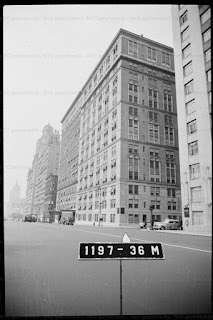
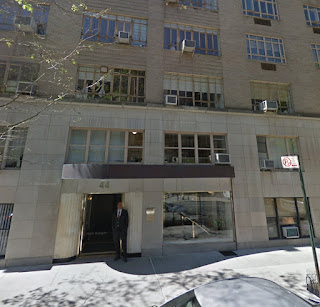
44 East 67th St

In 1968 Benjamin and philanthropist Reed Erickson had been in disagreement, mainly over money and who was to decide what, and after that year there was no more funding, and Benjamin had to vacate the large office.

It was back to 67th St.

Leo Wollman returned to his office on Mermaid Avenue, Coney Island, Brooklyn.

The Harry Benjamin Foundation wanted a book to emerge from their work, but this was felt to be too narrow. In particular that would exclude the important work being done in Europe. The book, financed again by Erickson’s EEF, eventually came out in 1969 as Transsexualism and Sex Reassignment edited by Richard Green and John Money.

Also in 1969 Benjamin recruited  Charles Ihlenfeld, an internist with an interest in endocrinology, mainly to cover the office during the summer while Benjamin was in San Francisco. Ihlenfeld learned on the job, and stayed on.


45 East 74th St, again between Madison and Park Avenues

Roberto Granato started doing vaginoplasties and phalloplasties and Benjamin and Ihlenfeld were pleased to refer patients to him.

In 1972 Ethel Person was introduced to Benjamin. He allowed her to interview some of his patients, and asked her to write a biographical portrait of him to be published after his death. She formally interviewed him to this end a dozen times.

Two papers by Person and Lionel Ovessey based on Person’s patient interviews were published, and came to standard psycho-analytic conclusions. Several of those who had been interviewed by Person were outraged. 

Ihlenfeld came out as gay in 1973. Benjamin was surprised but then became supportive.

Benjamin’s office was here until his retirement in 1975. Charles Ihlenfeld then took over the practice for a short while.


1 East 72nd St, at 5th Ave close to Central Park

In 1976 Wardell Pomeroy moved to California, and brought in Leah Schaefer as his replacement.

The practice was still open for existing patients. It was being managed under the aegis of the Orentreich Medical Group, a dermatology and hair restoration practice, also located at 1 East 72nd St. It was then still administered by Benjamin's office manager and assistant Virginia Allen.


223 West 22nd St, between 7th and 8th Avenues

Charles Ihlenfeld resigned in 1976 to begin a psychiatric residency in the Bronx, and Eugene Hoff took over. Hoff fired Virginia, the nurse Mary Ryan, and the physician Agnes Nagy, and pleased Dr Orentreich by moving the practice downtown to a townhouse behind the Chelsea Hotel.

Hoff transitioned to Jeanne and had surgery with Dr Granato in 1977. 

Leo Wollman had been working with Doris Wishman, one of the very few female exploitation film directors of her generation, and in 1978 they released Born A Man... Let Me Die A Woman, which is both a documentary and pornography.

Working with Connie Christine Wheeler, Leah Schaefer interviewed Harry Benjamin in 1979 about his history, he took to them and trusted them with his files. They read all the 1500 or so files, and started meeting regularly with him to discuss what they found.

The third edition of the Diagnostic and Statistical Manual of Mental Disorders (DSM III) 1980 added transsexualism for the first time, and subdivided it into asexual, homosexual, heterosexual and unspecified. Thus it was roughly congruent with the typologies proposed by Robert Stoller, Person-Ovesey and Virginia Prince. Furthermore ‘transvestism’ was defined as done by a heterosexual male. Again congruent with Stoller, Person-Ovesey and Prince. However to the chagrin of Prince (who had been insisting on a differentiation from fetishism) it was defined as done for sexual excitement.

By 1980 there were few patients left in Hoff's practice, and Hoff had already taken a job in a psych ward in Brooklyn. The next year she sold the building and moved away, first to Massachusetts and then California.

1980 the Yonkers Professional Hospital, where transgender surgery was done by Drs Wessor and Rish was closed down after a surprise inspection by the state.

Surgeon David Wesser who had done 200 sex-change operations, many referrals from Benjamin, was charged before a panel of the New York Department of Health in 1981, The panel was rigged and he was driven out of business.

-----------

Harry Benjamin died age 101 in 1986.

14 January 2022

The Offices of Harry Benjamin. Part I: to 1968

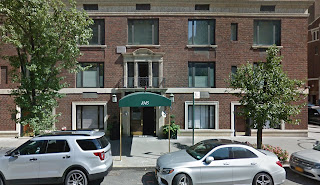
Thank you to Ken Lustbader and the NYCLGBT Historic Sites Project who, with input from me and close research in New York’s medical directories etc, has compiled a list of all Harry Benjamin’s offices with dates - but not moving dates. Here I have added information about each site.

All photographs are from GoogleMaps and show buildings as they are recently, not exactly as they were when Benjamin was there.


See also my biography of Harry Benjamin:

Harry Benjamin's other books
The other Harry Benjamin 
Benjamin's first 10 patients: a disambiguation

and a close reading of The Transsexual Phenomenon

Part I:  intro and the Scale
Part II:  transvestites
Part III: trans women
Part IV: photos, legal, trans men, conclusions
Comments

-----------

Harry Benjamin arrived in New York early 1913 as assistant to Friedrich Franz Friedmann who had developed a cure for tuberculosis of the joints by passing the tubercule baccilli through turtles. The results of his work were exaggerated in the press, and a New York banker offered a very large sum to treat his son in the hope that the treatment would work for tuberculosis of the lung also. After a media fuss, the good results proved to be transitory, and Benjamin refused to fudge the findings. He resigned and Friedmann refused to pay for his voyage home.

As a medical student in Berlin and Rostock Benjamin had served in the Prussian Guards, and was still a reserve member. Thus when war broke out in August 1914, he should have returned to Germany and reported for duty. Benjamin gave out three different accounts of how he did not return.

1069 Madison Avenue, at East 81st St

Erwin Haeberle: How did you get a foothold in America?

Benjamin: At first, it was not easy. After various attempts, in 1915 I simply opened a consultation room, in which I also slept. My income was not substantial: $2 for a consultation, $3 for a house call. The rent was $6 per week.

Wages in 1914 New York were 50-75 cents/hour. So you had to work about three hours to visit the doctor for 10 minutes - more if you were a woman.

Benjamin had applied for US citizenship by 1916. The process took 5-7 years. While not completed, the application helped him avoid being hounded as an enemy alien when the US joined the Great War in 1917.


237 Central Park West, at W 83rd St


By 1920 Benjamin was in a larger suite on the other side of Central Park, and across from the Park. 

1940
His father died in 1920, and he became a US citizen in 1921.

He became intrigued by the burgeoning new field of endocrinology and joined the New York Neurological Institute. In 1920 there was enormous publicity about Sergei Voronoff of the Collège de France who rejuvenated old men by transplanting monkey glands. Benjamin thought to meet with Voronoff, and in 1921 had the opportunity of accompanying a female patient, all expenses paid, to Vienna. There he discussed the idea with Max Herz, the appropriately-named heart specialist in Vienna, who thought that Eugen Steinach of the Vienna Vivarium was the real pioneer in the field.

Steinach’s method was ligation of the vas deferens, which, while causing atrophy of spermatogenic tissue, produced additional testosterone. Most patients reported increased vigour and sexual power. Benjamin met with Steinach and was duly impressed. Benjamin delivered a lecture on Steinach and his work at the New York Academy of Medicine in late 1921, and screened the Steinach film in 1923. In 1922 he published two articles in medical journals. Benjamin performed over 500 Steinach operations in New York (unlike Steinach who never did the surgery himself),

Along with Steinach, Benjamin pioneered an equivalent operation for women, diathermy, applied to one ovary, supplemented by x-ray treatment of the area. The prolific and celebrated novelist, Gertrude Atherton, then in her sixties, credited Benjamin’s treatment for overcoming her writer’s block. She wrote the experience into a new novel, Black Oxen, 1923,with a renowned scientist-doctor who was a composite of Steinach and Benjamin. The novel was filmed the same year.

Atherton continued as a devoted patron, and introduced Benjamin to San Francisco society. This led to his summertime practice in San Francisco that he continued for 37 years. Until Atherton died in 1948, his first dinner in San Francisco was always with her. Benjamin also visited Europe nearly every summer during the inter-war period.

239 West 75th St, west of Broadway


1940
237 Central Park West was demolished and replaced by a new building 1925-6.

He and Greta had recently married. Six months later Harry’s mother, Bertha, came from Germany to live with them as she was now a widow.

In 1930 Harry and Gretchen were largely responsible for arranging Magnus Hirschfeld’s visit to the US. In New York he stayed at their home and gave lectures in Benjamin's office.


728 Park Avenue, at 71st St, between E 70 and E 71st Sts


The marquee outside says 730, but the property has alternate addresses: 726-728 Park Ave, 48-50 E 71st
1939

St.

By 1935 Benjamin had many rich, powerful and famous patients, and himself became rich and a celebrity. He had a twelve-room suite of offices and he lived in a deluxe duplex apartment with a sweeping marble staircase. He had servants and a chauffeur. He was at this location for 20 years.

Benjamin was introduced to Alfred Kinsey in 1945. They both often stayed at the same hotel in San Francisco. Kinsey brought pioneer trans persons Sally Barry, Barbara and Lauren Wilcox and Louise Lawrence to Benjamin.

Virginia Allen and her doctor husband first met Harry Benjamin at a lecture that he gave in Atlantic City in 1950. When she moved to New York two years later, she phoned him, and although he could not remember who she was, he went to lunch with her. Shortly afterwards she became his assistant, at first part time.

In 1952 Norman Haire visited New York and was honored in Benjamin’s office.

In 1953 Benjamin met the now famous Christine Jorgensen and became her endocrinologist.

He also met Virginia Prince and became her endocrinologist.


125 East 72nd St, at Lexington Avenues

By 1956 Benjamin had moved to a smaller ‘retirement office”.


44 East 67th St, between Madison and Park Avenues

125 East 72nd St did not work out and by 1957 Benjamin had moved again. Virginia Allen typed the many drafts of Prostitution and Morality. One day while rearranging his files, she asked about a small group by itself where each patient had both a male and a female name. He decided to pay more attention to them.

In 1961 Ira B Pauly at Cornell Medical Center discovered Benjamin and his practice, and for much of a year, he attended Benjamin's Wednesday afternoon clinic for transsexuals. He set out to aggregate 100 cases from the literature and from among Benjamin’s patients. He completed "Male Psychosexual Inversion: Transsexualism. A Review of 100 Cases" in 1963, but it was not published until 1965.


1045 Park Avenue at 86th St

In 1963 philanthropic trans man Reed Erickson became a Benjamin patient and started transition. Money from Erickson enabled a move to a larger office at 86th and Park.

The next year he donated money to the newly created Harry Benjamin Foundation. They met in the new office mainly on Saturday evenings.

Benjamin began to share his practice with gynecologist and hypnotist Leo Wollman. Benjamin also worked with sexologist Robert Masters, endocrinologist Herbert Kuppermann, psychologist Wardell Pomeroy, previously of the Kinsey Institute, and Richard Green who wrote letters endorsing sex-change surgery in Europe for some patients. John Money, who was keen on opening a Gender Identity Clinic, was a frequent visitor.

The Harry Benjamin Foundation was integrated with the Johns Hopkins Gender Identity Clinic, endorsed the gender clinic at Stanford University and met with doctors from Minneapolis who were about to open their own gender clinic.

In 1964 Harry Benjamin finally published his book Prostitution and Morality, co-written with REL Masters. The book has a few passing references to trans prostitutes, and unlike his 1966 book, does acknowledge 'homosexual transvestites'.

Also in 1964 Benjamin published Nature and Management of Transsexualism: With a Report on Thirty-One Operated Cases.

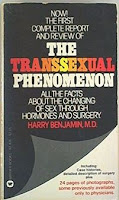
In 1966 Benjamin's The Transsexual Phenomenon was published, and became the seminal work on the subject.  See here for a close reading.

By 1968 Benjamin and Reed Erickson were increasingly in disagreement, mainly over money and who was to decide what.

Continued in Part II.


---------------

Some of these addresses are quite expensive. Which partially explains Benjamin’s high fees.

The following information for 730 Park Avenue is taken from realtor PropertyShark:

Built 1928
42 units
192,445 square feet
assessed market 2022 value $29,651,850.00.
property tax 2022 $3,111,483.00.

10 January 2022

This and that

I have updated my 4-part Index to the end of December 2021. 


I have also added to my Books Online and Writings on Other Topics, so they may repay a revisit.

--------------------

I am constantly getting comments posted that are in effect adverts in that they have links to sites for doctors, beauty parlors and whatever.  Of course I never release these comments.

Some readers do not seem to understand that this site is moderated, in that they post the same comment two or three times, presumably expecting their comment to appear immediately.   Of course it will not appear until I read and approve it.


Immediately above the box where you can enter comments you find:  "Comments that constitute non-relevant advertisements will be declined, as will those attempting to be rude. Comments from 'unknown' will also be declined. Repeat: Comments from "unknown" will be declined, as will anonymous comments."   Amazingly I get comments from "unknown" almost very day.   I only rarely release comments from "unknown" - if they are otherwise signed or if they have essential information.   It is important to distinguish one commenter from another - are both from the same person? etc.    My policy is clearly stated.    It is unfortunate that Google stopped accepting OpenID (Yahoo, MySpace, Facebook etc).   However you still have two real choices.  Either use your Google ID (if you have one and have not denied access) or simply enter a name, any name, your real name or a pseudonym.    

Please stop posting as "unknown".

---------------

Every now and then I get a comment asking either the person being profiled, or some one who has previously commented, to get back to the new commenter   -- but not giving an email address, a Facebook page, a Twitter ID or any other way that the new commenter could be reached.  !!!

Some ask another to get back to them while posting as "unknown" - yes really.

-----------

This encyclopedia was started in 2008, almost 14 years ago.   So inevitably there are dead links that no longer work.   Sometimes I spot one and clean it up as well as I am able.   Sometimes I do this by a direct link to the Internet Archive.    One of the neat features of the Brave browser is that it automatically offers to search the Internet Archive for the link.    In other browsers one can get the same effect by installing the Wayback Machine (Internet Archive) extension.   I recommend that extension to all readers.

28 December 2021

some 2021 trans obituaries

 Joe Tish (1924-2021) New York performer.  Active from the 1950s.  In the late 1960s Tish had a long-running show at the Crazy Horse, and was also in the 1960’s travelling act, French Box Revue. Tish was one of the few performers who sometimes left the club dressed as female. Once a club where he was performing was raided by the police, but they shooed him away assuming that he was a woman. Joe would be refused admission to the Stonewall Tavern when in costume, although he was so admitted at some uptown straight clubs, where his artistry was recognized. Tish continued performing after retirement.  Died forty days before 97th birthday.

Tish, on the right, at Crazy Horse.  


Christina Hayworth (194? - 2021) Stonewall Veteran and Puerto Rican trans activist.


Robina Asti (1921 - 2021) pilot, flight instructor.   She had to fight the system to get her survivor benefits when her husband died.   The bureaucracy maintained that that she had not been legally a woman at the time of her marriage.  She continued to fly into her 90s.  Died age 99.


Byun Hui-Su (1998- 2021) first known trans soldier in South Korea.  Discharged after surgery.  Found dead at home age 22. 


April Ashley (1935 - 2021) model, actress and co-wrote 3 autobiographies.  Victim of a politically-engineered divorce trial in 1969 that removed most rights for all UK transsexuals for over 30 years.  Died age 86.  


19 December 2021

Buddy Kent (1921 - ?) male impersonator, x-ray technician

Buddy Kent was originally Malvina Schwartz of Brownsville, Brooklyn a predominantly Jewish area. As a teenager she rode into Greenwich Village to explore the lesbian bars in the shadow of the 6th Avenue El. She soon changed her last name to Kent, wore a cross and lipstick, as Jews and lesbians did not get employed. During WWII, Kent played trumpet in the Women’s Army Corps band. From then on she was Buddy.

“Then at eighteen I was of age and I walked into Ernie’s, got my first job as a bartender, which I had never done. When Ernie interviewed me, he said, ‘What do you do?’ And I said ‘Everything, everything.’ So he put me behind the bar, and I was in full drag at this point: pants, vest, shirt, tie, short hair. I worked like that for a year. Then the liquor board came in and thought I looked too young. One reached across the bar, touched my face and said, ‘He isn’t even a shaver!’ But Ernie had all the connections. He took the men in the back, paid them off, and from then on, he said, ‘I’ll have you tend bar from eight to twelve. After midnight a girl cannot be behind the bar.’ Because now my cover was blown: I was a girl.”

She tended bar and took dance lessons. Buddy’s break came at Club 181, located at 181 Second Ave on the Lower East Side of Manhattan - which was run by Anna Genovese, the lesbian wife of top mafioso Vito Genovese. Many butches worked at Club 181 either as waiters or as chorus boys. Buddy Kent started as a chorus boy and then did a solo act, a Fred Astaire impersonation with black tails, top hat and a cane.

The hookers at Club 181 were organized by a madame, Lucille Malin, the widow of 1930s drag/pansy star Jean Malin.

Buddy, left

In 1949 the police raided the 181 because the neighbours had been complaining about seeing the performers go in to work in drag.  Buddy shrugged that off.

 “ 'An unhealthy atmosphere for their kids', they said. I got out the back way. If they took you in, it was usually for ‘disturbing the peace’ or 'impersonating’ somebody of the opposite sex."


One of the masculine lesbians whom Buddy knew was Angela Calomiris (1916-1995), who was initially active in the Photo League (for budding photographers) and then had risen within the US Communist Party and become its finance secretary, where she had access to the real names of all members. In July 1948 twelve leaders of the party were charged with advocating an overthrow of the US government. During the trial, in April 1949, Calomiris was called as a prosecution witness (the one and only time she was known to wear a dress), to much surprise, and was outed as an FBI asset. She became a minor celebrity and wrote an autobiography, Red Masquerade: Undercover for the FBI, 1950.

Calomaris

Calomaris also informed to the FBI re Yetta Cohn, a policewoman who was the editor of the NYPD newsletter. Cohn was the girlfriend of rising film star Judy Holliday (1921-1965  - Best Actress Oscar 1950) despite the latter’s supposed heterosexual marriage. Among other things, Calomaris accused Cohn of being a supporter of Henry Wallace (who had been Roosevelt’s Vice President and ran as the Progressive Party presidential candidate in 1948). Cohn was then unemployed for many years but was supported by Holliday. Calomaris' testimony also enabled the FBI to terminate the Photo League in 1949, by accusing it of being ‘communist’.

Calomaris then moved to Provincetown, Massachusetts, where she became a rich landlord, and opened up the town to lesbians. Her mentor in the Photo League, Sid Grossman never worked again in New York as a photographer. He and his wife moved to Provincetown, opened a photography school and fished. They sold their catch on the street. He died in 1955 age 42.

The Club 181 lost its liquor license in 1953 after being mentioned in USA Confidential as a gay club. The same management then opened the 82 Club around the corner at 82 E 4th St.

Buddy moved on - at first with Kicky Hall and his review. They went to the Jockey Club, a gay club in Atlantic City. On return, Kicky booked Kent into the Moroccan Village, on 8th St in Greenwich Village.

At one time in 1950 the Moroccan Village got closed down after an attempted robbery and a shooting. The performer during the shooting was the male impersonator/trans man Blackie Dennis. The Moroccan Village was able to open up again after a couple of months.

It was at Jimmy Kelly’s on Sullivan Street that Buddy Kent became Bubbles Kent, Exotic Dancer. “Because I wanted to get in on some of the big money,” She was still doing her Fred Astaire act, but concluded it by stripping down to sexy underwear.

Buddy became, with Jackie Howe and Kicky Hall, the partial owner of a club, the Page Three (with the obligatory mafia participation). That flourished for some ten years into the 1960s until changes in musical tastes took the crowds away.  Kicky Hall was also Buddy and Jackie's agent.

Afterwards Buddy became an X-Ray technician at St Vincent’s Hospital. She maintained her apartment on 8th St across from the old Whitney Museum. Jackie Howe and Kicky Hall lived in the same building.

In later years Buddy became involved with the local branch of Senior Action in a Gay Environment (SAGE) (now Services & Advocacy for GLBT Elders). Buddy was popular there in that with her show-biz experience she was ideal to run the social.

On 1983, Buddy was interviewed and tape-recorded by Joan Nestle for the Lesbian Herstory Archives (LHA).

Buddy ran again into Angela Calomiris, who was back in Manhattan, and encouraged her to join SAGE. She also got to know Lisa E Davis, who drew on the memories of Buddy and others for her novel, Under the Mink, set in 1949, and then wrote several articles about Buddy.

Calomaris finally retired to San Miguel de Allende/Guanajuato, in the hill country of central Mexico with her wife.

Buddy’s date of death is not recorded. Apparently it was shorty after her friend Jackie Howe died, and then one of Buddy’s sisters.

  • Lisa E Davis. Under the Mink. Intoprint, 2001.
  • Lisa E Davis. “Back in Buddy’s day”. Xtra, February 28, 2006. Online.
  • C Alexander Hortis. The Mob and the City: The Hidden History of How the Mafia Captured New York. Prometheus Books, 2014: 169, 171.
  • Lisa E Davis. “Buddy Kent, aka Bubbles Kent, Exotic Dancer”. West View News, 10/03/2015. Online.
  • Lisa E Davis. “The Red Scare's Lesbian Informant”. Advocate, April 07 2017. Online.
  • Lisa E Davis. Undercover Girl: the lesbian informant who helped the FBI bring down the Communist Party. Imagine book, 2017: 24-7, 32-3, 37, 173, 203, 227n6-7.
  • Hugh Ryan. “The Three Lives of Malvina Schwartz”. Hazlitt, October 12, 2016. Online.
  • Dylan Foley. “Lisa E. Davis, Greenwich Village historian, author of Under the Mink and Undercover Girl”.  The Last Bohemians, May 30, 2020. Online.
-----------------

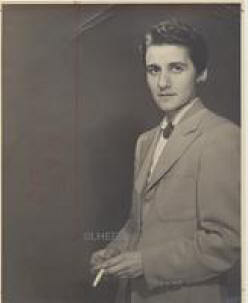
Apart from articles about Buddy, Kicky (Kiki) Hall seems to have disappeared from History.  The only other mention that I could find is the preface to The Queens: Photographs by George Alpert.  A De Capo Paperback, 1975.  He introduced Alpert to various trans women to be photographed including International Chrysis and Kim Christy

I do not know why Mr Hall took the name Kiki.  In the 1940s and 1950s 'kiki' among female impersonators and femme men was loving each other rather than going with a butch man.  Among lesbians it was a woman who resisted becoming either a butch or a femme.  That is, they were gender non-conformists relative to the gay/lesbian conventions.  They were super queer.