This site is the most comprehensive on the web devoted to trans history and biography. Well over 1800 persons worthy of note, both famous and obscure, are discussed in detail, and many more are mentioned in passing.

There is a detailed Index arranged by vocation, doctor, activist group etc. There is also a Place Index arranged by City etc. This is still evolving.

In addition to this most articles have one or more labels at the bottom. Click one to go to similar persons. There is a full list of labels at the bottom of the right-hand sidebar. There is also a search box at the top left. Enjoy exploring!

Showing posts with label academic. Show all posts

29 January 2022

Paul B Preciado (1970 - ) philosopher

Preciado, born in Burgos in northen Spain was raised and educated as Beatriz, and having earned a Fulbright Fellowship, at the age of 28 and generally taken to be a queer lesbian, took Philosophy and Gender Theory at the New School for Social Research in New York studying with Agnes Heller and Jacques Derrida. Her doctoral topic was 

“Saint Augustine’s conversion as a process of transsexuality: when converting, Augustine moved from a luxurious desire and a booming sexual activity to an ethical imperative of chastity and sexual self-renouncement”. 

She started to think of sexual plasticity as something that exceeded modern gender politics, and wanting to get deeper into the discourse on deconstruction, 

“I took my odd Augustinian topic from the New School to the School of Architecture at Princeton University. Entering the world of architecture meant a radical deferral of my philosophical practice. Though trained in constructivist theories of gender, I had never reflected about the very materiality of the performative processes of gender construction.”. 

This emerged as a PhD in Philosophy and Theory of Architecture: Pornotopía: Architecture and Sexuality in Playboy During the Cold War. (quotes from the Introduction to the English version of Countersexual Manifesto: 2-3)

In 1998 Preciado participated in a Diana Torr drag king workshop in New York, and later took Torr to France and Spain acting as the translator in the workshops.

Preciado’s first book was Manifeste contra-sexuel (2000) written while she was Princton working on her PhD and available initially only in French. It is posited as a disruption of feminism and of queer theory, and calls theorists such as Derrida, Foucault, Butler, and Haraway to task for not going nearly far enough in their attempts to deconstruct the naturalization of normative identities and behavior, and invokes countersexuality’s roots in the history of sex toys, pornography, and drag in order to rupture the supposedly biological foundations of the heterocentric regime. It was acclaimed by French critics as “the red book of queer theory” and became a key reference for European queer and trans activism.

Six years later Preciado provided the text for a series of photographs by the gender-variable Del Lagrace Volcano.

From 2005 to 2014 Preciado dated the writer and film-director Virginie Despentes, a woman with sex-work experience.

Preciado’s next book was Testo Junkie.  In French and Spanish 2008, English 2016. Preciado discusses the taking of self-administered testosterone, and how the body is politicised by "pharmacopornographic capitalism”. Taking testosterone is both political and performance, and Preciado discusses the changes and how they interact with the relationship with Virginie Despentes, and also deals with other drugs that transform the body such as birth control, Viagra, performance-enhancing drugs, Prozac, and estrogen.

Pornotopia, the book version of Preciado’s PhD dissertion came out in French in 2010 and in English in 2014. It was awarded a 2011 Prix Sade in France.

Preciado, in his mid-40s in 2014, announced that he was transitioning, and shortly afterwards that he had taken the name of Paul.

In 2018 the English translation of Countersexual Manifesto finally came out with a foreword by Jack Halberstam.
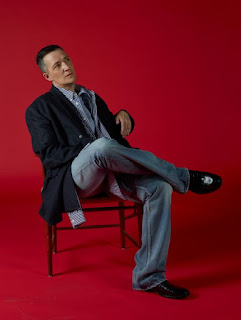

November 2019, Paul Preciado was invited to speak in front of 3,500 psychoanalysts at the annual conference in Paris of the École de la Cause Freudienne (Lacanian). Aware that most of those in attendance regarded him as a “mentally ill person” suffering from “gender dysphoria”, Preciado drew inspiration from Kafka's “Report to an Academy” in which a monkey tells an assembly of scientists that human subjectivity is a cage comparable to one made of metal bars. He touched on the homophobia and transphobia of psychoanalysis and spoke of its complicity with the ideology of sexual difference dating back to the colonial era. This he regarded as rendered obsolete by technological advances allowing us to alter our bodies and procreate differently. He called for a new psychoanalytic discourse allowing for a multiplicity of bodies without reducing the body to its sole heterosexual reproductive capability, and without legitimizing hetero-patriarchal and colonial violence. This was met with heckles and boos, and he was not permitted to finish. What he had said had been filmed on smartphones, was published online, where fragments were transcribed, translated, and published with little regard for exactitude.

Meanwhile he published An Apartment on Uranus: Chronicles of the Crossing. Despentes provided an Introduction. The book, mainly a collection of essays previously published in Libération, recounts the transformation from Beatriz into Paul B., but also considers political, cultural, and sexual transition, discussing issues from the rise of neo-fascism in Europe to the technological appropriation of the uterus, from the harassment of trans children to the role museums might play in the cultural revolution to come. 

“My trans condition is a new form of uranism. I am not a man. I am not a woman. I am not heterosexual. I am not homosexual. I am not bisexual. I am a dissident of the gender-sex binary system. I am the multiplicity of the cosmos trapped in a binary political and epistemological system, shouting in front of you. I am a uranist confined inside the limits of technoscientific capitalism.” (p29)

A year later Paul published the correct text of the unfinished address to the École de la Cause Freudienne, and followed that by Feminazis in which he discusses the insults from the “lords of colonial patriarchy”. 

“Since women speak for themselves, representatives of the old sexual regime have been so nervous that now they are the ones who are beginning to run out of words. Perhaps that is why the lords of colonial patriarchy have been digging into their necropolitical history books for insults to throw us in the face and, by curious chance, have chosen the one they always have at hand: nazi!”

Preciado was Head of Research of the Museum of Contemporary Art of Barcelona (MACBA) and Director of its Independent Studies Program (PEI) from 2011 to 2014. He has taught Philosophy of the Body and Transfeminist Theory at Université Paris VIII-Saint Denis and at New York University. From 2014 to 2017 he was Curator of Public Programs of documenta 14 exhibited in Athens and in Kassel Germany.  He participated in the LUMA Foundation, Arlès, France.

  • Beatriz Preciado translated to French by Marie-Hélène Bourcier. Manifeste contra-sexuel. Paris: Balland, 2000, 157 pp. An English version was issued 18 years later as by Paul B. Preciado translated by Kevin Gerry Dunn with a forward by Jack Halberstam. Countersexual Manifesto. Columbia University Press, 2018, xvi+216 pp.
  • Del LaGrace Volcano with text by Beatriz Preciado. Sex Works 1978-2005: From Love Bites to Postporn, Tübingen: Konkursbuch, 2006, 159 pp.
  • Beatriz Preciado, Testo junkie: sexe, drogue et biopolitique, Paris: Grasset & Fasquelle, 2008, 400 pp. English translation by Bruce Benderson. Testo Junkie: Sex, Drugs, and Biopolitics in the Pharmacopornographic Era. Feminist Press, 2013, 427 pp,
  • Beatriz Preciado, Pornotopía: arquitectura y sexualidad en Playboy durante la guerra fría, Barcelona: Anagrama, 2010, 220 pp. English translation Pornotopia: An Essay on Playboy’s Architecture and Biopolitics, Zone Books, 2014, 303 pp.
  • Paul B. Preciado with an introduction by Virginie Despentes. Un appartement sur Uranus: chroniques de la traversée.Paris: Grasset, 2019, 334 pp. English translation by Charlotte Mandell. An Apartment on Uranus: Chronicles of the Crossing. Semiotext(e), 2020, 263 pp. [8]
  • Paul B. Preciado, Yo soy el monstruo que os habla: Informe para una academia de psicoanalistas, Barcelona: Anagrama, 2020, 96 pp. English translation by Frank Wynne. Can the monster speak? a report to an academy of psychoanalysts. Semiotext(e), 2021.
  • Paul B. Preciado. Feminazis. Gato Negro, 2021.
  • Paul B. Preciado. Terreur anale. 2022.

-----

  • Diane Torr & Stephen Bottoms.  Sex, Drag, and Male Roles: Investigation Gender as Performance.  The University of Michigan Press, 2010: 165.
  • Rachel Santee. “Review: Testo Junkieby Paul B. Preciado, Translated by Bruce Benderson”. Akashic Books, September 17, 2013. Online.
  • Sarah K Hansen. “Paul B. Preciado, Testo Junkie: Sex, Drugs, and Biopolitics in the Pharmacopornographic Era”. philoSOPHIA, 6,1, 2016.
  • RL Goldberg. “Even This Review Is a Dildo: On Paul B. Preciado’s Countersexual Manifesto. LA Review of Books, February 16, 2019. Online.
  • Crispin Long. “Boundary Issues: In An Apartment on Uranus, Paul B. Preciado undermines geopolitical, technological, and gender binaries”. BookForum, July 30, 2020. Online.

EN.Wikipedia


05 December 2021

Leticia Carolina Nascimento (1990 - ) university lecturer

Nasciemento was born in Parnaíba, a coastal city in the north-east Brazilian state of Piauí, assigned male and raised by the maternal grandparents. Encouraged by the grandparents, and by the mother, Nasciemento graduated in pedagogy, and did a masters in education. 

Living initially as a gay man, Nasciemento taught for seven years in elementary school in Luís Correia, also on the coast of Piauí. In 2015 Nasciemento taught as a substitute teacher at Universidade Estadual do Piauí. Nasciemento had been increasingly living as female outside work. In 2017 she went public as Leticia with a lecture on queer theory called Corpo Sem Órgãos (Bodies without Organs). As she had already published academic articles under her male baptismal name, she was prevented from changing the name in her documents. 

In 2019 Leticia Nasciemento became a lecturer at the Universidade Federal do Piauí, the first trans woman ('mulher travesti') to do so. She commenced her PhD at the same time.


She describes herself as 

“Decolonial witch of becoming and of Sociopoetics (Feiticeira decolonial de devires e Bruxa da Sociopoética)"  ... "producing decolonial cartographies with black travestis from a mixed perspective of encounters between decolonial, feminist ideas and the philosophy of difference (produzindo cartografias decoloniais com travestis negras a partir de uma perspectiva mestiça de encontros entre ideias decoloniais, feministas e da filosofia da diferença)".

She considers that the greatest violence suffered by travestis in non-vulnerable environments is to be questioned about the fact that they are women. (Ela considera que a maior violência sofrida pelas travestis em ambientes não vulneráveis é a de serem questionadas quanto ao fato de serem mulheres. Cidadeverde, 2019)

In a paper in Research Society and Development, 2020, Nasciemento uses the concept of “heteroterrorismo curtural” in the education system: 

“And this way of thinking makes us question and perceive educational institutions, like schools, as one of the most efficient ones for fixing who we are and who others are, for establishing a division between the normal and the abnormal produced in them. And this split is produced by technologies of normalization - part of a system of know-power in which certain representations are authorized and others are made invisible, prohibited and invalidated, producing every utterance of cultural terrorism - reiterations that produce the genders and heterosexuality marked by incentives or inhibitions of behaviors to every lgbt-phobic joke, for example. (E esse modo de pensar nos faz questionar e perceber as instituições educativas, a exemplo da escola, como uma das mais eficientes para fixar quem nós somos e quem são os outros, estabelecer uma cisão entre os normais e os anormais produzidos nela. E esta cisão é produzida pelas tecnologias de normatização – parte de um sistema de saber-poder em que certas representações são autorizadas e outras invisibilizadas, proibidas e invalidadas, produzindo a cada enunciado eteroterrorismo cultural – reiterações que produzem os gêneros e a heterossexualidade marcadas por incentivos ou inibições de comportamentos a cada piada lgbtfóbica, por exemplo.)"

She is noted for her 2021 book, Transfeminismo: Feminismos Plurais, of which she says:

“It shows how more and more it is necessary for people to be open to different existences that do not necessarily fit into the binary and cisgender organization of the world. A first step in this direction is to know the experiences of those who are part of these groups and this book, written by a trans woman, black and fat, who is present in academic circles and is an inspiration for other transsexual and trans women, presents these experiences, it brings historical concepts and places transfeminism within other existing feminisms. (Mostra como cada vez mais é necessário que as pessoas estejam abertas às diversas existências que não necessariamente se encaixam no organização binária e cisgênera do mundo. Um primeiro passo nesse sentido é conhecer as experiências de quem faz parte desses grupos e esse livro, escrito por uma mulher travesti, negra e gorda, que está presente nos meios acadêmicos e é inspiração para outras mulheres transexuais e travestis, apresenta essas vivências, traz conceituações históricas e situa o transfeminismo dentro dos demais feminismos existentes.)”

  • “ ‘Ainda duvidam quando eu digo que sou professora’, diz 1ª travesti da UFPI”. Cidade Verde, 04/08/19. Online.
  • Ketryn Carvalho. “Letícia Carolina é a primeira travesti professora da UFPI; veja a entrevista”. Observatorio G, 2019. Online.
  • Letícia Carolina Nascimento. “Aprendizagens em educação e as diferenças – resistências ao heteroterrorismo cultural: que só os beijos te tapem a boca”. Research Society and Development, July 2020.
  • Roberto de Martin. “ ‘As mulheres trans e travestis entenderam a potência de movimentos feministas’ Letícia Carolina Nascimento conversa com CartaCapital sobre seu livro Transfeminismo, mais recente lançamento da Coleção Feminismos Plurais”. CartaCapotal, 12 de Junho de 2021. Online.
  • Letícia Carolina Nascimento. Transfeminismo: Feminismos Plurais. Perfect Paperback, 2021.

PT.Wikipedia      Google Academico        ResearchGate

22 January 2020

Richard Hoskins (1964 - ) theologian, criminologist

​Hoskins was born in Beaconsfield, Buckinghamshire, and mainly educated at Uppingham School, a boarding school in Rutland County, where he was sexually abused by a teacher who later was sent to prison. When he was fifteen, he sent off for mail-order oestrogen from Amsterdam. However his father intercepted the package and incinerated all of it at the bottom of the garden. Richard was pulled out of Uppingham, completed his sixth form elsewhere, and was then sent to the Royal Military Academy Sandhurst to learn how to be a ‘real man’. This led to a Short Service Commission in the 3rd Battalion of the Royal Anglian Regiment.

At the age of twenty-one Hoskins, again a civilian, travelled to Africa intending a gap year, but stayed six years until 1992. He and his wife spent most of the time working at the Baptist Mission medical centre in Bolobo, upriver from Kinshasha in what was then Zaire. In 1988 they became pregnant with twins. However the twins were two months premature, and a breech birth was required. The first daughter was a still-birth; the second survived, but only for 18 months.

The Hoskinses returning to Britain in 1992 and Richard read theology at Oxford University. The Hoskinses had two further children. Richard did a PhD at King's College London with a thesis on the doctrine of the trinity among Anglo Catholics at Oxford University in the late 19th century. Richard became a senior lecturer at Bath Spa University teaching African religions, and a senior research fellow at King's College London. The Hoskinses divorced. Richard remarried, and with his second wife wrote several entries on African religions for The Encyclopedia of Religion and Nature.

On 21 September 2001 the mutilated body of a very young black male was found floating in the Thames. The police dubbed him ‘Adam’, not knowing his name. Suspecting a ritual murder, they approached Hoskins for his knowledge of African religions. He was then called as an expert witness in many other criminal cases, including numerous high-profile murders, such as those of Victoria Climbié, Jodi Jones and the Eric Bikubi and Magalie Bamu case (in the last of which the killers claimed ‘kindoki’ – that the murdered child had evil powers). Hoskins was the only registered multicultural expert on the UK national police database at that time.


His first book on this subject was Sacrifice: journey to the heart of darkness, 2005.

In 2006 Hoskins was the lead presenter in Witch Child, a BBC 2 documentary re African children accused of being witches and then severely abused.

In 2009 his son with his first wife, David, then 19 and with mental health problems, climbed an electricity pylon and touched the 33,000 volt cable. He was then in hospital for 42 days before life support was switched off – a decision that his mother, the first Mrs Hoskins had to take.

Soon afterwards Richard’s second marriage ended. Which left him free to explore his feminine side, mainly taking instruction from YouTube videos.

In 2012 Richard published his account of the 2001 murder of ‘Adam’. The Boy in the River was both a commercial and critical success.


In autumn 2014 Hoskins surfed the Dark Web and purchased oestrogen from a site registered in Vanuatu. “They all seemed bona fide and a few even carried expiry dates”. They worked, but they also made him ill. A trip to the doctor, and, as Rachel, Hoskins was referred to the National Health Service gender identity system. By February 2015 she was not only accepted but fast-tracked into the programme. She was now on prescribed oestrogen, and over 18 months had her facial hair removed by NHS electrolysis.

Rachel 2016
In September 2015 Hoskins was asked by detectives of Wiltshire Police to examine claims made by "Lucy X" of a VIP satanic sex-abuse ring which was said to include the deceased former Prime Minister Edward Heath, as part of two separate investigations by the force into sexual abuse. She was addressed as Dr Rachel Hoskins, and so referred to in press reports. She compiled a 40,000-word report, and also went public alleging that some of the evidence presented was ‘preposterous’, ‘fantastical’ and gained through the ‘controversial’ practice of recovered-memory therapy. After the Mail on Sunday article in November 2016 on the Edward Heath investigation in which Dr Rachel Hoskins was mentioned for the first time, questions were inevitably asked.


In her Goodreads blog, she wrote 
“I was worried about reaction to my public and police profile. I needn’t have been. Most of my friends and family have been fantastically supportive and it helped that other public figures have acted as pioneers. When I eventually dragged myself to my GP she was brilliant and the NHS took me through counselling and then onto properly prescribed treatment. … I’d like to think we’re reaching a point in society when gender transition or gender-flex no longer matter. We certainly fixate too much on isolated body parts as human identifiers. … What’s important is to be true to yourself and value yourself. And for others to accept you for who you are. Be happy. That’s all that counts.”
In October 2016 Hoskins, apparently as Richard, went to Paris for the release of the French translation of The Boy in the River, published as L’Enfant dans la Tamise.  From there Hoskins flew to Bangkok and took a train to Malaysia “on the trail of both traffickers and some practices in the world of spiritual healers …..On a personal level I feel like the real Richard is back”.

In December Hoskins was back in Bangkok for an orchiectomy and facial feminisation surgery with Dr Sutin Khobunsongserm. This cost £15,000 and included only one night’s stay. Recovery had to be done in a hotel. Hoskins began to doubt the path she was on. In March 2017 Rachel received a referral letter for vaginoplasty at Brighton’s Nuffield Hospital, but instead went as a private patient to Nightingale Clinic, London. They diagnosed her as suffering from complex PTSD: multiple severe traumas, from the deaths of two daughter in Zaire, from the death of David, and from the gruesome nature of her police consulting work. Hoskins underwent intensive trauma counselling, and returned to being Richard, taking male corrective hormones.

In January 2020 he wrote an account of his gender journey for the Mail on Sunday.
“For a decade, I ran and ran. I tried to escape my life, my very identity. I changed my
gender to leave Richard and his life behind. Inspired by youthful images of smiling women, I grabbed the chance for a different life. I know I’m unusual and that few others have experienced the multiple traumas to have befallen me. I accept, too, there are some people who feel they have no choice but to change gender and I have sympathy, although I suspect the true numbers are small. For the few who genuinely feel they have no choice, perhaps a third gender would be a way forward: neither male nor female. For as I know all too well, it is nigh impossible for surgeons to replicate female body parts in full, nor can they alter the XY chromosomes with which most men are born. There is, after all, an added issue here about respect for women born as women. Looking back, I sometimes think that I was insensitive, that in my rush to change identity I trampled through places which rightly afford women their own dignity and space. What really gave me the right to use ladies’ loos, for example? Most of all, we need to recognise that gender transition can, in truth, be a misguided attempt to escape the person you were born to be – and demand a halt to this dangerous headlong charge.”

*Not the NZ trans activist Rachel Hoskin.
*Not the Christian Nordic writer Richard Kelly Hoskins; nor the Cornish writer Richard Hoskin.

-----------------------------------

There are passing mentions of novels by Hoskins. The first one was apparently called The Ritual Killer and published in 2015. However the book is in neither Amazon nor World.Cat. In addition, the article “Kimbanguism” in the Encyclopedia of Religion and Nature, written by Hoskins and his wife cites a 2003 book by Hoskins on the topic. This too is not found in either World.Cat or Amazon.

Hoskins is listed on the Wikipedia page for old Uppinghamsians.

Virginia Prince had a PhD in pharmacology, and listed her doctorate in the context of sexology and counselling.   This was at best misleading.   Hoskins has a PhD in theology and is referred to as the criminologist Dr Hoskins.   I really doubt that the trinitarianism of  John Illingworth contributes much to the study of ritual murder.    Not that I regard Hoskins' skill as a criminologist as being any the less for being learnt on the job, but the use the Dr title in the context is misleading.

Hoskins is not the only trans person to get better service for already being on hormones, blackmarket or otherwise.   However it was very marked in his case.  Perhaps because he graduated from private school and Oxford.  Most applicants for NHS gender change get such slow service that they have plenty of time to reconsider.   In addition it seems that even in 2016, Hoskins was not really presenting as female.   While news articles in various newspapers referred to Dr Rachel Hoskins, the person interviewed on television was a slightly androgynous Richard Hoskins - see video below.
  • Richard Hoskins. The Trinitarian Theology of John Richardson Illingworth and William Temple: and the implications for contemporary Trinitarian theology. PhD Thesis, University of London, 1998. Published as The Doctrine Of The Trinity In The Works Of John Richardson Illingworth And William Temple, And The Implications For Contemporary Trinitarian Theology. The Edwin Mellen Press, 2000.
  • Richard Hoskins. "Social and Transcendent: The Trinitarian Theology of John Richardson Illingworth Re-examined”. International Journal of Systematic Theology, 1,2, July 1999: 185-202.
  • Richard Hoskins. Sacrifice: journey to the heart of darkness. Little, Brown, 2005.
  • Richard Hoskins & Faith Warner. “African Religions and Nature Conservation”, “Biodiversity and Religion in Equatorial Africa”, “Kimbanguism” in Bron R Taylor (ed) The Encyclopedia of Religion and Nature. Thoemmes Continuum, 2005.
  • Richard Hoskins. “Muti and African Healing”, “Muti Killings” in Bron R Taylor (ed) The Encyclopedia of Religion and Nature. Thoemmes Continuum, 2005.
  • Ian Cobain & Vikram Dodd. “How media whipped up a racist witch-hunt”. The Guardian, 25 Jun 2005. Online.
  • “King's Sociologist of Religion presents documentary”. King’s College London, 4 April 2006. Archive.
  • Witch Child, with Richard Hoskins, BBC 2. 4 April 2006. Online.
  • Richard Hoskins. Boy in the River: a shocking true story of murder and sacrifice in the heart of London. Macmillan, 2012.  Translated into French by Marie Causse. L’Enfant dans la Tamise: Mautres rituels et sorcellerie au Coeur de Londres aujourd’hui. Belfond, 2015.
  • Richard Hoskins. “How a criminologist probing the ritual 'boy in the Thames' murder had to confront the personal tragedy of his own daughter's mysterious death in Africa”. Mail on Sunday, 19 May 2012. Online.
  • Richard Hoskins. “How London became the child abuse capital of the world: Trafficked here by gangs, prey to pimps, paedophiles and murderers... the booming trade in 'lost' children that shames us all”. Mail on Sunday, 2 August 2014. Online.
  • Rachel Hoskins. “Gender: are you sure you know?”. Goodreads, January 1, 2016. Online.
  • Rachel Hoskins. “A Trans response to Greer & Humphries”. Goodreads, January 5, 2016. Online.
  • Richard Hoskins. “The Witch Children: Tortured by evil exorcists, but 'multicultural' Britain is too liberal to admit they exist”. Mail on Sunday, 30 April 2016. Online.
  • Martin Beckford with Rachel Hoskins. “Sir Edward Heath accuser is a 'satanic sex fantasist': Police warned by OWN expert that ritual abuse claims are false - including how the former PM 'went to candlelit forest for paedophile parties' ”. Mail on Sunday, 26 November 2016. Online.
  • Robert Booth. “Ted Heath's accuser 'gave child abuse inquiry fantastical evidence'”. The Guardian, 27 Nov 2016.  Online.
  • Richard Bartholomew. “Police Probing Recovered “Memories” of Satanic Ritual Abuse Involving Former Prime Minister Edward Heath”. Bartholomew’s Notes, November 27, 2016. Online.
  • Rachel Hoskins. “Going public as Rachel Hoskins”. Goodreads, November 29, 2016. Online.
  • Jean La Fontaine. Witches and Demons: A Comparative Perspective on Witchcraft and Satanism. Berghahn Books, 2016: 59, 61-2, 64, 71, 72n13, 81.
  • “Should we have the right to decide our own gender?”. The Big Questions, BBC1, 5th February 2017. Archive.
  • Richard Bartholomew. “Expert: Satanic Ritual Abuse Claims are the “Core Strand” of Wiltshire Police Investigation into Edward Heath”. Bartholomew’s Notes, April 16, 2017. Online.
  • Richard Hoskins in David James & Jane Lunnon (eds) The State of Independence: Key Challenges Facing Private Schools Today. Routledge, 2019: 115-6.
  • Richard Hoskins. “Academic had gruelling sex swap surgery and then changed his mind at the last minute - and is now accusing the 'transition' industry of pushing vulnerable people like him into irreversible operations they'll regret”. Mail on Sunday, 11 January 2020. Online.
  • Lara Keay. “'I was very convincing': Academic who detransitioned four years after living as Rachel says he was 'hurtled through the system' and would never have changed gender if he was assessed properly by therapists”. Daily Mail, 21 January 2020. Online.

EN.Wikipedia    EN.Wikipedia(March 2017)    RichardHoskins.co.uk     Revolvy   People Pill    YouTube

___________________


20 September 2017

Jayne Thomas ( 194? – 2002) psychologist

Jay Thomas grew up in a small town in Indiana, and as a teenager was a national swimming champion.

Despite feeling wrong as a boy, Jay married a woman at age 17, however she had great difficulties with her husband’s transsexual inclinations. Thomas moved to the Los Angeles area and worked as a consultant for movie and television productions and as an engineer psychologist for Hughes Industries, an aircraft development company.

A second wife was more supportive of the trans aspects, and they traveled together as two women. Thomas had children with both wives.

When the second wife passed on in 1985, Thomas felt free to transition. Thomas had been working as a consultant at a large Los Angeles banking firm, and was able to continue there as a woman.

Afterwards she gave counseling to other transsexuals, in accordance with the HBIGDA Standards of Care. In 1988 she took a part-time position in the Psychology Department at the Santa Monica College, where she was a well-regarded teacher who shared her background with the students. She also worked part-time at the Los Angeles Mission College.

With Kate Bornstein, Jayne appeared on the Geraldo television program “Who’s Sorry Now” about post-surgical regret. Kate and Jayne were there in contrast as successful and happy transsexuals.

Jayne was a speaker at the first New Women’s Conference in Essex, Massachusetts in 1991: her talk was reprinted in The Journal of Gender Studies.
“I've made the comment on more than one occasion that I'm a hell of a lot more comfortable with the masculine part of myself now, in female form, than I ever was when I was in male form. I couldn't be androgynous as a male. I can now. Because being male doesn't threaten me now”.
Jayne also gave lectures and presentations at other colleges. From this came the VHS tape Gender Identity: Variations of Expression. At one college presentation, after Thomas spoke of her gender history, an Iranian woman said:
"I knew there was something different about you. I knew it! Women don't walk around the way you do. Women aren't as assertive, as bold as you. Women your age wouldn't generally stand here like this and make a presentation."
Jayne’s son, an aspiring thespian had become involved in dance as a form of creative expression. Jayne met his teacher and also took the course, and found it useful in expressing a new gender. She and the teacher wrote this up and it was included in the Gender Blending anthology edited by the Bulloughs and James Elias.

During the spring semester, 2002 Jayne suffered a stroke and went into a coma. Despite medical care, she died a few months afterwards
  • Jayne Thomas. “Putting Gender Issues in Perspective: The Whole You”. Journal of Gender Studies, 14,1,Winter-Spring 1992: 3-19. Online.
  • Kate Bornstein. Gender outlaw: on men, women, and the rest of us. Vintage Book, 1995: 81.
  • Jayne Thomas & Toby Green. Gender Identity: Variations of Expression. VHS Tape, 1995.
  • Loren M. Wingert, CPA. “Coming Out: Transitioning Successfully On the Job”. Transgender Tapestry, 78, Winter 1996: D3. Online.
  • Jayne Thomas & Annette Cardona. “The Use of Dance/Movement in the Adjustment to a New Gender Role” in Bonnie Bullough, Vern L. Bullough & James Elias. Gender Blending. Prometheus Books, 1997: 405-412.
  • Daniel Harju. “Teacher Fights For Her Life: SMC instructor shared perspectives on human sexuality and personal life experiences”. Corsair, 84, 11, 13 November 2002. Online.
  • Jeffrey S Nevid & Spencer A Rathus. Psychology and the Challenges of Life, Binder Ready Version: Adjustment and Growth. 13th Edition. Wiley, 2016:404-5, 407.

Melanie Yarborough


28 August 2017

Babette Ellsworth (1928 – 2002) academic


Albert Ellsworth was born in Yakima, Washington State, to a teenage mother, Mildred Sweet (1911-1955) and her husband Albert Ellsworth (1906-1990). They were told that the child was not expected to live, and relocated to Redmond, Washington. Subsequent enquiries to the hospital re the child went unanswered.

Neglected, the baby was cared for by a French aristocrat, Germaine Bonnefont (1894-1983) a teacher of French and Spanish, and her US husband, Robert Brown, and in the 1930 census he was listed as their son Bobby Brown. They took the young boy to France, although without the formality of adoption.
The Bonnefonts - Albert on left

Brown returned to the US alone in 1932, and to his work in the forestry service, but came down with liver damage, and died.

Albert was raised in Narbonne close to the Spanish border and grew up tri-lingual. He was educated as a Catholic and lived at the Chateau du Lac south of Narbonne. The Bonnefont clan were acquainted with exiled Russian aristocracy, including  Felix Yusupov (1887-1967) transvestite and assassin of Rasputin. They had connections with the Francoist regime in Spain and were supporters of the Vichy regime during the German occupation: some joined the Waffen SS and died defending France from the Allied invasion in 1944; others were killed after the Liberation of France.

In the ensuing chaos, Albert came to the attention of the new government in Paris, and after scrutiny of his documents, it was determined that he was a US citizen and he was sent back to Yakima on the SS Argentina in 1946. He was upset that US customs confiscated his portrait of Hitler.

He was then 17, and had no memory of his birth mother who was still only in her mid-30s. They had sex and a sister-daughter Rosalyn was born, although by then Albert had left and did not know about the child. After living rough, Albert was saved by the Portland, Oregon Catholic charity, Blanchet House. They arranged educational scholarships and Ellsworth was able to do a BA and a masters at the Catholic University of Portland (not to be confused with the Methodist Portland University or with Portland State University).

Germaine reinvented herself as a veteran of the French Résistance, and arrived in Portland in 1947. She later lived in British Columbia.

Ellsworth did a doctorate at the University of Bordeau. He was employed to teach history, French and Spanish at Portland State University. He took a wife, Helen, and they had three daughters. In 1964 Ellsworth was hired at the newly formed Portland Community College, and stayed the rest of his life.

Albert was cross-dressing in private.

One of his students was Billie, the wife of the progressive judge Raymond Shoemaker. They fell in love and Albert abandoned Helen. The Judge and Mrs Shoemaker welcomed him and the three lived ménage a trois, and traveled together until the Judge died in 1977. Billie came down with cancer in 1990. Albert and Billie married so that he would inherit the house.

Shortly after Billie’s death, Albert married Sandra, a close friend whom he had known for decades, who worked in administration at Portland Community College. However Ellsworth started talking about changing sex, and in 1994, transitioned on the job at the age of 66. She was one of the first patients of surgeon Toby Meltzer who had started performing vaginoplasty in Portland, only the year before. Her legal name became AJ Bobbie Ellsworth, but she was from then generally known as Babette.

Sandra could not relate to this and they were divorced shortly afterwards.

In 1998, Babette made an arrangement with one of her students, Ross Eliot, food and board in exchange for chauffeuring and other assistances.  Bills and other mail arrived addressed to Albert Ellsworth. "My professor smiled mischievously when I asked about this. Albert? Oh, he was my husband. Some people suspected I had him murdered. This suggestion made her laugh."

In 2002 Babette was contacted by the long lost Rosalyn, who came to visit her sister-father. While she was there, Babette died of a massive heart attack while entering a bus for a student tour that she was to lead. She was 74.


Profelleworth.com      rosseliot.wordpress.com    ancestry.com     ccsnyder.com

----------------------

AJ Ellsworth is not listed among the Notable alumni of the University of Portland, nor among people from Portland nor among the faculty at Portland Community College.

Ross Eliot does not find out until p118 that Albert Ellsworth is Babette rather than her dead husband.  "Oh please! Ross?  You've seen her without a wig.  Ladies don't go bald that way.  And you know how deep her voice is.  Plus, come on, no real woman her age has tits that perky."

According to Ross Eliot, Ellsworth had three wives:
Helen, 195?
Billie, 1990
Sandra, 1992

Craig Snyder apparently omits the middle wife, and gives a different name for the 3rd.


Craig Snyder’s page on Germaine Bonnefont says that she and Robert Brown adopted two sons, the other named as Robert John Pierre. Ross Elliot in his blog entry on Ellworth’s FBI file (http://profellsworth.com/news: May 4, 2015) gives this name as an alias of Babette.

I cannot find any account of Judge Raymond Shoemaker.

11 February 2017

Nina Arsenault (1975–) sex worker, performer, journalist

Rodney Arsenault was raised in a trailer park in Beamesville, Ontario, where he identified with beautiful women. He gained two masters degrees and became an instructor in acting at Toronto’s York University.

Arsenault started having plastic surgery during holiday breaks and reading weeks, and became Nina. At a staff Christmas party, a grad student proclaimed:
“Aren’t you victimizing yourself by constructing your new identity out of the oppressive misogynistic values that you were socialized with as a male?”
Nina conceded the point, but embraced the image anyway.

Early on, Nina dated Eric Newman, the future Luka Magnotta, who later became a porn actor, and had plastic surgery such that when he was a contestant on COVERguy on OUTtv and Nina was a judge, she failed to recognise him.

In 2003, she had a small part in the film Soldier’s Girl.

In 2005, Nina’s talent agent was Eugene Pichler, who was also advocating against funding for transgender surgery at the same time.

After nine years, 60 cosmetic surgeries and $160,000, financed mainly from working in the actual sex trade, working as a cyber-whore, and writing a ‘t-girl’ column in Fab magazine, Nina was chosen for one of eight Unstoppable awards, that year’s theme in the 2007 Toronto Pride Gala.

Sky Gilbert, drag queen and playwright, wrote a play, Ladylike, around her persona, and it opened in November 2007. In 2010, she starred in the solo piece, I Was Barbie. In 2012, Nina’s play in seven monologues,  The Silicone Diaries, was professionally produced. She has also done performance pieces in art galleries.

In May 2012, Luka Magnotta murdered Lín Jùn, 林俊, a student at Concordia University, posted videos of the crime online and physically posted body parts to politicians and to schools. He fled to Paris and Berlin, but was arrested, returned to Canada, tried and sentenced to life in prison. His earlier relationship with Nina attracted press attention.

Later that year, the book TRANS(per)FORMING Nina Arsenault: An Unreasonable Body of Work, a series of essays on her work, was published.

In 2013, while on a flight to Edmonton with fellow performer Lexi Sanfino, a flight attendant asked for makeup advice “because you used to be guys, right?” In response, Sanfino decided to strut topless down the aisle. She was arrested when the plane landed, and Nina who filmed the arrest was also arrested, but released without charges. They were addressed as male based on the ‘M’ in their passports, and Nina was questioned about whether she had had genital surgery. They pointed out that it was not illegal for a legal male to remove his top. Lexi was charged with causing a disturbance.

In 2015, Nina appeared at TEDxToronto.
IMDB     EN.WIKIPEDIA


23 August 2016

Alice Lyman Miller (1944 - ) intelligence analyst, academic

Harold Lyman Miller grew up in rural western New York state, where as a young teenager he would take a dress when fossil hunting in the wild.

Then he put away childish things and set out to prove his manliness. He played high-school basketball, chased girls, did a BA in Oriental Studies, 1966 at the then all-male Princeton University, and a PhD in history at George Washington University, DC, 1974, and married.

A fluent Mandarin speaker, Miller worked as an analyst of Chinese foreign policy at the Central Intelligence Agency 1974-1990. His second wife was also a CIA analyst. They had a son and a daughter.

From 1990-2000 he worked as professor of China studies and for most of that period, director of the China Studies Program at the School for Advanced International Studies, Johns Hopkins University (which, unlike the rest of Johns Hopkins, is located in Washington, DC).

Not until he was 52 did Miller catch an episode of the Phil Donahue show on TV about transsexuals and realize that was what he was. He also discovered the book True Selves: Understanding Transsexualism by Mildred Brown. Miller discussed his feelings with his second wife, and started wearing female clothes.

Approaching 60, Miller got a new position as a visiting fellow at the conservative think tank, the Hoover Institute at Stanford University, Palo Alto, California, and also as senior lecturer at the U.S. Naval Postgraduate School in Monterey, California.

At the urging of the wife, Miller consulted local gender counselor Judy Van Maasdam, the co-ordinator at Stanford’s Gender Dysphoria Clinic. Alice, as Miller became, underwent 250 hours of electrolyis and in total spent over $100,000 transitioning. She was able to transition on the job in both positions. Both institutions had had previous employees transition.

Alice had surgery at the Sequoia Hospital in Redwood City, California in August 2007.

In May 2015, Alice gave a talk on transition at the TEDx event at Stanford University.

*not Alice Miller the child psychologist
  • Harold Lyman Miller. Factional Conflict and the Integration of Ch'ing Politics, 1661-1690. Phd thesis, George Washington University,1974.
  • H. Lyman Miller. Science and Dissent in Post-Mao China: The Politics of Knowledge. University of Washington Press, 1996.
  • Alice Lyman Miller. "Some Things We Used to Know About China's Past and Present (But Now, Not So Much)". Journal of American-East Asian Relations. 16, 1, 2009: 41-68.
  • Alice Lyman Miller & Richard Wich. Becoming Asia: Change and Continuity in Asian International Relations Since World War II. Stanford University Press, 2011.
  • Tracie White. “Transition Point: The Unmet Medicak Needs of Transgender people”. Stanford Medicine, Spring 2012. http://sm.stanford.edu/archive/stanmed/2012spring/article7.html.
  • Stacy Trevenon. “The importance of being Alice: Moss Beach woman embraces transition”. Half Moon Bay Review, June 24, 2015. www.hmbreview.com/community/the-importance-of-being-alice/article_2a66a04c-1aa9-11e5-af30-af09569bfe4b.html.
EN.Wikipedia     HooverInstitute    
_____________________________

The EN.Wikipedia article on Alice has no mention at all of her gender change despite the fact that she is quite open about it. Nor does it list her first two books.  The page was written by the now blocked author Occultzone

Amazon has H Lymon Miller and Alice Miller as two separate authors.

It is ironic that Miller spent 10 years at Johns Hopkins University without being aware of its pioneering gender clinic.


12 April 2015

Aase Schibsted Knudsen (1954 - ) media academic

Knudsen was born in Fumes, Norway, and did a BSc Electronics Engineering at Gjøvik University College, 1979 and a PhD in media production at the Royal Institute of Technology in Stockholm with a BSc.

Since 2007, when she was in the middle of transition, Knudsen has been a professor at The Norwegian Film and Television School, Lillehammer University College. In 2009 Aase came out in the press and on television to educate the Norwegian public about transsexuality.

Since 2010 she has been on the Trans Policy Committee of Landsforeningen for lesbiske, homofile, bifile og transpersoner (LLH). She is also a guitar and bass player.

NO.WIKIPEDIA   HIL   LinkedIn

11 March 2015

Jack Halberstam (1961–) academic. Part II

Continued from Part 1.

The next year, 1999, in an interview in Genders, Halberstam wrote:
"The term 'female masculinity' stages several different kinds of interventions into contemporary gender theory and practice. First, it challenges the notion that genders are symmetrical - in other words saying that gender is "performative" may be particularly helpful when thinking about femininity but less useful in relation to masculinity. Masculinity, in fact, often presents as non-performative or anti-performative (think of Clint Eastwood's laconic roles for example). Second, female masculinity disrupts contemporary cultural studies' accounts of masculinity within which masculinity always boils down to something like 'the social, cultural and political effects of male embodiment and male privilege'. I hope my book will force masculinity studies to make a radical break from white men's studies."
and
"I embrace categorization as a way of creating places for acts, identities and modes of being which otherwise remain unnamable. I also think that the proliferation of categories offers an alternative to the mundane humanist claim that categories inhibit the unique self and creates boxes for an otherwise indomitable spirit. People who don't think they inhabit categories usually benefit from not naming their location. I try to offer some new names for formerly uninhabitable locations."
The same year, Halberstam (using the name 'Jack' for the first time in a book credit) published The Drag King Book with photographs by Del LaGrace Volcano, which encountered resistance from drag kings who insisted that they were just having fun, and that their behavior would not bear the theoretical weight that she was putting on it.

Halberstam also appeared in the documentary films Venuz Boyz and Boy I Am.

In the 2005 book, In a queer time and place: transgender bodies, subcultural lives. Halberstam analyses the murder of Brandon Teens and its representation in mainstream media, considers the transgender gaze, and the influence of drag king culture on hetero-male films.

In 2007, Halberstam was co-author of Rrose Irrose, a 700+ page catalogue of an exhibition at New York's Guggenheim Museum devoted to gender variant photography.

Maracena & Jack in Oprah magazine
In 2008, Halberstam, having broken up with a lover of 12 years, took up with Chilean immigrant sociologist Macarena Gomez-Barris, mother of two, who had broken up with her husband. The next year their relationship was featured in an edition of Oprah magazine.


In the 2011 book, The Queer Art of Failure, Halberstam explores loss, forgetting and failure as alternatives to the capitalist heteronormative model. He offers queer analyses of Finding Nemo and Dude, Where's My Car, and explores 'shadow feminisms' grounded in negation, refusal, passivity, absence and silence, and looks at a thread in the history of male homosexuality that has been significantly downplayed: that of homosexuality and fascism.

The 2012 book, Gaga Feninism: Sex, Gender, and the End of Normal, which lists the author as J. Jack Halberstam, advocates creative mayhem using the image of Lady Gaga, an exemplar of a new kind of feminism that privileges gender and sexual fluidity.

Later that year, on his blog, Jack sort of explained his gender:
"first, I have not transitioned in any formal sense and there certainly many differences between my gender and those of transgender men on hormones. Second, the back and forth between he and she sort of captures the form that my gender takes nowadays. Not that I am often an unambiguous 'she' but nor am I often an unambiguous he. Third, I think my floating gender pronouns capture well the refusal to resolve my gender ambiguity that has become a kind of identity for me. I watch friends, one after the other, transition, mostly from butch to TG male and I wonder whether I am just sitting on a fence and not wanting to jump. … I still use women’s restrooms and I avoid any and all contact on going in or coming out. If someone looks frightened when they see me, I say 'excuse me' and allow my 'fluty' voice to gender me. If someone looks angry, I turn away but mostly I just ignore what is going on around me in the restroom and do what I am there to do. … I also wish more people would adapt to a pronoun system based on gender and not on sex, based on comfort rather than biology, based on the presumption that there are many gendered bodies in the world and 'male' and 'female' does not even begin the hard work of classifying them. … And ps: grouping me with someone else who seems to have a female embodiment and then calling us LADIES, is never, ever ok!" (September 3, 2012).
  • Judith M. Halberstam. Parasites and perverts: anti-Semitism and sexuality in nineteenth-century gothic fiction. PhD thesis, University of Minnesota, 1991.
  • Judith Halberstam. "F2M: The Making of Female Masculinity". In Laura L. Doan, The Lesbian Postmodern. Columbia University Press, 1994.
  • Judith Halberstam and Ira Livingston (eds). Posthuman bodies. Indiana University Press, 1995.
  • Judith Halberstam. Skin shows: gothic horror and the technology of monsters. Duke University Press, x,215 pp1995.
  • Jenni Olson & Judith Halberstam (dir). Looking Butch: A Rough Guide to Butches on Film. US 100 mins. 1995.
  • Judith Halberstam. Female Masculinity. Duke University Press, xiv,329 pp 1998.
  • Annamarie Jagose. “Masculinity Without Men: interview with Judith Halberstam”. Genders Online Journal. 29 1999. Online at: http://web.archive.org/web/20131206153420/http://www.genders.org/g29/g29_halberstam.html.
  • Del LaGrace Volcano & Judith 'Jack' Halberstam. The Drag King Book. Serpent's Tail, 1999.
  • Rachel Adams. "Masculinity without man" A review of Female Masculinity. GLQ, 6,3, 2000: 467-478.
  • Gabrielle Baur (dir & scr). Venus Boyz, with Judith Halberstam, Del Lagrace Volcano, Dianne Torr and many other drag kings and masculine females. US/Switzerland 102 mins 2002.
  • Judith Halberstam. “What's That Smell?: Queer Temporalities and Subcultural Lives”. S&F Online - Public Sentiments. Summer 2003. www.barnard.columbia.edu/sfonline/ps/halberst.htm.
  • Judith Halberstam. “Foreword”. In Claudine Griggs. Journal Of A Sex Change: Passage through Trinidad. Berg, 2005.
  • Judith Halberstam. In a queer time and place: transgender bodies, subcultural lives. New York University Press. 256 pp 2005.
  • Sam Feder & Julie Hollar (dirs). Boy I Am, with Nicco, Norie, Keegan and Judith Halberstam, US 2006.
  • Jennifer Blessing, Judith Halberstam, Lyle Ashton Harris, Nancy Spector, Carole-Anne Tylor, Sarah Wilson. Rrose Irrose. Harry N. Abrams, 2007.
  • Mary A Fischer. "Why Women Are Leaving Men for Other Women". O, The Oprah Magazine, April 2009. www.oprah.com/relationships/Normal-Women-and-Gender-Identities-Gender-Stereotypes.
  • Judith Halberstam. The Queer Art of Failure. Duke University Press, 2011.
  • Philip Gambone. "Judith (Jack) Halberstem". Travels in a Gay Nation: Portraits of LGBTQ Americans. University of Wisconsin Press, 2010: 138-144.
  • J. Jack Halberstam. Gaga Feninism: Sex, Gender, and the End of Normal. Beacon Press, 2012.
  • Judith Halberstam. "Heini Halberstam obituary". The Guardian, 30 January 2014. www.theguardian.com/education/2014/jan/30/heini-halberstam-obituary.
EN.WIKIPEDIA    jackhalberstam.com   EuropeanGraduateSchool WorldCat(Judith)   WorldCat(Jack)    Amazon(Judith)    Amazon(Jack)     BullyBloggers


_________________________________________________________________________________

Around the same time as Halberstam published Female Masculinity, Riki Wilchins published Read My Lips: Sexual Subversion and the End of Gender. What they have in common is that they both pay attention to persons who fall between the standard gender categories. I have not found any account that compares the two.


In the Female Masculinity chapter on John Radclyffe Hall, Halberstam has interesting things to say about the rich English masculine women who spent time in Paris in the 1920s and 1930s. I would have liked Halberstam's comments on the Parisian masculine women such as Violet Morris and Madeleine Pelletier who so much resemble trans men and yet retained their female name.

09 March 2015

Judith Jack Halberstam (1961 - ) academic. Part 1

Halberstam's grandfather was the Rabbi in the town of Most in the Sudetenland. He died of a heart attack in 1936.   After the Nazi occupation, it was permitted that some Jewish children be allowed to leave without their parents.  The Rabbi's widow put their child Heini on a Kindertransport train to London in 1939.  She herself was later deported to a Nazi work camp, where she died.

Encouraged by his English foster parents, Heini pursued his education and did a PhD in mathematics at the University of London. He specialised in the distribution of prime numbers, and taught at Trinity College Dublin 1962-4, and the University of Nottingham 1964-80. He and his wife, Heather had four children, of whom Judith was the second. Heather died in a car accident in 1971.

Judith was frequently taken to be a boy:
"Nearly every day. I didn't go around correcting people. … [I] just though I was a boy. I thought that eventually somebody would figure that out." (Gambone: 139)
This created problems with school classmates. She kept her hair as short as possible and fell into the punk rock scene.

Heini Halberstam took a position as head of the Mathematics Department at the University of Illinois, Urbana-Champaign in 1980 and emigrated with his second wife. Judith followed, and ended up in the San Francisco area:
"the New Agey, leftover stuff from the hippie era and the intense focus on gay men, was so not my scene" (Gambone:141).
But she did find and appreciate the dyke-bar scene. On a whim she applied to the University of California at Berkeley and was accepted. She earned a BA in English at in 1985. She followed this with an MA, 1989, and PhD, 1991, at the University of Minnesota. In Minneapolis she found a vibrant butch-femme scene.
"I suddenly got what I thought my role was. I could be queer, interested in women and masculine. The word 'butch' was a lifesaver. Even though 'butch' was already being vilified by the feminists, I took it up anyway because there was no other term"(Gambone:141).
She began to see more female-to-male persons.
"The difference between me and a trans man is not much. I just never pursued the surgery and the hormones." (Gambone:141)
Halberstam's thesis was Parasites and perverts: anti-Semitism and sexuality in nineteenth-century gothic fiction, and she found a position as Assistant Professor of English at the University of California, San Diego, and became the film reviewer for Girlfriends magazine.

In 1994 she contributed an essay "F2M: The Making of Female Masculinity" to Laura L. Doan's anthology, The Lesbian Postmodern, which contains the paragraph:
"We are all transsexuals except that the referent of the trans becomes less and less clear (and more and more queer). We are all cross-dressers but where are we crossing from and to what? There is no 'other side' , no 'opposite' sex, no natural divide to be spanned by surgery, by disguise, by passing. We all pass or we don't, we all wear our drag, and we all derive a different degree of pleasure – sexual or otherwise – from our costumes. It is just that for some of us our costumes are made of fabric or material, while for others they are made of skin; for some an outfit can be changed; for others skin must be resewn. There are no transsexuals."(Doan:212)
The article was criticized by trans men who insisted on the difference between themselves and butches who were women, and many butches wanted to deny that difference in order to suggest that there exists an element of choice in relation to the question of whether or not to transition. Jamison 'James' Green, the editor of FTM Newsletter, took Halberstam to task for speaking for trans men, and a writer, Isabella, suggested that Halberstam was a lesbian feminist who wanted transsexuals to disappear within a postmodern proliferation of queer identities.
"I took this criticism very seriously, if only because I had been trying to do the very opposite of what she accused me of doing." (p147)
Jordy Jones, the performance artist, supported Halberstam in the newsletter pointing out that transsexual experience cannot be represented in any one totalizing or universal way.

In 1995 Halberstam temporarily left UCSD to do a postdoctoral fellowship at New York University, and a visiting professorship of gay and lesbian studies at Yale.

Her first book was Skin shows: gothic horror and the technology of monsters, which does a queer reading of gothic fiction and horror movies, and posits post-human bodies. The latter idea was further explored in the anthology Posthuman bodies, which she co-edited.

The same year she and Jenni Olson created a documentary, Looking Butch: A Rough Guide to Butches on Film, a compilation of images of butch women from the earliest days of Hollywood, including tomboys from the '60s and recent transgender FTMs. And asked why are they less common now that we have a lesbian cinema?

By 1998 she was able to publish the seminal Female Masculinity, which gained two Lambda Book Award nominations. Halberstam is open about her own masculinity, and introduces her other persona, Jack. She asks about female-born persons who are not really lesbian or trans:

"female-born people who think of themselves as masculine but not necessarily male and certainly not female". (Gambone:142)
Halberstam provides the hitherto hidden history of masculine women: Anne Lister, Radclyffe Hall, stone butches, drag kings and transgender dykes. Furthermore:
"I claim in this book that far from being an imitation of maleness, female masculinity actually affords us a glimpse of how masculinity is constructed as masculinity."(p1) “This study professes a degree of indifference to the whiteness of the male and the masculinity of the white male and the project of naming his power. Male masculinity figures in my project as a hermeneutic, and as a counterexample to the kinds of masculinity that seem most informative about gender relations and most generative of social change”. (p3) “Female masculinity is not some bad imitation of virility but a lively and dramatic staging of hybrid and minority genders". (Back cover).
It also considers the border wars between butch and FTM, and butches in films. As Adams says in her review of the book:
"One valuable lesson of Halberstam’s work is that granting white men ownership of masculinity has elided more progressive versions of the masculine and has enabled the condemnation of female masculinity by both straight and lesbian feminists". (p468) "Drawing examples from the early nineteenth century through the first decades of the twentieth, Halberstam demonstrates the unacknowledged contribution of female masculinity to modern understandings of masculinity. Moreover, she shows how previous scholarship, eager to secure the historical foundations of lesbianism, has oversimplified, misunderstood, or elided a wide range of gender-deviant behaviors." (p469)
Continued in Part II.

22 January 2015

Carla LaGata (196? - ) anthropologist, activist

Carsten Balzer, whose female persona is Carla Lagata, has been active in social movements since the mid-1980s, holds a MA and PhD from the Free University of Berlin, has done fieldwork in Tanzania, the Brazilian Amazon region, Rio de Janeiro, New York City and Berlin and has taught Cultural Anthropology and Latin American Studies at the Free University of Berlin.

S_he has published on the differences between drag queens and Tunten, and the differences between the trans subcultures in Rio, New York and Berlin paying attention to the interaction between the international/US concept of drag queen and autochthonous local traditions.

S_he is chairperson of the Scientific Advisory Board of the transgender network Berlin (TGNB), founding member of the online journal Liminalis – Journal for Sex/Gender Emancipation and Resistance, Editorial Board member of the academic journal Transgender Studies Quarterly (TSQ), and member of the Advisory Committee of the Open Society Foundations’ LGBTI rights initiative.


S_he supported Transgender Europe (TGEU) from its very beginnings in 2005 and served as a TGEU Steering Committee member from 2008 to 2012. Currently, s_he is the lead researcher of TGEU's Transrespect versus Transphobia research project, which s_he initiated in 2009, and resulted in the publications of several reports on transgender and human rights around the world. In particular for each year's Transgender Day of Remembrance and each International Day Against Homophobia and Transphobia, under the name Trans Murder Monitoring, they issue a list of named trans persons known to have been murdered in the previous twelve months.


  • Carsten Balzer. Santo Daime in Deutschland - eine verbotene Frucht aus Brasilien.(Santo Daime in Germany - a forbidden fruit from Brazil ). ZfR, Zeitschrift Für Religionswissenschaft ; 7.1999. [Marburg]: [Diagonal-Verl.], 1999.
  • Carsten Balzer. Wege zum Heil: die Barquinha ; ein religiöses Rettungsboot auf den Wogen des kulturellen und sozialen Chaosmos amazonischer Welten ; (amazonische Transformationen im Lichte Ayahuascas). (Ways to salvation: the Barquinha; a religious rescue boat on the waves of the cultural and social Chaosmos Amazonian worlds; (Amazonian transformations in the light of ayahuasca) ) Freie Univ., Fachbereich Sozialwiss. II, Magisterarbeit, [ca. 1999]--Berlin, 1999, 1999.
  • Carsten Balzer. Wege zum Heil: die Barquinha : eine ethnologische Studie zu Transformation und Heilung in den Ayahuasca-Ritualen einer brasilianischen Religion. (Ways to salvation: the Barquinha: an ethnological study of transformation and healing in the ayahuasca rituals of a Brazilian religion). . Mettingen: Brasilienkunde-Verlag, 2003.
  • Carsten Balzer. "The Beauty and the Beast: Reflections About the Socio-Historical and Subcultural Context of Drag Queens and 'Tunten' in Berlin". In Steven P. Schacht & Lisa Underwood. The Drag Queen Anthology: The Absolutely Fabulous but Flawless Customary World of Female Impersonators. New York: Harrington Park Press, 2004.
  • Carsten Balzer. The Great Drag Queen Hype: Thoughts on Cultural Globalization and Autochthony. Paideuma : Mitteilungen Zur Kulturkunde ; 51.2005. Stuttgart: Kohlhammer, 2005.
  • Carsten Balzer,. Gender - Outlaw - Triptychon: eine ethnologische Studie zu Selbstbildern und Formen der Selbstorganisation in den Transgender-Subkulturen Rio de Janeiros (Gender - Outlaw - Triptych: an ethnological study of self-images and forms of self-organization in the transgender subcultures of Rio de Janeiro ), PhD Freie Universität Berlin, 2008.
  • Jan Simon Hutta & Carsten Balzer. "Identities and Citizenship under Construction: Historicising the 'T' in LGBT Anti-Violance politics in Brazil". In Yvette Taylor & Michelle Addison. Queer Presences and Absences. Palgrave Macmillan, 2013.
  • Jan Simon Hutta & Carsten Balzer. "Trans Networking in the Europen Vortex: Between Advocacy and Grassroots Politics". In Phillip Ayoub & David Paternotte. LGBT Activism and the Making of Europe: A Rainbow Europe. Palgrave Macmillan, 2014
  • J K Carsten Balzer/Carla LaGata. "Human Rights". TSQ: Transgender Studies Quarterly. 1, 1-2, 2014: 99-103.
  • Aren A. Aizura, Trystan Cotten, Carsten Balzer/Carla LaGata, Marcia Ochoa, Salvador Vidal-Ortiz (eds). Decolonizing the Transgender Imaginary. Duke University Press, 2014.
TGEU    WorldCat