This site is the most comprehensive on the web devoted to trans history and biography. Well over 1800 persons worthy of note, both famous and obscure, are discussed in detail, and many more are mentioned in passing.

There is a detailed Index arranged by vocation, doctor, activist group etc. There is also a Place Index arranged by City etc. This is still evolving.

In addition to this most articles have one or more labels at the bottom. Click one to go to similar persons. There is a full list of labels at the bottom of the right-hand sidebar. There is also a search box at the top left. Enjoy exploring!

Showing posts with label US Civil War. Show all posts

25 August 2016

as if the last several decades had never happened

In May 2011, I wrote about Albert Cashier, a trans man combatant in the US Civil War.   

That war has become noted for the large number of born-female persons who served as men on both sides.  The same phenomenon has not been as documented for the Franco-Prussian War or the Crimean War, both also in the mid-nineteenth century.    It is generally assumed that such cross-dressing was not possible in the Great War, 1914-18, and later, as medical inspections of new recruits became common (however see Julie Wheelwright's Amazons and Military Maids: Women who dressed as men in pursuit of life, liberty and happiness for several who did so anyway).

Most such persons were temporary transvestites, who, if they survived, reverted to living as women after the war.   There has been some debate about how many should be considered transgender, but there is considerable agreement that Albert Cashier is the strongest candidate in that he never reverted, never used his girl name again, and was outed only at the age of 70 in 1914 when he was taken into the State Hospital and coerced into female clothing.   He died a few months later.

Albert Cashier is frequently mentioned as a trans man pioneer, and is featured in Wheelwright's book, in Richard Hall's Patriots in Disguise: Women Warriors of the Civil War, and has a book-length biography, Lon P. Dawson's Also Known As Albert D.J. Cashier.    

Cashier's girl name was Jennie Hodgers.

 
So it was with some surprise that I, this week, received an email from one Elizabeth Martins advertising a US Civil War novel by a John William Huelskamp. She writes:
"I’d like to introduce you to Jennie Hodgers, one of the few known women to dress as a man and fight in battle during the Civil War. It was only later on in life that Jennie’s true identity was discovered (otherwise, she would have been dismissed from battle). This begs the question: how many more women fought in battle that have gone unrecognized?"
I have bolded 6 errors in this introductory paragraph.  Martins continues her misgendering, and insists again that Cashier's "true identity" was as a woman.
"Jennie’s story is a classic Civil War story. Move over Scarlett O’Hara – this story is true." 
For some reason I have never though of Scarlett O'Hara as a trans man!!


Obviously Martins never read my article on Mr Albert Cashier.   She does include a passing reference to the LGBTQ community - which again she obviously does not understand.   

She also says that Huelskamp is "fighting to erect a memorial in her [that is Jennie Hodgers, Cashier's girl name] honor in Chicago". While a memorial to Albert Cashier would be quite welcome, one to Jennie Hodgers would be divisive and create a lot of conflict. Remember the 10-year struggle in Portland, Oregon, to get Alan Hart honoured as Alan and not by his girlname.

In previous decades books such as this that ignore the trans identity of historical persons were quite common.   It is very disappointing that it is still going on.   Whether one regards it as impertinent, arrogant, naive or willful ignorance.

09 March 2012

Marshall S. Pike (1818 - 1901) performer, songwriter.

Marshall was born in Westborough, Massachusetts. By age 14 he was writing verses and music.

He started his female impersonation career in white-face and flaxen wig: in 1843 he was a member of a troupe called The Albino Family.

Thomas Dartmouth Rice had pioneered black-face performance but without cross dressing. Pike and his colleagues added the latter and became The Harmoneon Family, later The Harmoneons. As such they appeared in 1847 at the White House in Washington before President James Polk. Slide says that this makes Pike, who was playing Fanny, the first female impersonator to perform for the US President.

After his Washington triumph, Pike joined Ordway's Aeolians in Boston, and in 1857 left to form his own troupe, Pike's Harmoneons.

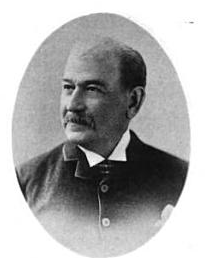
Pike in the 1880s
With the advent of the US Civil War, he became Drum Major of the 22nd Massachusetts Voluntary Infantry. He was taken prisoner in 1861 at the battle of Gaines’s Mill and sent to Libby Prison where he formed a Glee Club.

He was also active as a legitimate actor, and wrote more than one hundred songs.
  • Anthony Slide. Great pretenders: a history of female and male impersonation in the performing arts. Lombard, Ill.: Wallace-Homestead Book Co., 160 pp. 1986: 16.
  •  William J. Mahar.  Behind the Burnt Cork Mask: Early Blackface Minstrelsy and Antebellum American Popular Culture. Urbana: University of Illinois Press, 1999: 316.
_________________________________________________________________________________________________________

For whatever reason the Wikipedia article on Pike mentions neither that he was a black-face performer nor that he was a female impersonator.

And also, Pike is hardly mentioned in John Strausbaugh's otherwise excellent Black Like You: Blackface, Whiteface, Insult & Imitation, 2006.

19 May 2011

Albert D.J. Cashier, (1844 - 1915) soldier, laborer.

Jennie Hodgers was born in Clogherhead, County Louth. Hodgers emigrated to the US as a male stowaway.

As Albert Cashier he enlisted in the US Civil War with the 95th Illinois Volunteer Infantry in 1862 at age 18. The regiment was involved in almost 40 battles, including the siege at Vicksburg Mississippi where they suffered heavy casualties. Cashier was once captured by Confederate forces but managed to escape and return to his regiment.

He settled in Saunemin. Illinois in 1869. He worked as a farmhand, church janitor, cemetery worker and lamplighter. He voted in elections. He applied for a military pension in 1890 but, as he refused the required medical examination, it was not granted.

One neighboring family discovered Cashier's body sex when he was ill, but maintained the confidence. A second application for a three-fourths disability pension in 1907 with the complicity of his doctor was approved. He was awarded $12 a month. In 1910 he was hit by his employer's car which broke his leg. The doctor discovered his sex but remained quiet.

A year later Cashier became seriously ill, and was taken to the Soldier and Sailor's home in Quincy, Illinois, where the doctors agreed to respect his chosen gender. However he became increasingly mentally disturbed by 1914 and was transferred to the State hospital where he was coerced into wearing women's clothes and his condition deteriorated rapidly. His story was leaked to the press and reprinted across the US.

He died six months later.

His tombstone was in the name of Albert Cashier. His executor spent nine years tracing his identity back to Jennie, and was still unable to find any heirs. His estate of $416 was given to the county. In the 1970s a second headstone was added giving both his names.
  • Julie Wheelwright. Amazons and Military Maids: Women who dressed as men in pursuit of life, liberty and happiness. Pandora 1989: 140-1,146-7.
  • Gerhard P Clausius. “The Little Soldier of the 95th: Albert D.J. Cashier” Illinois State Historical Society. 51,1958.
  • Richard Hall. Patriots in Disguise: Women Warriors of the Civil War. Marlowe & Company, 1994: 20-6.
  • Stephanie Stevens. "Remembering the Civil War Veteran Albert D.J. Cashier". TransAdvocate, May 25th, 2009. http://transadvocate.com/autumnsandeen.
  • Lon P. Dawson. Also Known As Albert D.J. Cashier: The Jennie Hodgers Story, or How One Young Irish Girl Joined the Union Army During the Civil War. Compass Rose, nd.
  • “Albert Cashier”. Wikipedia, the free encyclopedia. http://en.wikipedia.org/wiki/Albert_Cashier.

15 July 2010

Happy Ned Taylor (? - 1887) sailor, labourer.

Elizabeth Taylor grew up to be Ned.
Although British, Happy Ned Taylor served in the Union Navy during the American Civil War, and was immortalized in a well known ballad.
“My name was Elizabeth Taylor,
But bless you I’ve long been a man;
I served in the fleet as a sailor
When the war o’ Secession began;
I fought for the North like a good un
Though I wasn’t a Yankee mysel;
And why it all ended so sudden
I’m dash’d if I ever could tell!”
At the end of his service, Ned worked in the docks at Liverpool, then as a navvy and as a farm labourer. The 'fact' that he was female-bodied was only discovered again after he died.
  • Julie Wheelwright. Amazons and Military Maids: Women who dressed as men in pursuit of life, liberty and happiness. Pandora 1989: 42.
  • “Female Sailors”, Notes and Queries. VII series, IV Dec 17, 1887: 486. Online at:  http://bit.ly/9Ko9L3.

03 May 2010

Mary Edwards Walker (1832 – 1919) doctor, suffragette.

Mary Walker was born and raised in Oswego, New York, the youngest of five daughters. In the early 1850s she adopted the new pants outfit associated with the name of Amelia Bloomer. She became one of the very first women doctors in the US when she graduated from Syracuse Medical College in 1855, the only woman in her class. She married in 1856, wearing men’s cloths, and she did not take her husband’s name. They set up a joint practice in Rome, New York, but separated in 1859.

With the start of the US Civil War in 1861, she volunteered on the Union side, but was only allowed to be a nurse, but after working as an unpaid field surgeon near the front lines, she became the second ever US Army Surgeon in 1863. In 1864, while treating civilians, she was captured by Confederate troops and charged as a spy. She was released as part of a prisoner exchange. In 1865 she was awarded a Congressional Medal of Honor, the only women to ever receive one.

She was an advocate for women’s dress reform and in 1866 was elected president of the National Dress Reform Association, and made speaking tour of England. In 1869 she finally obtained her divorce. She became a persistent wearer of trousers, switching from an androgynous mix to strictly male clothing later, although at all times insisting on being treated as a lady, and she never attempted to pass as male. She stood by the earlier suffrage position that the US Constitution gave women the vote, and she opposed the majority of suffragists who switched tactics to campaign for a female suffrage law.

She argued that women’s clothes kept them “unnaturately excited, or in a condition to be excited sexually”. Her solution to the sexual double standard was for men to be continent. She condemned all anal and oral sexual acts, and also masturbation.

In 1887 she began the first of several mid-western tours in dime-museum sideshows. She built up a collection of over 1000 pictures and letter of cross-dressing individuals. She corresponded for many years with the German transvestite Otto Spengler.

In 1902 a medical journal article referred to “Dr. M- W--, of Washington" as “the most distinguished sexual invert in the United States".

In 1917 the US Congress revoked her Medal of Honor (along with 900 others) as she had not been in ‘actual combat with an enemy’, but she refused to return it and continued to wear it until her death. She died of old age at 86, and was buried in her black suit.

A Liberty ship was named after her in the Second World war. US President Carter restored her medal in 1977. The US Postal Service issued a 20¢ Mary Walker stamp in 1982. The medical facilities of SUNY Oswego are named for her as is a US Army Reserve center in Walker, Michigan.
  • Mary Edwards Walker. Hit. New York: American News, 1871.
  • Mary Edwards Walker. Unmasked, or The Science of Immorality. To Gentlemen. Philadelphia: Wm. H. Boyd, 1878.
  • R. W. Shufeldt, "Dr. Havelock Ellis on Sexual Inversion," Pacific Medical journal (San Francisco), vol. 45 (1902), p. 201.
  • Charles McCool Snyder. Dr Mary Walker: the Little Lady in Pants. Arno Press, 1976
  • Allison Lockwood. 'Pantsuited pioneer of women's lib, Dr. Mary Walker'. Smithsonian. 7 March 1977.
  • Leslie Feinberg. Transgender Warriors: Making History from Joan of Arc to Rupaul. Beacon Press, 1996: 111.
Women in History    EN.WIKIPEDIA     FTM Contributions to Medicine, Psychology, Science and Engineering     OutHistory. ____________________________________________________________

The FTM page implies that she was a trans man, but limited by the technology of the time.  I don’t see this.  While she liked men’s clothing, there is no implication that she wanted to be a man.  Unlike many female-born persons in the 19th century she did not attempt to pass as male.  Had she done so, she would have been able to vote.