This site is the most comprehensive on the web devoted to trans history and biography. Well over 1800 persons worthy of note, both famous and obscure, are discussed in detail, and many more are mentioned in passing.

There is a detailed Index arranged by vocation, doctor, activist group etc. There is also a Place Index arranged by City etc. This is still evolving.

In addition to this most articles have one or more labels at the bottom. Click one to go to similar persons. There is a full list of labels at the bottom of the right-hand sidebar. There is also a search box at the top left. Enjoy exploring!

Showing posts with label postmodernism. Show all posts

29 January 2022

Paul B Preciado (1970 - ) philosopher

Preciado, born in Burgos in northen Spain was raised and educated as Beatriz, and having earned a Fulbright Fellowship, at the age of 28 and generally taken to be a queer lesbian, took Philosophy and Gender Theory at the New School for Social Research in New York studying with Agnes Heller and Jacques Derrida. Her doctoral topic was 

“Saint Augustine’s conversion as a process of transsexuality: when converting, Augustine moved from a luxurious desire and a booming sexual activity to an ethical imperative of chastity and sexual self-renouncement”. 

She started to think of sexual plasticity as something that exceeded modern gender politics, and wanting to get deeper into the discourse on deconstruction, 

“I took my odd Augustinian topic from the New School to the School of Architecture at Princeton University. Entering the world of architecture meant a radical deferral of my philosophical practice. Though trained in constructivist theories of gender, I had never reflected about the very materiality of the performative processes of gender construction.”. 

This emerged as a PhD in Philosophy and Theory of Architecture: Pornotopía: Architecture and Sexuality in Playboy During the Cold War. (quotes from the Introduction to the English version of Countersexual Manifesto: 2-3)

In 1998 Preciado participated in a Diana Torr drag king workshop in New York, and later took Torr to France and Spain acting as the translator in the workshops.

Preciado’s first book was Manifeste contra-sexuel (2000) written while she was Princton working on her PhD and available initially only in French. It is posited as a disruption of feminism and of queer theory, and calls theorists such as Derrida, Foucault, Butler, and Haraway to task for not going nearly far enough in their attempts to deconstruct the naturalization of normative identities and behavior, and invokes countersexuality’s roots in the history of sex toys, pornography, and drag in order to rupture the supposedly biological foundations of the heterocentric regime. It was acclaimed by French critics as “the red book of queer theory” and became a key reference for European queer and trans activism.

Six years later Preciado provided the text for a series of photographs by the gender-variable Del Lagrace Volcano.

From 2005 to 2014 Preciado dated the writer and film-director Virginie Despentes, a woman with sex-work experience.

Preciado’s next book was Testo Junkie.  In French and Spanish 2008, English 2016. Preciado discusses the taking of self-administered testosterone, and how the body is politicised by "pharmacopornographic capitalism”. Taking testosterone is both political and performance, and Preciado discusses the changes and how they interact with the relationship with Virginie Despentes, and also deals with other drugs that transform the body such as birth control, Viagra, performance-enhancing drugs, Prozac, and estrogen.

Pornotopia, the book version of Preciado’s PhD dissertion came out in French in 2010 and in English in 2014. It was awarded a 2011 Prix Sade in France.

Preciado, in his mid-40s in 2014, announced that he was transitioning, and shortly afterwards that he had taken the name of Paul.

In 2018 the English translation of Countersexual Manifesto finally came out with a foreword by Jack Halberstam.
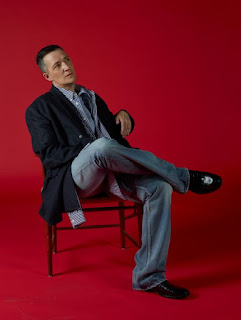

November 2019, Paul Preciado was invited to speak in front of 3,500 psychoanalysts at the annual conference in Paris of the École de la Cause Freudienne (Lacanian). Aware that most of those in attendance regarded him as a “mentally ill person” suffering from “gender dysphoria”, Preciado drew inspiration from Kafka's “Report to an Academy” in which a monkey tells an assembly of scientists that human subjectivity is a cage comparable to one made of metal bars. He touched on the homophobia and transphobia of psychoanalysis and spoke of its complicity with the ideology of sexual difference dating back to the colonial era. This he regarded as rendered obsolete by technological advances allowing us to alter our bodies and procreate differently. He called for a new psychoanalytic discourse allowing for a multiplicity of bodies without reducing the body to its sole heterosexual reproductive capability, and without legitimizing hetero-patriarchal and colonial violence. This was met with heckles and boos, and he was not permitted to finish. What he had said had been filmed on smartphones, was published online, where fragments were transcribed, translated, and published with little regard for exactitude.

Meanwhile he published An Apartment on Uranus: Chronicles of the Crossing. Despentes provided an Introduction. The book, mainly a collection of essays previously published in Libération, recounts the transformation from Beatriz into Paul B., but also considers political, cultural, and sexual transition, discussing issues from the rise of neo-fascism in Europe to the technological appropriation of the uterus, from the harassment of trans children to the role museums might play in the cultural revolution to come. 

“My trans condition is a new form of uranism. I am not a man. I am not a woman. I am not heterosexual. I am not homosexual. I am not bisexual. I am a dissident of the gender-sex binary system. I am the multiplicity of the cosmos trapped in a binary political and epistemological system, shouting in front of you. I am a uranist confined inside the limits of technoscientific capitalism.” (p29)

A year later Paul published the correct text of the unfinished address to the École de la Cause Freudienne, and followed that by Feminazis in which he discusses the insults from the “lords of colonial patriarchy”. 

“Since women speak for themselves, representatives of the old sexual regime have been so nervous that now they are the ones who are beginning to run out of words. Perhaps that is why the lords of colonial patriarchy have been digging into their necropolitical history books for insults to throw us in the face and, by curious chance, have chosen the one they always have at hand: nazi!”

Preciado was Head of Research of the Museum of Contemporary Art of Barcelona (MACBA) and Director of its Independent Studies Program (PEI) from 2011 to 2014. He has taught Philosophy of the Body and Transfeminist Theory at Université Paris VIII-Saint Denis and at New York University. From 2014 to 2017 he was Curator of Public Programs of documenta 14 exhibited in Athens and in Kassel Germany.  He participated in the LUMA Foundation, Arlès, France.

  • Beatriz Preciado translated to French by Marie-Hélène Bourcier. Manifeste contra-sexuel. Paris: Balland, 2000, 157 pp. An English version was issued 18 years later as by Paul B. Preciado translated by Kevin Gerry Dunn with a forward by Jack Halberstam. Countersexual Manifesto. Columbia University Press, 2018, xvi+216 pp.
  • Del LaGrace Volcano with text by Beatriz Preciado. Sex Works 1978-2005: From Love Bites to Postporn, Tübingen: Konkursbuch, 2006, 159 pp.
  • Beatriz Preciado, Testo junkie: sexe, drogue et biopolitique, Paris: Grasset & Fasquelle, 2008, 400 pp. English translation by Bruce Benderson. Testo Junkie: Sex, Drugs, and Biopolitics in the Pharmacopornographic Era. Feminist Press, 2013, 427 pp,
  • Beatriz Preciado, Pornotopía: arquitectura y sexualidad en Playboy durante la guerra fría, Barcelona: Anagrama, 2010, 220 pp. English translation Pornotopia: An Essay on Playboy’s Architecture and Biopolitics, Zone Books, 2014, 303 pp.
  • Paul B. Preciado with an introduction by Virginie Despentes. Un appartement sur Uranus: chroniques de la traversée.Paris: Grasset, 2019, 334 pp. English translation by Charlotte Mandell. An Apartment on Uranus: Chronicles of the Crossing. Semiotext(e), 2020, 263 pp. [8]
  • Paul B. Preciado, Yo soy el monstruo que os habla: Informe para una academia de psicoanalistas, Barcelona: Anagrama, 2020, 96 pp. English translation by Frank Wynne. Can the monster speak? a report to an academy of psychoanalysts. Semiotext(e), 2021.
  • Paul B. Preciado. Feminazis. Gato Negro, 2021.
  • Paul B. Preciado. Terreur anale. 2022.

-----

  • Diane Torr & Stephen Bottoms.  Sex, Drag, and Male Roles: Investigation Gender as Performance.  The University of Michigan Press, 2010: 165.
  • Rachel Santee. “Review: Testo Junkieby Paul B. Preciado, Translated by Bruce Benderson”. Akashic Books, September 17, 2013. Online.
  • Sarah K Hansen. “Paul B. Preciado, Testo Junkie: Sex, Drugs, and Biopolitics in the Pharmacopornographic Era”. philoSOPHIA, 6,1, 2016.
  • RL Goldberg. “Even This Review Is a Dildo: On Paul B. Preciado’s Countersexual Manifesto. LA Review of Books, February 16, 2019. Online.
  • Crispin Long. “Boundary Issues: In An Apartment on Uranus, Paul B. Preciado undermines geopolitical, technological, and gender binaries”. BookForum, July 30, 2020. Online.

EN.Wikipedia


06 April 2013

A Review of Darryl Hill's Trans Toronto: An Oral History

Darryl Hill did his BA and MA at the University of Saskatchewen, and his PhD at the University of Windsor. He was for a while in the Psychology Department at Concordia University, where he would have met Vivian Namaste.  He is now an Associate Professor in the Psychology Department at the College of Staten Island, which is part of the City University of New York.  He is also a co-founder of TransNYC.  He has previously published a paper, "Sexuality and gender in Hirschfeld’s ‘Die Transvestiten’: A case of the 'Elusive evidence of the ordinary.' ". Journal of the History of Sexuality, 14, 2005, 316-332, which points out that the distinction in his work between homosexual and transvestite is less sure than generally assumed.

  • Darryl B. Hill.  Trans Toronto: An Oral History. New York: William Rodney Press, 2012.  
Or from Lulu.com.


In 1996-7 and again in 1999-2000 Hill interviewed a variety of trans people in Toronto, 28 in all.  However despite the book's title this is not simply an oral history of being trans in Toronto.  The final paragraph of the book is a summation: "A new model of gender generalisable beyond trans-identified people presents challenges, but I have found that postmodern feminist queer theory offers a compelling proposal for gender in the postmodern context, assertions widely supported by the life stories of some trans Torontonians at the start of the 21st century".

He tells us (p12) that "Many interviewees had questions about me (e.g. What's a straight guy from Saskatchewan doing interviewing trans people?), my goals for this research (e.g. Was I seeking, like some psychologists, to pathologise trans people?), my gender (Was I a female-to-male transsexual?) and so on.  When they asked questions, I was open and honest."   Except that he does not tell us, the readers, what answers he gave to those questions.

The book really does need to have 'postmodern' in its title.  I imagine that there will be three kinds of reader:
1) those of the postmodern persuation.  Even these I think will find the 50 (out of 180) or so pages explaining postmodern theory to be a bit much, as presumably they already know it.
2) those unpersuaded by postmodernism.   I suspect that many of these will give up once they hit the heavy theory section starting in chapter 3.
3) those who want a history of trans Toronto, for there is no other book on the topic.  By a mixture of skipping and using the index these readers will find the bits of interest.
This book would be much more readable if the theory sections had been moved to an appendix.  The major history discussion does not happen until chapter 8, after the theory chapters.  Fortunately the postmodern sensibility as it has seeped into public consciousness has removed the obligation that people used to feel that a book should be read sequentially. 

Let us return to the 28 interviewees.  They are referred to only by first names or pseudonyms for obvious reasons of confidentiality.  However Darryl does taunt us a bit on that.  He tells us (p93) that Laura, Sarah and BC "were a significant presence on the Internet: they each had popular and widely accessed web pages dedicated to some aspect of trans life", and that (p161) "one narrator had been a leader in trans politics, truly a leader, but had since been keeping a lower profile and was not currently involved in any political project."   I  had previously visited BC's web page, and so recognized her non-standard name immediately.

Another of the 28 used the very unusual spelling Miqqi.  Google 'Miqqi' - simply that even without any extra words like 'transgender' and you immediately find the web page of Micheal Gilbert who is a professor at York University, Toronto and, as Miqqi Alicia, an open tranvestite who has been profiled as such in Toronto Life, has written for Transgender Tapestry and is a frequent participant at Fantasia Fair.  The index has an entry for each of the 28 interviewees, and therefore an entry for Miqqi.  However it also has an entry for Michael Gilbert.  It is never admitted that they are the same person.  In addition Hill mentions Xpressions (p27), a transvestite social group, without mentioning that Miqqi is active in it.    And further (p9) he mentions that he met a key informant at an academic conference - at a guess this is Miqqi again.   While I am open to the Buddhist-postmodernist notion that the unitary self is a delusion, to split a single person into parts like this is misleading.

There are no sketches of each of the 28.  Apart from Miqqi, I was unable to develop any feeling for them as individuals.   As I said, there are index entries for them which enable you to flip and read all the comments from a single person, but this is awkward at best.  They are quoted in response to aspects of theory, sometimes supporting it, sometimes questioning it.  On page 5, Hill mentioned that Namaste had rightly argued - in particular against Garber -  that trans persons are more than literary devices illustrating the the crisis of gender through discursive perfomatives.  Likewise they are more than talking heads to be juxaposed against theory points.  Without a proper sketch of each of the interviewees, it is not really fair to describe what Hill is doing as 'oral history'.

The book contains a short account of Toronto trans history before 1995, when Hill began his interviews.

However there is nothing on the 1950s when Jean Fredericks started her career before moving to London nor on the 1960s when Katherine Cummings was a student in Toronto and socializing with John Herbert Brundage.  The periodical Justice Weekly, which was published in Toronto, acted as a contact point for closeted transvestites. The transsexual, Dianna Boileau, was dramatically outed after a car accident, and later became the first transsexual accepted for surgery at the Clarke Institute Gender Identity Clinic.  Nor is there mention of Betty Steiner who became the first head of the Clinic when it was founded in 1969.  

Rupert Raj, founder of FACT, Metamorphosis Medical Research Foundation etc is very ill-served by being reduced to one factually-incorrect sentence: "Rupert Raj, who was active in in the Calgary-based FACT between 1982 and and 1988, went on to cofound (with Mirah-Soleil Ross) the Meal Trans program in 1999)" (p150).  On the previous page Hill had told us that "the Foundation for the Advancement of Canadian Transsexuals (FACT) [was] also known as the Federation of American and Canadian Transsexuals".  This really won't do.  Rupert moved to Toronto from Calgary in 1979 which therefore became the base location of FACT.   In 1982 he permitted Susan Huxford (not mentioned anywhere in Hill's book) to take over FACT.   Huxford renamed FACT as the Federation of American and Canadian Transsexuals as there was a branch in the US. 

Two paragraphs later Hill is telling us that "By the late 1980s, the main newsletter was Transition Support News".  His removal of Huxford from the story creates more problems.  In 1986 both FACT-Toronto and FACT-Hamilton rebelled against Huxford's authoritanism (much as FPE Alpha Chapter had rebelled against Virginia Prince in 1974).  The Toronto chapter reconstituted itself as Transition Support, and has continued with name changes and is still going. 

The in-between paragraph tells us: "In July 1979, a group claiming to be Ontario's only group for 'TV/TS' produced their first newsletter, Skirting the Issue".  The group was the short-lived Transvestites in Toronto, a social group.  Why doesn't Hill name the group? Is he being prudish about its acronym?

Hill does not mention that FACT-Toronto had a member who is world-famous for her sporting achievements: Michelle Duff.  Nor does he mention the Toronto performers such as Craig Russell, Rusty Ryan, Michelle DuBarry (who did attend a few meetings of Transvestites in Toronto), nor the musicans Barbra Amesbury and Toby Dancer (whom the Ontario trans rights bill was named after).

Unlike the chapter in Namaste's book which discusses the Clarke Institute Gender Identity Clinic but says not a word about autogynephila, Hill does quickly summarize it (139) and ask his interviewees what they think about it.  There is no mention at all about Kurt Freund, its inventor and Ray Blanchard is referred to only by his surname, and only his late 2005 paper is listed.  Michael Bailey is not mentioned but Alice Dreger's defence of Bailey is.  Of the transsexuals who embraced the concept, Anne Lawrence in the US is mentioned, but the major Canadian who did so, Willow Arune, is not.  Nor is there any mention that the Clarke Gender Clinic is the only clinic in the world where a staff member has also changed gender: Maxine Petersen. There have been extensive discussions of the Clarke Institite (later called CAMH) and autogynephilia on this site, on BC's site, on TS Roadmap and on Lynn Conway's site.  As Hill's account is so short it would help if he referred his readers to these sources.

On p67 Hill cites Docter and Prince in successive sentences as both regarding the sex-gender syster as binary.   Surely he should have mentioned that they were personal friends and therefore this does not count as two independent researchers coming to the same conclusion.

In the 1980s one of the most dispiriting aspects about reading books on transgender was that almost all of them cited Janice Raymond, even for small details.  One would have thought, at least hoped, that that was bygone.  But she is cited 4 times in this book without any warning that her book is a transphobic tirade which does not attempt to be objective in either a modern or a postmodern sense.   If Hill did not figure that out himself, surely some of the 28 interviewees pointed it out.   Also Raymond is not a postmodernist.  She is not only an unreconstructed essentialist, her positions in all her books are fully compatible with the doctrines of the Holy See.  This is not a minor point.  After all the damage that Raymond did, the many who died because her advocacy denied them needed medical care, it matters that we should stand up and call out any who purport to be pro-trans and yet uncritically cite Raymond.

Most of the deficiencies in Hill's knowledge of the history of trans in Toronto could have been fixed by perusing this site.  Should I take umbrage that he declined to do so?  From internal evidence it is apparent that he wrote the first draft in his book at the beginning of the 2000s, years before this site existed.  However he revised it later for publication in 2012 - see the (very small number of) items in his bibliography with dates in the last five years.

What you think of this book will depend on where you situate yourself with regard to postmodernism.  I have flirted with it, mainly in the 1990s.  People do tell me that some of my positions are definitely postmodern, and I don't mind being labelled so.  However I have generally been quite disappointed by postmodernist book on trans topics.  Other examples are by Namaste and Ekins (not mentioned at all by Hill).  To do postmodernist theorizing (or theorizing for any other school) it is necessary to get the facts fairly close to being right, and Hill, Namaste and Ekins have come up short on this criterion.

Unfortunately we do not yet have a history of trans in Toronto, or even in Canada.  This is much needed.  Hill's book is inevitably going to attract readers looking for such a book, and unfortunately they will have to plough through a long theory section, or practice their skipping skills.

14 September 2009

Viviane Namaste: Invisible Lives – a review

See also: “A Gang of Trannies”: Gender Discourse and Punk Culture – a review of the chapter by Viviane Namaste


Viviane did a BA in Sociology at Carleton University, Ottawa, 1989, an MA at York University, Toronto, 1990, and a PhD in Semiology at the Université du Québec à Montréal, 1996. She is Principal at the Simone de Beauvoir Institute, Concordia University, Montréal. She was awarded the 2009 Canadian Award for Action on HIV/AIDS and Human Rights for her efforts to address the HIV prevention and treatment needs of trans people, bisexuals and the swingers community.
  • Viviane K. Namaste. Invisible Lives: The Erasure of Transsexual and Transgendered People.  University of Chicago Press, 2000.

    Namaste, as the subtitle of the book says, is concerned with the erasure of trans people in both straight and gay/lesbian contexts. Of course any conceptual or bureaucratic system emphasizes some people and erases others.   In addition, the high estimate for transsexuals being 1 in 500, it is inevitable that social workers, civil servants etc will neglect us, which makes it all the more important to speak up for our existence.   In turn, inevitably,  Namaste’s book also erases some types of transsexual. Her major concern is with trans prostitutes, unemployed and seropositives. It is of course good that someone is speaking up for this group. However trans persons with regular jobs are not much mentioned in this book.  She says not a word about trans people who erase themselves by going stealth and denying that they were ever a different gender. Nor does she say anything about gay scholars, Jonathan Katz the most prominent, who treat trans people as either gay or lesbian.

    If you are the kind of reader who ignores footnotes, you will miss Note 3 to the introduction where Viviane mentions that she herself is trans, and goes on: “I am not interested in situating myself personally in this book. There are a variety of reasons to justify my position. First, autobiography is the only discourse in which transsexuals are permitted to speak. An academic text on transsexuality and the institutional world that does not address the transsexual author’s personal history, then, is a critical intervention in the existing knowledge paradigm”. She extends this with a disinterest in the personal history of the other writers that she engages with, some of whom are trans and some are not. Those readers who happen to know which ones are, will be reading a somewhat different book to those who do not.

    Throughout the book she inserts comments by Diane Gobeil, Mirha-Soleil Ross and Margaret O’Hartigan, much in the same way as television documentaries have talking-heads, but beyond the simple fact of them being MTF activists, she tells us nothing of them.  Again, some of us know who they are, and others do not.

    This is an academic text. It is concerned with the implications of post-structuralist theory and sociology. It is narrower than post-structuralist, it is post-Foucaultian. Much of the theory discussion will not interest the general reader.

    In 1995 Namaste was funded by Health Canada to do a needs assessment for transgendered persons in Toronto. She interviewed 33 people, 31 mtf, 2 ftm, 6 post-operative, 19 enrolled at the Clarke Institute (now the Centre for Addiction and Mental Health=CAMH) Gender Identity Clinic (more), 12 sex workers. She does not explain why it was so difficult to find more than 2 trans men. Toronto, after all, is the city where Rupert Raj (not mentioned in the book), has worked so long and hard in organizing trans men.

    It is no surprise that the 12 sex workers reported frequent police harassment, and in a back-handed way it is encouraging that only one other did so: she is a métis who was stopped in northern Ontario for driving with a broken light, and who was then jailed when they realized that she was trans.

    It is also not a surprise that homeless trans persons avoid the youth, women’s and homeless shelters where they were usually expected to impersonate their birth gender, and even then were often turned away. Seven years later in 2002, Toronto revised its shelter standards: "It is expected that all shelters be accessible to transgendered/transsexual/two-spirited residents in their self-defined gender and that shelters will work toward improving access to this group”. This was a step forward, but practice lags behind theory. Interestingly, Namaste reports that some trans women opted to go to gay bathhouses rather than to the city shelters. This in turn raises questions that she does not answer. The gay bathhouses admit only men, and therefore to some extent the trans women must be impersonating their birth gender there also.

    In discussing trans persons who attend Alcoholics Anonymous, she mentions that many AA members are transphobic. Some trans persons attend AA either as their birth gender or as their chosen gender but in both cases feel frustrated in that they cannot talk about what actually drove them to drink. Now just a minute. The latter group, those who attend as their chosen gender are complaining that they pass. The down-side of stealth or passing is that there are things that one cannot talk about. It is difficult for a trans alcoholic to attend AA unless he or she is out, for this very reason. Ideally there should be a specialist trans AA group, but failing that would it not be better to attend a gay/lesbian group where one can be out as trans, rather than a heterosexual group where one is intimidated not to discuss the real issue.

    While Namaste was conducting her study in the Summer of 1995, a provincial election returned the Progressive Conservatives under Mike Harris with an item in their manifesto that they would discontinue funding under the provincial health plan for SRS. This put Namaste in a bind when she wrote her report in that she did not want to provide material that would support that intention. This book, published in 2000, contains data that she left out. Nevertheless the Harris government did suspend funding in 1998, and the suspension remained in place until reversed by the Liberal government in 2008.

    The major complaint of the 19 respondents who were or had been enrolled at the Clarke Institute Gender Identity Clinic was the requirement that they do 12 months of real-life test before starting hormones. This is more than is required by the HBIGDA (now WPATH) Standards of Care, but is required by several Gender Identity Clinics. Namaste reports that the staff at the Clarke Institute Gender Identity Clinic estimate that 30-50% of their clients are receiving hormones from somewhere else, but contrary to what some expect, such clients are not expelled from the program. It is of course, as Namaste explains, not good health care to force persons to cross-live without hormones if such policy leads to them being beaten up.

    The second complaint of the respondents is that the Clarke Institute Gender Identity Clinic does not provide any counselling in dressing, passing etc. Personally I would never have expected such advice from a GIC. Such is part of what is offered by transsexual peer groups.

    The Clarke Institute Gender Identity Clinic is (in)famous as the institution where the concepts of autogynephilia and Homosexual Transsexual (HSTS) were developed, first by Kurt Freund and then by Ray Blanchard.  In addition to the many web pages that discuss this issue, it is explained at length in a book published by the Clarke Institute Gender Identity Clinic, Gender Dysphoria: Development, Research, Management, 1985.  This being the case, I found it particularly odd that Namaste’s book does not mention Blanchard nor the 1985 book nor the concepts of autogynephilia and HSTS, nor even the idea that there are two types of transsexualism.  I wanted Namaste to ask her respondents whether they tried to present themselves more as autogynephilic or more as HSTS. But it is as if the Clarke had never coined the concepts.

    Those who have read Michael Bailey’s The Man Who Would Be Queen, 2003, may be left with the impression that trans prostitutes are the epitome of HSTS.  In addition, Namaste quotes Dallas Denny from 1992 who expressed the opinion that prostitutes were over-represented among the clients at GICs, and then Namaste makes a very strange comment: “Nevertheless, her position assumes that most ‘true’ transsexuals are not involved in prostitution and/or street life”.   Is Namaste asserting that most transsexuals, or at least ‘true’ transsexuals, are prostitutes?   She never defines what might constitute a ‘true' transsexual, and what would be a ‘false’ transsexual.     Traditionally most trans women went into prostitution because all other types of employment were closed off to us.  This is still the case in some Mediterranean countries, but this is hardly the case in modern Canada.  While prostitutes are still a significant proportion of us, it has not been my experience that they are the majority, and certainly Namaste does not supply any statistics or any other evidence to get me to change my mind. In her own sample only 12 out of 33 are prostitutes.

    Anyway the reality at the Clarke Institute Gender Identity Clinic was that prostitutes were not accepted. The GIC does not regard prostitution as a typical female employment, and of the nature of the trade, prostitutes are not able to present a tax return in a female name showing that they have been working as women. Namaste also interviewed GIC staff in Montréal and Québec City and shows that they have a very similar attitude. Not surprisingly only 4 of the 12 prostitutes in Namaste’s sample were enrolled at the Clarke Institute Gender Identity Clinic, and only two of those admitted to them that they were prostitutes. One of these was told that she would get no help if she were busted by the police again, and withdrew from the program. An angle that Namaste does not pursue: as clients are expected to show their tax return to prove that they are working as the target gender, do not some other self-employed persons run into similar problems of proof?

    Namaste mentions that many think that there is a quota re how many transsexuals the Clarke Institute Gender Identity Clinic can approve per year and quotes in refutation a representative of the Ontario Health Insurance Plan (OHIP) that the numbers vary from year to year. Surely the wrong question is being asked here. The population of Ontario is 13 million and was 10 million in 1995. We divide the 1995 total by 1,000 to get a rough estimate of transsexuals in the province which would be 10,000, and further divide by 50 to get the number who apply in any given year. Therefore we would expect around 200 per year. The Clarke approval figures are around 10 a year. There may not be a quota as such, but the Ontario Ministry of Health expects the Clarke to keep the figures closer to 10 than to 200. They have been very efficient at this.

    From 1998 to 2008 OHIP did not fund SRS. Hence the Clarke Institute Gender Identity Clinic was without its carrot. Why did people continue to enrol and put up with their nonsense? While this happened after Namaste’s study, her data offers a snapshot of Toronto transsexuals just before the funding suspension was introduced.  We should be able to extrapolate from her data to answer the question, but the data presented does not do so.
    ---------------------
    A few notes on word usage.
    • Not everyone will understand ‘Anglo-American’. It does not mean UK + USA, as in the mining company. It is Quebec usage in contrast to Franco-American. American here = US + Canada. This usage of course erases Hispanic-American and Aboriginal American and all the types of immigrants.
    • A footnote on the word ‘travelo’ would be useful.
    • transsexuel/transsexuelle. Which is which? Just as Anglophone sexologists describe trans women as ‘male transsexuals’, so I think that there is a political dispute as to whether a transsexuelle is a trans man or a trans woman. This is not clarified.
    • Namaste is constantly saying “transsexual and transgendered (TS/TG) people”, which does of course become tedious. At least in the chapter on applicants to the Clarke Institute in Toronto, '”transsexual” alone would have sufficed.
    • Sometimes she says ‘transgenderist’, as does Anne Bolin whom she quotes several times. This form of the word is, of course, associated with Virginia Prince whose meaning is distinctly different from what Namaste and most writers mean by ‘transgendered’. Prince is not mentioned even once in this book, but the use of her word does open up confusion.
    • What does Namaste mean by ‘heterosexual’? E.g. p63 ‘MTF queens who are unapologetically heterosexual’. I read this twice, once thinking that she means gynephiles and then that she means androphiles. She is doing here the writing equivalent of mumbling, and her meaning is not clear. She never uses ‘androphilic’ or ‘gynephilic’, and one is left uncertain at best.
    • There is a contentious translation on p12: “La fierté gaie, lesbienne, bisexuelle, travestie, et transsexuelle” is rendered “lesbian, gay, bisexual, and transgender pride”.