This site is the most comprehensive on the web devoted to trans history and biography. Well over 1800 persons worthy of note, both famous and obscure, are discussed in detail, and many more are mentioned in passing.

There is a detailed Index arranged by vocation, doctor, activist group etc. There is also a Place Index arranged by City etc. This is still evolving.

In addition to this most articles have one or more labels at the bottom. Click one to go to similar persons. There is a full list of labels at the bottom of the right-hand sidebar. There is also a search box at the top left. Enjoy exploring!

Showing posts with label masquerade balls. Show all posts

18 September 2012

Druids’ Hall, 26 July 1854

The hall, owned by the Ancient Order of Druids, was let over a period of 18 months during the Crimean War to a Mr Harris.  On the night of 26 July 1854, the event was a bal masqué.

Joseph Brundell of the city police had been on duty over the 18 months near Druids’ Hall and had noticed men attending in female attire.  He reported this to his sergeant, and was told not to interfere unless he saw ‘disgusting conduct’ in the public street.

Inspector Teague reported the next day:
From information I received relative to the frequent congregation of certain persons for immoral practices at the Druids'-hall, I proceeded thither in company with Sergeant Goodeve about 2 o'clock this morning. I saw a great many persons dancing there, and among the number were the prisoners, who rendered themselves very conspicuous by their disgusting and filthy conduct. I suspected that the prisoners and several others who were present in female attire were of the male sex, and I left the room for the purpose of obtaining further assistance, so as to secure the whole of the parties, but when we got outside Campbell came out after us, and, taking us by the arms, was about to speak, when I exclaimed, "That is a man," upon which he turned round and ran back immediately to the Druids'-hall. I returned and took Campbell into custody and observing Challis, whom I have frequently seen there before, behaving with two men as if he were a common prostitute, I took charge of him also.
John Challis, 60, wearing 'the pastoral garb of a shepherdess of the golden age', and George Campbell, 35, a lawyer, “completely equipped in female attire of the present day”, were arrested with on the charge of disguising themselves as women with the purpose of exciting others to commit an unnatural offence.

Madeleine Vincent said, she attended to the refreshment department in the ballroom, and saw the prisoners there, but saw nothing disgusting in their conduct, and never told the police that she had. She had said their conduct was disgraceful because they made such a noise, but that was the only impropriety she saw or complained of.

The landladies of all the different lodgings occupied by Challis during the last 12 months came forward and stated that they always considered his character irreproachable; but that he had a sort of mania for masquerades.
Sir R.W.Carden [magistrate] -  I was informed by your own bail that your object in visiting Druids'-hall was to see vice in all its enormity, in order that you might correct it from the pulplit, and he said that was the excuse you made for going to such places.

Campbell - It is a quite a mistake. I certainly did wish to see a little of London life without mixing with its abominations.

Sir R.W.CARDEN - And you thought that dressing yourself in women's attire was the best way of avoiding those abominations? I must say it was a very imprudent course . . . . I certainly hope you now see the folly of indulging in such extraordinary freaks, as you term them, and that you deeply feel how degrading it is to a man of education . . . to be placed in such a position. . . . However, under the circumstances, I am willing to believe it was nothing more than an act of the grossest folly, and that you now sincerely repent your imprudent conduct.
  • The Times, 27 July, 1 August, 2 August.  1854.  Online at: www.victorianlondon.org/sex/mencrossdressing.htm.
  • Thomas Boyle. Black Swine In The Sewers Of Hampstead: Beneath The Surface Of Victorian Sensationalism. London: Hodder & Stoughton 1989. New York: Viking 1989: 11.
  • H. G. Cocks. Nameless Offences Speaking of Male Homosexual Desire in Nineteenth-Century England. London: I.B. Tauris, 2003: 69-70.

13 March 2012

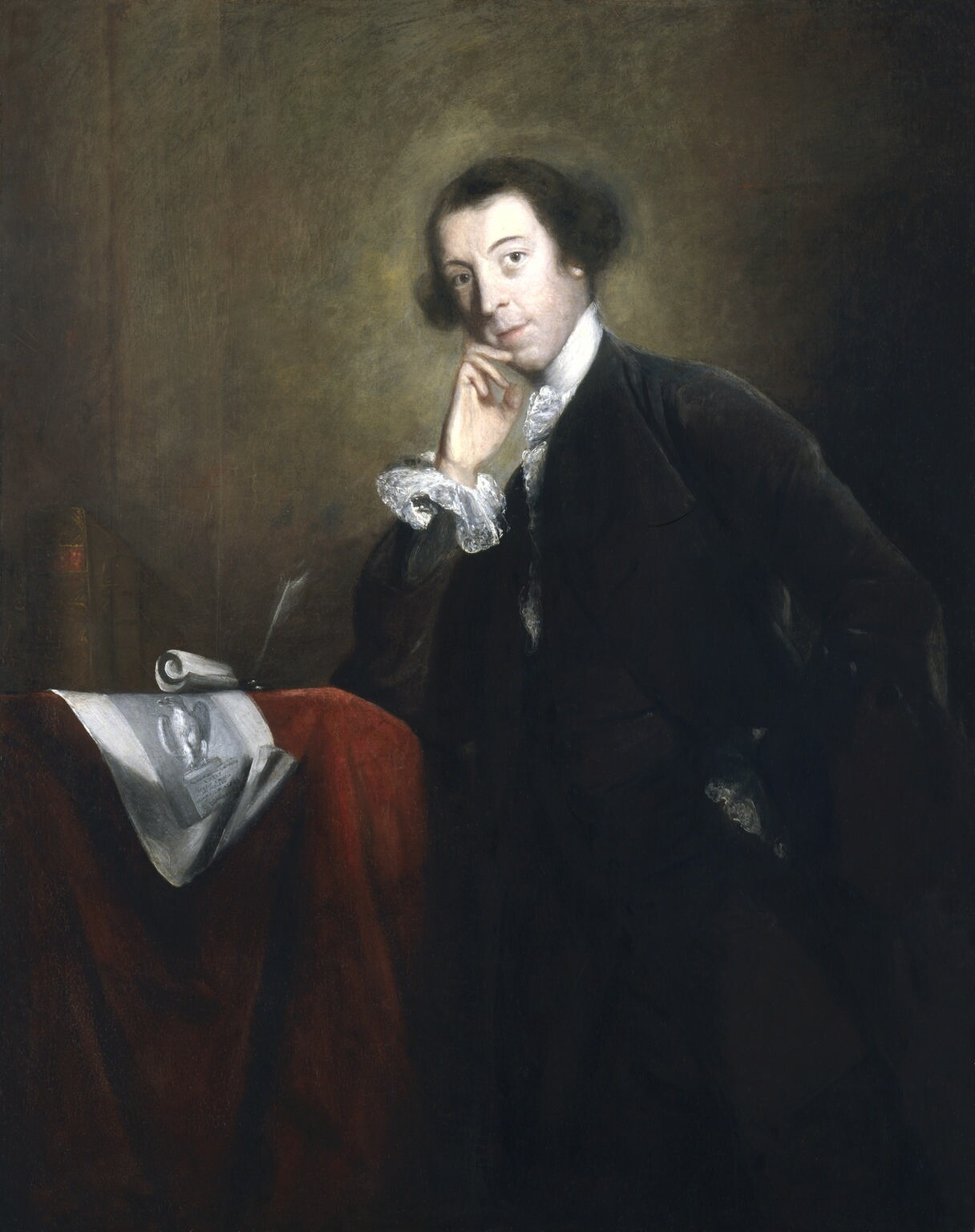
Horace Walpole (1717 - 1797) Member of Parliament, writer.

Horace was the youngest son of Prime Minister Robert Walpole (1676-1745) and a cousin of the future naval hero, Horatio Nelson (1758-1805). He was educated at Eton and King’s College, Cambridge, although he left without a degree. His mother died in 1737.

His father arranged three sinecures for him with a total income of £3,400 a year. Despite that, he took off for a two-year Grand Tour of Europe with his friend from Eton, Thomas Gray, the future poet. They fell out in Florence, and made their own way. Horace never married nor was ever said to have a mistress. Historians are divided about whether he should be regarded as gay.

On return in 1741 Horace was given the Parliamentary seat of Callington, Cornwall. He held the seat for thirteen years without ever visiting the constituency.

Horace liked to dress as an eroticized older woman, a role that he wore at masquerade balls. In 1742 he wrote to Horace Man: “I was last week at the masquerade dressed like an old woman, and passed for a good mask”, and Lady Hervey described him as afterwards standing for a hour in “stays and underpetticoats’ before his footman. (Correspondence, I(17), 359).

Robert Walpole died of gout in 1745 and left Horace the office of Collector of the Customs, worth £1,000 a year. Walpole and Gray resumed their friendship in 1745, the year of the Jacobite Rising.

In 1751 Horace’s elder brother, Edward (1706-84), was indicted for buggering a servant, based on the say so of a gang of blackmailers.  He was able to obtain a verdict of not guilty and proceeded to prosecute three of the gang for conspiracy to extort. They were sentenced to the pillory and to 2-4 years imprisonment.

Horace was Member of Parliament for Castle Rising 1754-7, and then for King’s Lynn till 1768.

Walpole is credited with coining the word ‘Serendipity’ in 1754 after reading Michele Tramssino’s The Three Princes of Serendip. By this time, despite being ectomorphic and eating little, he had started to suffer from gout.

He is the author of The Castle of Otranto, which is taken to be the first Gothic Novel. The first edition, 1764, was published anonymously on his own printing press.

In 1770, Horace was one of the first to receive the gossip from Paris that Charles d’Eon was a woman.

Walpole was a lifelong Whig supporting the Hanoverian Monarchy. He was quoted as saying: “This world is a comedy to those that think, and a tragedy to those that feel”.

Robert Walpole had been created Earl of Orford in 1742. The title passed to his eldest son, also Robert in 1745, and then to his son who died unmarried in 1791, and, Edward having already died with only illegitimate daughters, the title fell to his uncle Horace, who also had no issue.

After Mary Wollstonecraft published her A Vindication of the Rights of Man in reponse to Edmund Burke's Reflections on the Revolution in France, Walpole put her down as "a hyena in petticoats" for attacking  Marie Antoinette, in that she like most commentators deplored Burke's theatrical pity for the french Queen.  He was saying that it was unnatural for a woman to write a book.

In his later years, Horace became so infirm that his secretary wrote his letters.

The apparent canard that Edward Hyde, Lord Cornbury, dressed as Queen Anne while Governor of New York and New Jersey 80 years before, was told by Walpole in an evening of gossip in 1796.

Walpole died of gout aged 79. He left voluminous correspondence which was published in 44 volumes, and are frequently consulted by historians of the period. He left his wealth to Anne Damer, a sculptress who was known for her cross-dressing.
  • Horace Walpole. The Castle of Otranto A Story. London: Printed for Tho. Lownds, 1765.
  • Arthur J Viseltear. “The Last Illnesses of Robert and Horace Walpole”. The Yale Journal of Biology and Medicine, 56, 1983: 131-152.
  • Terry Castle. Masquerade and Civilization: The Carnivalesque in Eighteenth-Century English Culture and Fiction. Stanford, Calif: Stanford University Press, 1986: 64, 73-4, 354.
  • Rictor Norton. Mother Clap's Molly House: The Gay Subculture in England, 1700-1830. London: GMP, 1992: 95-6, 139, 234-5.
  • Gary Kates. Monsieur D'Eon Is a Woman: A Tale of Political Intrigue and Sexual Masquerade. New York: Basic Books, 1995: 9, 180, 182, 256.
  • Patricia Updegraff Bonomi. The Lord Cornbury Scandal: The Politics of Reputation in British America. University of North Carolina press, 1998: 14-16.

 EN.WIKIPEDIA     GLBTQ    GAYFORTODAY  
_________________________________________________________________________________

Was Walpole a transvestite?  Even though the verb form, to transvest, was a well established word in eighteenth-century English, the question would not make sense to eighteenth-century Londoners.  Transvesting was something that one did, not what one was.   Even though they were starting to talk of a sodomist as a type of person superceding the previous usage that sodomy was something that one did, without an implication of being a type of person, the same progression had not happened with transvesting as such, even though some who transvested were by then regarded as 'mollies'.  However there is no record of Walpole being in a molly house, and his being an aristocrat it is almost unthinkable that he would be regarded as a molly.

27 February 2009

Princess Seraphina (16?? – 17??) servant.

John Cooper, a gentleman's servant. was active in the Molly houses in London in the 1720s, using the name, Princess Seraphina. He was a gay transvestite just at the period when people were beginning to conceive of such a role - to which they applied the label 'molly'.

Trumbach quotes some of Seraphina's contemporaries. One called her a Mollycull, 'one of the runners that carries messages between gentlemen ... going of sodomitical errands'. Another said that she had 'never heard she had any other name than the Princess Seraphina', and that she had 'seen him several times in women's clothes, she commonly used to wear a white gown and a scarlet cloak with her hair frizzled and curled all around her forehead; and then she would so flutter her fan and make such fine curtsies that you would not have known her from a woman: she takes great delight in balls and masquerades'.


However she sometimes dressed as a man. In 1732 John Cooper was the plaintiff in a court case in which he charged Thomas Gordon with forcing him to undress in Chelsea Fields in order to exchange his fine male clothes for those of Gordon. Gordon insisted that this was part of a deal in permitting Seraphina to bugger him.
    • Randolph Trumbach. "The Birth of the Queen: Sodomy and the Emergence of Gender Equality in Modern Culture”. In Martin Baumal Duberman, Martha Vicinus & George Chauncey, Jr (eds) Hidden from History: Reclaiming the Gay and Lesbian Past. New York: New American Library 1989: 138-9.
    • Rictor Norton. “Princess Seraphina”. Homosexuality in Eighteenth-Century Englandhttp://rictornorton.co.uk/eighteen/seraphin.htm

17 May 2008

Yelizaveta Petrovna Romanova (1709 - 1762) Empress.

Empress of all the Russias from 1741, Yelizaveta took Russia into the War of Austrian Succession, (1740 –48), and the Seven Years War (1756-63). She encouraged the foundation of the University of Moscow and the Academy of Fine Arts in St Petersburg, and the building of fine buildings such as the Winter Palace and Smolny Cathedral. She remains popular because she excluded Germans from the government, and not a single person was executed during her reign.

Charles d'Eon de Beaumont was part of the French embassy to Russia during her reign, but the claims that he first practiced crossdressing at her court seem to be without foundation.

Ekaterina Romanova, Yelizaveta's successor, comments on life under Yelizaveta in the mid 1740s: 'In those days, there was a sort of masquerade at court every Tuesday. ... The Empress had decreed that, at these masquerades, to which only those persons had access who had been selected by her, all the men had to be dressed as women and all the women as men. I must say there could have been nothing more ugly and at the same time more laughable than most of the men so disguised, and nothing more miserable than the women in men's clothing. The Empress alone, who was best suited to men's clothing, looked really well; thus costumed, she was, in fact, very beautiful.'

While Yelizaveta's body was rather heavily built in the upper half, she had a well-shaped pair of legs, which at that period could be shown only in a male costume.

Yelizaveta was known for her intolerance of any member of the court who dressed as she did, or outdid her in any way. When the beautiful Mme Lopukhin appeared at a ball wearing a rose in her hair, exactly like the Empress, Yelizaveta not only cut off the rose, and the attached hair, but she boxed the woman's ears in front of the assembled court. It was not easy to avoid dressing like Yelizaveta for she would change her dress several times a day.

In this light it is not surprising that the courtiers did not transvest with the enthusiasm that is required for success. Success might be costly.

The Russian writer Barsukov, in his Annals de le Patrie, says that the masquerades took place twice a week. He also says that Yelizaveta decided to be the dresser at the court theatre, where all female roles were played by young men. He cites an instance in 1750 when the Empress personally dressed a young cadet who was to play a female role in a tragedy by Sumarakov.

When she died, Yelizaveta left 15,000 dresses, as well as a selection of male clothing.
  • Cynthia Cox. The Enigma of the Age: the Strange Story of the Chevalier d'Eon. Longmans. 1966: 24-5
EN.Wikipedia.