This site is the most comprehensive on the web devoted to trans history and biography. Well over 1800 persons worthy of note, both famous and obscure, are discussed in detail, and many more are mentioned in passing.

There is a detailed Index arranged by vocation, doctor, activist group etc. There is also a Place Index arranged by City etc. This is still evolving.

In addition to this most articles have one or more labels at the bottom. Click one to go to similar persons. There is a full list of labels at the bottom of the right-hand sidebar. There is also a search box at the top left. Enjoy exploring!

Showing posts with label police raid. Show all posts

10 November 2021

1947 police raid resisted

The raid and the fightback at the Stonewall tavern, New York 27-8 June 1969 is now iconic.  Many histories also mention previous police raids on trans/gay/queer venues: Cooper's Doughnuts May 1959, Dewey's Lunch Counter April 1965 and Compton's Cafeteria August 1966.

There were of course a lot more, even in the US. I compiled a list some years back of such raids from 1726 onwards.  But there was an important one that I missed.  The first police raid on a queer venue after WWII.  

-------------

Ueno Park had long been a center for the sex trade, given its proximity to Yoshiwara, the traditional pleasure quarters of old Edo.  Ueno was also the main rail terminal for trains serving the north of Japan, and immediately after the war it became a temporary home for people being repatriated from overseas to the provinces or returning to Tokyo from the countryside, where they had fled to avoid the air raids during the closing months of the war. While extreme poverty among this population no doubt drove many women (cis and trans) and some men to prostitution in an effort to survive, it seems that Ueno had long been a site of male prostitution. 

At this time the trans sex workers (Dansho) mainly wore the traditional kimono.

1947 November 22: Police raid on the trans prostitutes in Tokyo’s Ueno Park.  This was motivated not so much by the fact that these were trans prostitutes as by the fact they were seeking customers outside the designated red-light zones. 

Mark McLelland explains what happened:

"At around 7 pm on the previous evening, the superintendent of the Metropolitan Police had gone to inspect the effectiveness of the curfew that had been declared in Ueno Park to deter the lively prostitution scene that had developed there. At the back of the Shimizu-do- (a temple building), he, and his accompanying entourage of journalists, encountered a group of men dressed in women’s attire. When the journalists and camera crew started taking pictures of the men using a flash, the cross-dressers started attacking them in an attempt to take the cameras. The  superintendent and his men fled the scene in fear, but later returned to the  Shimizu-do- with reinforcements, not only to discover that the cross-dressed men were still there but that their number had increased to more than ten. The cross-dressers once again demonstrated their “masculine nature” (dansei no taisei) and began to beat up the camera crew. Then, they started hitting the superintendent who once again fled. Although the cross-dressers were finally subdued and arrested when 15 reinforcement police arrived, all things considered, the police came off looking rather inept if not outright incompetent in their handling of the incident. (p156-7)"

The incident was widely reported in the press, especially the scandal magazines, and was turned into a novel.

  • Sumi Tatsuya. Dansho no mori (男娼の森 / Grove of Male Prostitutes). Hibiya Shuppansha, 1949.  A novel about Ueno Park’s trans prostitutes.
  • “Dansho¯ zadankai: mondai no kokuhaku, (Confessions of a Problem: A Roundtable Discussion with Male Prostitutes)Oke, 2, 5, August 1949. English translation by Wim Lunsing as Chapter 5 of  Queer voices from Japan: first person narratives from Japan’s sexual minorities.     Some of the trans women involved at Ueno Park are interviewed by a journalist.
  • Mark Mclelland. Love, Sex, and Democracy in Japan during the American Occupation. Palgrave MacMillan, 2012.

13 April 2020

La Paloma - a nightclub outside Miami

Miami was not very observant of the alcohol prohibition laws when they were in force, and when they ended in 1933, it was ready to expand and to entertain the tourists who were coming in greater numbers.  It was in competition with Havana, and the newly available airplanes allowed tourists to go to Havana without stopping in Miami. While New York City closed down the Pansy Craze after the repeal of alcohol prohibition, would-be tourists were informed that it was not so in Miami.

La Paloma (=the dove) was a nightclub located on NW 79th Street, then an unincorporated part of Dade County. It featured strippers, female impersonators, off-color jokes. Kofoed commented of the clientele that you could find “homosexuals in evening gowns, trousered lesbians, and prostitutes”, and that performers “solicited customers for normal or abnormal sex practices”. The club was run by Al Youst (1902 -1973), an entrepreneur with an arrest record: for intercourse with a minor, selling liquor without a proper license, assault and battery, and burglary in New Jersey and Baltimore. Judge William Smathers of Atlantic City had released him after several months in jail on condition that he leave New Jersey: “Go away. Go a long ways away. Go to some place like Florida.”


Not all in the county related to what Miami was becoming. In 1935 several dozen neighbors demonstrated, calling for La Paloma to be shut down. One called it a menace to the community’s health because “women and liquor prevail[ed]” without a proper license.

On Monday15 November 1937 there was a gathering of nearly 200 members of the local Ku Klux Klan wearing their standard long white hooded robes, and several dozen new members were inducted. They burned a fiery cross on public property. Then they charged into La Paloma. The band kept playing, figuring that it was all part of an act. However the intruders smashed furniture and musical instruments. They roughed up some of the performers and the staff. They told everyone to leave, and threatened to burn the place down.

However The Miami Herald affirmed:
“Law enforcement has not been turned over to the Ku Klux Klan in Dade County”. 
The raid also made national news. The New York Times commented:
“Every civic club of the Miami area is sure to approve the Klan’s militant stand against too rough divertissement which has characterized the city’s night life from 1934”, 
and also opined that “once-famous hot spots” in Miami would now be unavailable.

Life Magazine, Nov 15, 1937
The Dade County sheriff declared the club to be a menace, and ordered that the club remain closed. However it did re-open. Two weeks after the KKK raid, the sheriff and his men themselves raided the club.  This time the club again re-opened after two days. Youst vowed La Paloma would “reopen with spicier entertainment than ever.” He even incorporated actors dressed as KKK in the skits.

In July 1939 there was another police raid on La Paloma, and they arrested “four men employed . . . to wear feminine clothes and impersonate women in songs and dances”. None of the four appeared in court – they were represented by the club’s attorney, Fred Pine, who entered pleas of guilty. They were to pay a fine of $25 or serve “30 days on charges of vagrancy”. The one exception was an impersonator whose male name was Robert Trent, who appeared personally and was freed on a directed verdict.

The tourist industry was for a while too important. Sporadic raids continued in response to public nuisance charges to placate conservative residents, but in no way did the police attempt to eradicate such clubs. Indeed almost all raids were during the tourist off-season. For the clubs it was a cost of doing business.

In March 1940 Federal agents raided La Paloma. Youst was arrested on two “white slavery” charges for bringing in five young (17-year-old) women from Chattanooga, Tennessee and jailed when he was unable to supply a $20,000 bond. Other employees were released after signing affidavits. One of the transported five, Evelyn Clark, had become Mrs Youst.

Assistant district attorney, George Smathers, nephew of the Judge in Atlantic City, co-prosecuted both Al and Evelyn Youst. Al Youst, supposedly suffering from tuberculosis, attended the trial on a stretcher; Evelyn bottle-fed their child in the courtroom until the judge barred the crying child. Al spoilt his act by rising to enter a not-guilty plea. When the subpoenaed employees, mainly young attractive women, testified about exotic dances and after-hours activities, the judge banned all observers from the courtroom, and newspapers said that “testimony went beyond all printable bounds”.

Fred Pine, the Yousts’ attorney, argued that the charges were hypocritical.  “If they’re going to clean up Miami why is this the only club they pick on? Is it because Al Youst wouldn’t turn rat and save himself by giving false testimony against the sheriff?” – referring to graft charges against the local police. Youst had refused to testify that the police had accepted bribes in exchange for permitting continued operation. The prosecution’s case centered on a $25 check sent to Evelyn’s mother endorsed by Youst and Pine. That and testimony about activities at La Paloma led to guilty verdicts. Evelyn got four years; Al eight.

The club closed down after this arrest. The attorney, Fred Pine, who had worked for Al Capone in 1929, and later been the Dade County solicitor before working for Youst was also convicted on similar charges the next year.

It is said that one of the cops later dated one of the impersonators and escorted her to the annual policeman’s ball – and took her there in a patrol wagon.

  • “The Ku Klux Klan Raise a Miami Hot Spot”. Life, 15 Nov 1937. Online.
  • “La Paloma ‘Artists’ Handed $25 Fines: Four Plead Guilty to Vagrancy Allegations”. The Miami News, 26 Jul 1939: 2. Online.
  • “G-Men Stage Miami White Slave Raid: La Paloma Club Closed and Manager Held in $20,000 Bond”. The Evening Independent, Mar 27, 1940. Online.
  • Jack Kofoed. Moon Over Miami. Random House, 1955: 229.
  • William Peirce Randel. The Ku Klux Klan: a century of infamy. Chilton Books, 1965: 225.
  • Brian Lewis Crispell. Testing the Limits: George Armistead Smathers and Cold War America. University of Georgia Press, 1999: 6-8.
  • John A Stuart & John F Stack. The New Deal in South Florida: Design, Policy, and Community Building, 1933-1940. University Press of Florida, 2008: 56.
  • Melanie Shell-Weiss. Coming to Miami: A Social History. University Press of Florida, 2009: 120.
  • Paul Chartrand. Seeing Red: Paranoia, Politics, and McCarthyism in the 1950 Florida Democratic Primary for the US Senate. Florida Gulf Coast University, 2013: 34-5
  • Julio Capó Jr. Welcome to Fairy Land: Queer Miami before 1940. The University of North Carolina Press, 2017: 232-3, 252, 263, 267-271, 277-8.
  • Julio Capó Jr. “Why a Forgotten KKK Raid on a Gay Club in Miami Still Matters 80 Years Later”. Time, November 28, 2017. Online.
  • Brittany Shammas. “Five Moments in Miami’s LGBTQ History, From 1937 to 2015”. Miami New Times, March 12, 2019. Online.
EN.Wikipedia

---------------------------

Youst and Pine sent $25 to Evelyn's mother.   Five young women, so $5 each.  According to this inflation calculator, $5 in 1939 is worth $92.85 now.  Chatanooga-Miami is a bit less than 800 miles/1300 km.   So the money was probably for bus fare, with very little left over.

The racist term 'white slave traffic act' was used as a nickname for the The Mann Act, 1910, which was "An Act to further regulate interstate and foreign commerce by prohibiting the transportation therein for immoral purposes of women and girls, and for other purposes".   While that wording says nothing about race, the act was use to interfere with with interracial relationships and also premarital and extramarital relationships.   Jack Johnson, the black boxer, was charged in 1912 with violating the Mann Act due to traveling with his white girlfriend, Lucille Cameron, who refused to cooperate with the prosecution and whom he married soon thereafter.  In 1941 Charlie Chaplin ended his affair with Joan Barry and bought her a train ticket to New York.  For this he was charged under the Mann Act. As Wikipedia puts it: "The penalties would be applied to men whether or not the woman involved consented and, if she had consented, the woman could be considered an accessory to the offense". 

So the Yousts were convicted in that Youst and Pine had sent bus fare combined with "after-hours activities".   Evelyn would seem to have consented in that she ended up as the boss's wife - although nothing is said about the other four. 

---------------

So we have the irony that a mixed queer-straight night club was raided for being queer and kept going.   But was finally closed when the boss was convicted of a technical infraction of a law about heterosexuality.

We might also mention the novel The Saint in Miami, 1940 by Leslie Charteris.   On p136, the protagonist goes to a nightclub with the fictional name of Palmleaf Fan which may well be inspired by La Paloma.
"And he realised that there were some things about the clientele of the Palmleaf Fan which were more than somewhat queer.
He wasn’t thinking of the more obvious queernesses, either; although it dawned on him in passing that some of the groups of highly made-up girls who sat at inferior tables with an air of hoping to be invited to better ones were a trifle sinewy in the arms and neck, while on the other hand some of the delicate-featured young men who sat apart from them were too well-developed in the chest for the breadth of their shoulders. Those eccentricities were standard of the honky-tonks of Miami."

13 March 2019

Candy Lee (193? - ) female impersonator, bartender, Mardi Gras, muse to Tennessee Williams

The first gay 'krewe' – of the krewes that put on the New Orleans Mardi Gras celebrations – was the Yuga Krewe, founded in 1958. The name is an exoticism referring to the Kali Yuga of Hinduism. It was also a gay in-joke to refer to it as KY (after the branded lubricant), and perhaps Yuga is a play on (are) you gay? The Krewe had grown out of the Steamboat Club, a gay social organization. These were the years when gay organizations had to be discreet; Mayor deLesseps Story Morrison and Louisiana district attorney Richard Dowling pursued an anti-gay clean-up, supposedly for the tourists, and a crackdown ensued. The first two Yuga Balls were held in a private house on Carrollton Avenue, but the neighbors had become irate. The third Yuga Ball in 1960 was held in a jazz club, Mama Lou’s on Lake Pontchartrain, reached by a wooden walkway that proved quite difficult for those who came in high heels. The fourth and fifth Yuga Balls were held in the suburb Metairie in a school that had a large dance studio, and was surrounded by a wooded area close to the lake. The second gay krewe, that of Petronius, held its first ball in 1962 at the same location. However the Yuga Ball a week later was raided by the Parish Police. Some managed to flee, but many were arrested in what the police dubbed a ‘lewd stag party’. Those arrested had their names printed in the newspapers and thus most lost their jobs.

Candy Lee had started a career as a female impersonator at the Club My-O-My on Lake Pontchartrain. She also worked as a bartender at Bacino’s bar, and was an acquaintance of playwright Tennessee Williams when he returned to the city in the late 1950s.

Williams wrote an one-act play, And Tell Sad Stories of the Death of Queens in 1958, which is said to be inspired by the life of Candy. The play’s protagonist, an interior decorator who sometimes cross-dresses, is called Candy, and is about to turn 35. Her older lover who set her up in business has left her for a younger man. Candy picks up a sailor, Karl, in a gay bar. She spends money on him, and he then beats her up and steals more. This was the first play by Williams with explicit gay characters, and was never performed during his lifetime.

The real Candy Lee had been arrested five times at Bacino’s in 1958, as had the other bartenders. She was also one of the founder members of the Yuga Krewe. However she did not get on with the other members, and by the early 1960s had been banned from the balls. The word is that she called the police on the 1962 Fifth Yuga Ball.
  • Michael Paller. Gentlemen Callers: Tennessee Williams, Homosexuality and Mid-Twentieth-Century Broadway Drama. Palgrave MacMillan, 2005: 133-7, 246n45n47. Discussion of the play.
  • Howard Philips Smith. Unveiling the Muse: The Lost History of Gay Carnival in New Orleans. University Press of Mississippi, 2017: Chp 1 The Royal Krewe of Yuga and the Birth of Gay Carnival.
--------------

Clay Shaw, New Orleans business man and prominent in the city’s gay scene was likely a member of the Yuga Krewe. He is best known as the only person to be prosecuted for the assassination of US President Kennedy (Tommy Lee Jones portrayed Shaw in Oliver Stone's 1991 film JFK.)

17 January 2016

Three Centuries of Police raids


I think that this is a first attempt at compiling such a list. Four Us raids: Cooper's Doughnuts, Dewey's Lunch Counter, Compton's Cafeteria and Stonewall are frequently mentioned, but there were a lot more, even in the US. There are probably many more that I have missed.
1726
February Mother Clap's Molly House, Field Lane, Holborn, London
 
Most found-ins were eventually set free because of lack of evidence, but some were fined, imprisoned and exhibited in the pillory. Three were hanged at Tyburn. Rictor Norton
1810
8 July White Swan, Drury Lane
 
A Molly House where 'faux marriages' were arranged, young boys and female clothing was provided. After a raid and trial, 2 were executed, 6 were pilloried and imprisoned. Blogarticle
1854
26 July Druids' Hall, London
 
After 18 month's police observation, the balls were raided. Some were charged with disguising themselves as women with the purpose of exciting others to commit an unnatural offence. They pleaded naivety and were released. GVWW
1880
September Temperance Ball, Hulme, Manchester
 
The Hall was rented supposedly for the Manchester Pawnbrokers' Association. About half of the dancers were cross-dressed. The police followed a tip-off and raided, but the magistrate released all. GVWW
1889
July 19 Cleveland St, Fitzrovia, London
 
A male brothel that offered cross-dressing as well as other services. Members of the establishment including the Heir Presumptive were customers. EN.Wikipedia
1894
Fitzroy Square, London

Alfred Taylor, who would be a co-defendent with Oscar Wilde the next year, and Arthur Marling, a female impersonator, were arrested for wearing female clothing at a party given by John Preston. GVWW
1901
17-18 November 4a calle de la Paz, Mexico City 
 
The local policeman noticed many carriages depositing passengers, and investigated. He discovered 41 male-bodied persons dancing, 19 dressed as female. He called reinforcements and they were all arrested. It was rumoured that the President's son-in-law was allowed to escape. 19 of the arrested were inducted into the army and sent to do forced labour in the Yucatan where a Mayan insurgency (the Caste War) was being suppressed with the assistance of the UK government. GVWW
1913
Maidenhead
 
Reginald de Veulle and Joseph Dean were at a drag party when locals, having realised the nature of the party, starting throwing stones.
1920
31 March 1128 West Twenty-Eighth Street, Los Angeles
 
After a trip to Bakersfield, Arthur Harper, an ex-mayor of Los Angeles, and his wife returned home unexpectedly, on the last day of March 1920, to find a raid by the Los Angeles police ‘purity squad’ against a party given by their son Joseph, 24. Joseph and seven others were in female garb. The police claimed that a ‘degenerate orgy’ was in progress, and charged all twenty found with Social Vagrancy. The female garb was confiscated as ‘evidence’, and those wearing it had to send for masculine clothing before they could leave. Eight were denied bail after failing to pass medical quarantine examinations. GVWW
1923
4 February Black Parrot Tea Shoppe Hobo-Hemia, Greenwich Village, New York

Detectives Joseph Massie and Dewey Hughes of the Special Service Squad were assigned to the Black Parrot Tea Shoppe Hobo-Hemia, 46 Charles Street, to witness what they had been informed would be a “circus", and arrested five women and eight men. However on closer inspection, Ruby Bernhammer 21 from West Hoboken, New Jersey, did not meet their definition of a woman. Bernhammer was charged with disorderly conduct for giving an indecent dance, and they gave her name as 'Harry'. Another arrested was Arthur C. Budd also 21 who worked as a female impersonator in “The Lady in Ermine” at The Century Theater under the name Rosebud. GVWW
1932
27 Holland Park, London
 
Austin S., barman organized a ball for domestic servants and hotel staff. Many of the men were cross-dressed. The event was raided by the police; 33 men and 1 woman were arrested. The subsequent trial became the most widely reported English 'pansy case’ of the 1930s. GVWW

 
The Big House, Hollywood Boulevard, Los Angeles
 
From 1932 onwards, and especially after the end of Alcohol Prohibition in 1933, the Los Angeles Police Department (LAPD) started busting the pansy clubs. The raid on The Big House in the fall of 1932 is notable in that it met resistance: the patrons fought back and a female impersonator attempted to escape through a window. However he, the owner and two patrons were arrested. GVWW
1933
6 May Institut für Sexualwissenschaft, Hatzfeldschen Palais in Berlin-Tiergarten
 
The building had been bought by Magnus Hirschfeld in 1919 for the Institut, and had been recognised by the German government as a registered charity. When the National-Socialist Party became the government in 1933, the destruction of the Institute was a priority. GVWW

 
21 May The Buddy's Rendezvous, Hollywood Boulevard, Los Angeles
 
The Big House, renamed Buddy's Rendezvous, reopened, and the police returned eight months later. The waiter was arrested for selling liquor and beer without a proper licence, and five transvestites were arrested on vagrancy charges. Each received the maximum six-month jail sentence for masquerading, and the bar finally closed. GVWW

 
23 May Tait's, San Francisco.
 
Rae Bourbon was performing, and the performance was being broadcast live on the radio, when the club was raided by the police. GVWW Blogarticle
1935
20 December The Cabin Inn, 3119 Cottage Grove Avenue, Bronzville, Chicago
 
The Cabin Inn was first raided in October when it hosted a wedding between a trans woman and a man. The impersonators were given a choice: "put on your pants or go to jail with the management". The Inn paid bribes, and quickly re-opened. The police returned and cited the Cabin Inn for violating its entertainment license. Twelve had been arrested: the two owners, two bartenders, the floodlight operator and seven female impersonators, three working at the Cabin Inn and four guests. In South State Street Court Judge Eugene McGarry dismissed all the charges: "The testimony does not show any specific violations of ordinance ... It appears that these men were dressed in female clothes. The testimony shows that it was a masquerade party. Female impersonators appear on stage every day. In the absence of any such testimony I have no choice but to find the defendants not guilty and that will be the order." GVWW

1937

November, La Paloma Nightclub outside Miami

After a KKK raid on the club, The Dade County sheriff declared the club to be a menace, and ordered that the club remain closed. However it did re-open. Two weeks after the KKK raid, the sheriff and his men themselves raided the club.  This time the club again re-opened after two days.  GVWW
1939
Le Binocle, Paris 
 
Closed by the police in the austerity period that preceded the coming war. GVWW

July: La Paloma Nightclub outside Miami

Another police raid on La Paloma, and they arrested “four men employed . . . to wear feminine clothes and impersonate women in songs and dances”. None of the four appeared in court – they were represented by the club’s attorney, Fred Pine, who entered pleas of guilty. They were to pay a fine of $25 or serve “30 days on charges of vagrancy”. The one exception was an impersonator whose male name was Robert Trent, who appeared personally and was freed on a directed verdict.  GVWW


1947

++November 22: Ueno Park. Tokyo

Police raid on trans prostitutes.  This was motivated not so much by the fact that these were trans prostitutes as by the fact they were seeking customers outside the designated red-light zones. The situation turned into a riot during which several policemen were injured. The incident was widely reported in the press.

1950
January Wiltshire, Los Angeles
 
Three young African Americans were arrested for dressing as female. They claimed to be domestic servants. Lavender Los Angeles, p48.

 
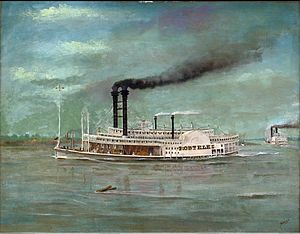
The steamer Robert E. Lee, on the Potomac River
 
An African-American river outing with some cross-dressed. The police arrested some. GVWW
1954
November LaVie Cafe, Altadena, Los Angeles.

The LAPD raided and arrested five 'men' for wearing women's clothes. Lavender Los Angeles, p48.

 
Tommy's Place, 529 Broadway, San Francisco
 
The bar was closed by the vice Squad. Two of the bartenders were charged with serving minors, and then some heroin, probably planted, was found in the ladies' toilets. Tommy lost her license and one of the bartenders was convicted. GVWW
1958
October National Variety Artists Ball, Manhattan Center, New York
 
143 were arrested, including Perry Desmond. GVWW
1959
May. Cooper's Doughnuts, Main St, Los Angeles
 
Police harrasment led to a riot. Queerty
1962
Stella Minge's Molly House, Silverton, Newham, London
 
London's last Molly House was raided now and then. GVWW

 
26 October National Variety Artists Ball, Manhattan Center, New York
 
Usually left alone, this year the NYPD raided the ball and arrested 30 or 43 "men" in female costume. This was the night before the trans gathering at Chevalier D’Eon Resort in upstate New York dominated by Virginia Prince. Those arrested appeared before Judge William Ringel who ruled that they could not be "''masquerading to conceal identity" if they were at a masquerade ball. GVWW

++The Yuga Ball, Metairie, New Orleans

The first gay 'krewe' – of the krewes that put on the New Orleans Mardi Gras celebrations – was the Yuga Krewe, founded in 1958. The fourth and fifth Yuga Balls were held in the New Orleans suburb of Metairie in a school that had a large dance studio, and was surrounded by a wooded area close to the lake. The second gay krewe, that of Petronius, held its first ball in 1962 at the same location. However the Yuga Ball a week later was raided by the Parish Police. Some managed to flee, but many were arrested in what the police dubbed a ‘lewd stag party’. Those arrested had their names printed in the newspapers and thus most lost their jobs.
1963
February The Black Cat Bar, 710 Montgomery St, San Francisco
 
José Sarria performed at the Black Cat doing camp versions of operatic arias. The police regularly raided gay bars and charged everyone, particularly trans women (as cross-dressing was a municipal crime), found inside. José urged that they plead not guilty which overloaded the courts and judges started demanding actual evidence. After years of harassment, but winning some court cases against the harassment, but with a legal cost of $38,000, the bar was forced to close. EN.Wikipedia
1965
25 April Dewey's Lunch Counter, 219 S 17th St, Philadelphia
 
Deweys was a Philadelphia chain restaurant. The Dewey's at 208 s 13th St was the 'fag' branch where drags queens, hustlers, lesbian and cops ate and drank side by side. The other branches, especially the 17th St branch wanted it that only the 13th St branch be so. They started refusing service to known homosexuals and "persons wearing non-conformist clothing". 150 protesters staged a sit-in and the police were called. 3 protesters were arrested. At a second sit-in a week later the police declined to take any action, and the management agreed to end discrimination. BlogArticle
1966
August Compton's Cafeteria, 101 Taylor St at Turk, San Francisco.
 
This branch of Compton's was one of few places in the city were trans persons could go. However the staff had started calling the police to arrest trans persons. By August a picket was launched. One night friction exploded into riot, dishes were smashed and the windows were smashed. The next night was a repeat. EN.Wikipedia
1967
Midnight, 1 January The Black Cat Tavern, 3909 West Sunset Boulevard.

On the last night of 1966 there was a drag contest at New Faces, a bar on W. Sunset Boulevard, Los Angeles. Just before midnight many of the contestants crowded into the Black Cat, just down the street. At the stroke of midnight, as many of the men exchanged a traditional kiss, the LAPD rushed in and beat several customers brutally. They chased two back to the New Faces where they knocked down the woman owner and beat the two bartenders unconscious, one of whom then suffered a ruptured spleen and after recovery was charged with felony assault on a police officer. Six patrons were charged with lewd conduct for kissing, and were all found guilty by a jury. Two of them were later registered as sex offenders. In response, there were organized protests, and the convictions of the two were appealed as far as the US Supreme Court which declined to take the case. This inspired a new periodical, The Advocate, for gay and lesbian (including transvestite) issues. GVWW EN.Wikipedia
1969
2 am 28 June The Stonewall Inn, 51-53 Christopher St, Greenwich Village, Manhattan, New York
 
In pursuance of a case of stolen bonds and blackmail, the NYPD decided to raid the Stonewall Inn whose management was implicated. However they chose to raid late at night when the Inn was busy with customers, and ended up paying more attention to how people were dressed than to evidence of blackmail. They took a paddy wagon designated for drag queens, from whom they met the first significant resistance. The police lost control, and a full-scale riot ensued, and continued for three nights. If the upstairs office was searched, it was not mentioned. The riots are now iconic, and taken as the origin of trans liberation. GVWW
1973
Stonewall Club on Twenty-first Street, Miami Beach, Florida
 
After a raid and arrests Angela Douglas of TAO files suit for discrimination. GVWW
1974
February Goldsmiths College, New Cross, London
 
The Gay Lib drag commune, Bethnal Rouge, was invited by Goldsmith College Gay Soc to give a Pre-Disco talk. Group 4 Total Security working for the College attacked them before they even spoke, and when Lewisham police arrived they were told that Bethnal Rouge had come to the disco to cause trouble. One queen needed hospital treatment; another who was head butted lost two front teeth. One was arrested and later that night thrown through a glass door in the police station. The rest escaped. GVWW
1976
21 April South London Gay Community Centre, 78 Railton Rd, Herne Hill, London
 
The building and next-door had been empty for many years when they were squatted in 1974 and became the Gay Community Centre and the Women's Centre. Alternate lifestyles, art and politics flourished. "Gender bending was encouraged to dissolve rigid categories of masculine men and feminine women. For others dressing in drag was a sheer pleasure and an opportunity for ingenious invention". However finally the legal owners asserted their position and bailiffs and police arrived to take the property so that it could be sold to Lambeth Council for £25,000 for redevelopment. BlogArticle
1990
3am, 15 July. Sex Garage loft party in Old Montreal.
 
Sex Garage, hosted by New Yorker Nicolas Jenkins, catered to the "butches, trannies and drag queens" who were reviled elsewhere, and mixed them with all sorts. 16 police cruisers and 40 officers with billy clubs became angry when they found no money behind the bar. Some drag queens climbed out the windows and crawled across rooftops. Many of the rest of the crowd were beaten, and photographs were in the next day's newspapers. Demonstrations started the next evening, and on the 16th they were met with more police brutality, documented by journalists. Demonstrations continued for two months. Led to Lesbians and Gays Against Violence (LGV) which led to La Table de concertation des gaies et lesbiennes du grand Montreal, which lobbied for the Quebec Human Rights Commission’s historic 1993 public hearings on violence against gays and lesbians. Newsarticle Wikipedia

 
19 July Centre de Christ Libérateur (CCL), 3bis, rue Clairaut, Paris
 
Joseph Douce, gay priest, author of La Question transsexuelle, who organised meetings and counselling for trans persons, was the prime mover behind CCL. Two men showed police badges and asked him to go with them. In late October his decomposed body was found in the forest of Rambouillet outside Paris. It is claimed that he was taken by the political police, Renseignements Généraux (RG). RG section leader Jean-Marc Dufourg was questioned about Douce’s death, fired and convicted of misuse of a firearm, but never officially admitted to be Doucé’s murderer. GVWW

 
14 November Tuntenhaus Forellenhof, Mainzer Straße 4, Berlin
 
After the fall of the wall, 30 houses in Mainzer Straße became squats with different orientations. Number 4 was a Tuntenhaus (queer-house). In November the police came to clear the squats, which resulted in street battles with, at its height 1400 police firing tear gas and water canons against 500 squatters. DE.Wikipedia.
2000
11 February Mikons bar, Cordoba.

Vanessa Ledesma of Córdoba, who was active in the Asociación Travestis Unidas de Córdoba (ATUC) was arrested during a scuffle at the Mikons bar on 11 February 2000. Five days later she was dead. Vanessa Ledesma was recognized by Amnesty International as one of six cases to mark its 40th anniversary. GVWW
2004
18 December Gondolin Hotel, Buenos Aires
 
The hotel was taken over by travestis from the town of Salta after the owner died with no kin to inherit. Monica León organized the Asociación Civil Gondolin, in large part to help the travestis there who were heavily into drugs and alcohol, and never used condoms. She coordinated with two hospitals to bring in 40-45 travestis monthly for check-ups to control tuberculosis. She sorted out the legal status of the hotel by getting the travestis to pay its taxes and bills. On 18 December 2004, 60 police surrounded the hotel and robbed the inmates. Monica was shot eight times in the legs. GVWW
2006
6am 31 March Le Madame, Koźlej 12, Warsaw
 
From 2003 Le Madame had been a club and community centre for alternate lifestyles and opinions. In 2005 the city took ownership and with the encouragement of the ruling Kaczynski twins began harassing the club. On 31 March bailiffs and police were sent in, but were met by a sit-in. However it was cleared brutally. Street demonstrations continued for many days. Drag performer Pandora entertained in front of the building. PL.Wikipedia    newsarticle
2008
April Lambda Istanbul
 
Lambda Istanbul, founded 1993, registered 2006. In 2007 the City government complained and a local court banned Lambda Istanbul. The police raided its cultural centre on grounds of "frequent visits by transgender people". The Supreme Court overruled the order on November, and in April the local court gave permission for continued operation. Newsarticle

 
9 November Dasarahalli, Bangalore
 
Police in Bangalore, India, forced 100 hijras from their homes, after a scandal about some hijras kidnapping and castrating male children. Newsarticle
2009
12 June Riyadh
 
66 Filipino guest workers at a private party for Philippine Independence Day were arrested for 'imitating women' and possession of alcohol. Newsarticle

 
June-December Honduras
 
Following the US-backed military coup, opposition political activists were killed by death squads as were “up to 18 gay and transgender men have been killed nationwide — as many as the five prior years — in the nearly six months since a political crisis rocked the nation.” Newsarticle
2010
January Japan
 
Three Filipino, who had previously worked in Japanese nightclubs before final surgery, were arrested on return to Japan to live with their husbands because of discrepancies in their papers. BlogArticle

 
26 March Mercure Hotel Surabaya
 
Conference held by the International Lesbian, Gay, Bisexual, Trans and Intersex Association (ILGA) was cancelled by the police after complaints and then threats by Muslims. ILGA

 
1 May Bumi Wijaya Hotel, Depok
 
The National Commission for Human Rights held a human rights training session. This was invaded by the Islamic Defenders Front (FPI) complaining that the Commission recognized the transsexual community. Afterwards, Satpol disputed that they had a permit. Newsarticle

 
17 May Pembe Hayat (Pink Life), Ankara.

Five activists were detained and brutally attacked by the police, and then charged with 'resisting police'. In October a judge dismissed the case for lack of evidence and reprimanded the police. Newsarticle

 
July Khartoum
 
19 young men in Sudan at a private party. A police raid found them in female clothing and makeup. No lawyers would defend them. They were sentenced to 30 lashes and fined. They were flogged in public. Newsarticle
2012
February Iraq
 
Continuous reports of militia targeting youths which focus on attacks, kidnapping, torture and murder of ‘emo’ youth and individuals perceived as gay, lesbian or trans. GayAsylumUK has confirmed that the US-backed Iraqi authorities actively conspire in this, arresting LGBT people and handing them over to the militiamen who kill them. The Netherlands is granting asylum to GLBT Iraqis.
2014
April Jeddah
 
Neighbours complained about loud music at a beach party. Some were 'dressed in women's clothes'. The police arrested 35 and accused them of being gay. Newsarticle

 
October Yaoundé
 
A private house was raided after a neighbour complained that it was frequented by 'effeminate homosexuals'. Seven trans persons were arrested and charged with being engaged in "prostitution and homosexual acts". They were later released for lack of evidence. Newsarticle

 
24 November Bangalore
 
After a recent demonstration at Pride against India's recriminalization of homosexuality in 2013, 167 hijras were arrested in a 'crackdown' on assumed beggars, although they were not begging at the time and some were dragged from their homes, and others when they went to the police station to help those already arrested. Nearly 2,000 hijras and supporters, aware of the targeted nature of the sweep marched in protest. Newsarticle
2015
June Agadir
 
Police arrested 20 gay and trans persons, and charged them with “breach of public decency”. Newsarticle

28 October 2014

Black Parrot Tea Shoppe Hobo-Hemia, raided 1923

In February 1923 the Charles Street Police Station in Manhattan was paying special attention to Greenwich Village. Deputy Inspector Joseph A. Howard and Captain Edward J. Dempsey of the Charles Street Station, and a party of ten detectives visited each tearoom and cabaret.

Detectives Joseph Massie and Dewey Hughes of the Special Service Squad were assigned to the Black Parrot Tea Shoppe Hobo-Hemia, 46 Charles Street, to witness what they had been informed would be a “circus", and arrested five women and eight men.

However on closer inspection, Ruby Bernhammer 21 from West Hoboken, New Jersey, did not meet their definition of a woman. Bernhammer was charged with disorderly conduct for giving an indecent dance, and they gave her name as 'Harry'.

Another arrested was Arthur C. Budd also 21 who worked as a female impersonator in “The Lady in Ermine” at The Century Theater under the name Rosebud.

The next day the local magistrate dismissed charges against all but the proprietors of the Black Parrot. Rosebud lost his job at The Century Theatre, but was working again the next year.
  • "Village Raid Nets 4 Women and 9 Men: Detectives Thought They Had Five Females, but Misjudged One Person by Clothing”. New York Times, February 5, 1923: 17.
  • "Board Ship to Get Big Liquor Agent". New York Times, February 6, 1923: 23.
  • "Cabaret" column. Variety, February 15, 1923: 30.
  • C. J. Bulliet. Venus Castina: Famous Female Impersonators Celestial and Human. Covici 308 pp 1928. Bonanza Books. 1956: 252.
  • Chad Heap Slumming Sexual and Racial Encounters in American Nightlife, 1885-1940. University of Chicago Press,2009: 353.
  • "Mae West: Rosebud". Mae West, July 26, 2008. http://maewest.blogspot.ca/2008/07/mae-west-rosebud.html.
IBDB(Arthur C Budd)   
____________________________________________________________

In contradiction to the New York Times, Variety claimed that the one “togged up in complete female attire” was Rosebud, as does Bulliet.

05 August 2013

The Cabin Inn, Chicago

The (Cozy) Cabin Inn opened in 1933 at 3119 Cottage Grove Avenue in Bronzeville, in Chicago's South Side, at the southern side of the Century of Progress fairgrounds. Impersonator Gilda Gray was the hostess, and did an imitation of the fan dance made famous by Sally Rand at the just finished World's Fair. It was owned by Jack Hardy and Nathan "Big" Ivy, who hailed from Arkansas and was a successful entrepreneur friendly with Chicago Negro politicians.

In Summer 1934 the show featured impersonator/blues singer Luzetta Hall and the dance team of Blue and Jean, The Lady and Gentleman of the Carioca. The star was the Brown Mae West (Dick Barrow) – not to be confused with the Sepia Mae West. Nat Ivy placed advertisements in the local newspapers: "When you have seen our Floor Show ... you have seen Chicago at its Best".

In late 1934 and early 1935 Mayor Joseph Kelly had the police clamp down on pansy and lesbian bars in the Near North Side but left Bronzeville alone. White patrons who enjoyed this type of entertainment started going to Bronzeville.
In October 1935 the Cabin Inn hosted a double wedding: that of midget dancer "Bullfrog Shorty” to Muriel Borsack, and that of impersonator Jean Acker and Vernon Long. Luzetta Hall was Jean's bridesmaid and guests came from as far away as Philadelphia and Indianapolis. It is said that Alfred Finnie took inspiration from this event in founding the Finnie's Balls which started that year. However the police came and closed the club. The impersonators were given a choice: "put on your pants or go to jail with the management".

The Inn was open again within a week, allegedly having paid bribes. The police returned in December and cited the Cabin Inn for violating its entertainment license. Barrow had a gig in Los Angeles and quickly went to it.

The Chicago Defender reported December 21 that twelve had been arrested: the two owners, two bartenders, the floodlight operator and seven female impersonators, three working at the Cabin Inn and four guests. In South State Street Court Judge Eugene McGarry dismissed all the charges: "The testimony does not show any specific violations of ordinance ... It appears that these men were dressed in female clothes. The testimony shows that it was a masquerade party. Female impersonators appear on stage every day. In the absence of any such testimony I have no choice but to find the defendants not guilty and that will be the order."

The Cabin Inn re-opened with Varieties of 1935, featuring a team of impersonators led by Valda Gray. In 1938 The Cabin Inn relocated to 3520 South State Street, still with Valda Gray.

By 1940 Nat Ivy had run out of influential friends and lost his entertainment licence.
  • Chad C Heap. Slumming: Sexual and Racial Encounters in American Nightlife, 1885-1940. Chicago: University of Chicago press, 2007: 94-6.
  • St. Sukie De la Croix. Chicago Whispers A History of LGBT Chicago Before Stonewall. Madison: The University of Wisconsin Press, 2012: 146-8, 152.
  • Tristan Cabello. "Queer Bronzeville: African American LGBTs on Chicago's South Side, 1900-1985: The emergence of African-American queer cultures on Chicago's South Side, 1920-1940". Windy City Times, 2012-02-29. www.windycitymediagroup.com/lgbt/Queer-Bronzeville-African-American-LGBTs-on-Chicagos-South-Side-1900-1985/36389.html.
____________________________________________________________

Heap says that the Inn was originally called the Cozy Cabin Inn and changed its name in 1935 when it relocated to South State Street.  De la Croix says nothing about ‘Cozy’ and has the move to South State Street in 1938.   De la Croix says that the December trial was re the October wedding;  Heap implies that it was re the December raid.

De la Croix makes some odd stylistic choices for a gay man.  He describes Bullfrog Shorty’s wedding as genuine without any quotes, but does put quotes around Luzetta being Jean’s “bridesmaid”.

We are not told if the marriage of "Bullfrog Shorty” to Muriel Borsack was registered with the State of Illinois. 

06 March 2013

The Big House – police raid

1932 was a peak year for pansy revues in Los Angeles with appearances by Karyl Norman and Jean Malin, and the next year Hollywood made a record number of films with pansy content.

However, from 1932 onwards, and especially after the end of Alcohol Prohibition in 1933, the Los Angeles Police Department (LAPD) started busting the pansy clubs. BBB's Cellar and Jimmie's Back Yard were raided repeatedly.

The raid on The Big House on Hollywood Boulevard in the fall of 1932 is notable in that it met resistance: the patrons fought back and a female impersonator attempted to escape through a window. However he, the owner and two patrons were arrested.

The bar, renamed Buddy's Rendezvous, reopened, and the police returned eight months later. The waiter was arrested for selling liquor and beer without a proper licence, and five transvestites were arrested on vagrancy charges.
  • Daniel Hurewitz. Bohemian Los Angeles and the Making of Modern Politics. Berkeley: University of California Press, 2007: 121-2.

05 March 2013

Stella Minge (192?–?) sailor, bawdy house keeper

Stella Minge, who had been in the merchant navy, had a house in Silvertown, (map) Newham, London, in the 1950s and 1960s, that was known for its frequent Friday night parties that often lasted until Sunday or even Monday. Stella, a queen herself, often encouraged younger queens, and her place was generally known among sailors, straight as well as gay, as the place to go when in London.

Police officers often stopped by because of the noise complaints, but individually would come back when off duty to join in the fun. Sometimes it was raided.

One day when Stella was going to be away for a while she went to the local police station to ask them to keep a eye on her house. The constable replied: "Stella, we've been keeping an eye on your house for donkeys' years".

*Not the DJ in Rochdale, nor the alias of Sapphire Dior.
  • Kris Kirk & Ed Heath. Men in Frocks. London: GMP, 1984: 32.
  • Ian Lucas. Impertinent Decorum: Gay Theatrical Manoeuvres. London: Cassell, 1994: 54.
  • Ann Edmead. Tumbleweed: The Boy. Strategic Book Publishing, 2011: Chp 6: Stella Minge, the Queen of Silver Town.
__________________________________________________________

Minge is slang for female pubic hair, but there are real people with the name (try googling it).  So it may have been Stella’s birth name, or it may just be a drag name.  We have earlier seen that Finocchio is a negative word for gay in Italian, but also the name of real people.

Stella’s home is referred to as a ‘bawdy house’ in Men in Frocks.  It could also be described as a Molly House – the last one in London?  And still active in the 1960s.

25 November 2012

Washington yachting party, 1950

In the late 1940s and for a long time afterwards there were no reliable guides for gays and trans.  In the US the closest were a series of books by Hearst newspaper reporters Jack Lait and Lee Mortimer: New York Confidential, 1948 (which sort of became a film in 1955), Chicago Confidential, 1950, and Washington Confidential, 1951 and U.S.A Confidential, 1952.  These book were somewhere between exposé and travel guide, and provide no footnotes or sources for their claims.

The Washington edition makes the following claim:
“Black Washington has its share of deviates, too.
During the summer, groups of colored fairies make up "yachting" parties and cruise the Potomac on the steamer Robert E. Lee. One Saturday night, last summer, over 100 cops were dispatched to the docks when the "Society of Female Impersonators" was to have a midnight sail. They found one thousand seven hundred Negro men, all dressed as women, on the boat, and as many more trying to get on. A riot was in the making, but the cops busted it up and kept it quiet when they hauled away two wagon loads. The ship finally got off at 2 A.M. . . .”
1,700 on the boat, and as many more trying to get on!!!

I can find no confirmation of this anecdote in GLBT histories of Washington.   I am inclined to reject the tale as a fabulation based on the improbable large numbers alone.

It would seem to be a sarcastic touch by the authors to put a negro (that being the term then used) outing on a ship named for the prominent Confederate General.   There was a steamship with that name.  But it sailed on the Mississippi, not on the Potomac.

The practice of cops seizing a random sample at a a gay event, and then leaving, was actually a common practice.

  • Passage cited on page 277 in Neil Miller. Out of the Past: Gay and Lesbian History from 1869 to the Present. New York: Vintage Books, 1995.

18 September 2012

Druids’ Hall, 26 July 1854

The hall, owned by the Ancient Order of Druids, was let over a period of 18 months during the Crimean War to a Mr Harris.  On the night of 26 July 1854, the event was a bal masqué.

Joseph Brundell of the city police had been on duty over the 18 months near Druids’ Hall and had noticed men attending in female attire.  He reported this to his sergeant, and was told not to interfere unless he saw ‘disgusting conduct’ in the public street.

Inspector Teague reported the next day:
From information I received relative to the frequent congregation of certain persons for immoral practices at the Druids'-hall, I proceeded thither in company with Sergeant Goodeve about 2 o'clock this morning. I saw a great many persons dancing there, and among the number were the prisoners, who rendered themselves very conspicuous by their disgusting and filthy conduct. I suspected that the prisoners and several others who were present in female attire were of the male sex, and I left the room for the purpose of obtaining further assistance, so as to secure the whole of the parties, but when we got outside Campbell came out after us, and, taking us by the arms, was about to speak, when I exclaimed, "That is a man," upon which he turned round and ran back immediately to the Druids'-hall. I returned and took Campbell into custody and observing Challis, whom I have frequently seen there before, behaving with two men as if he were a common prostitute, I took charge of him also.
John Challis, 60, wearing 'the pastoral garb of a shepherdess of the golden age', and George Campbell, 35, a lawyer, “completely equipped in female attire of the present day”, were arrested with on the charge of disguising themselves as women with the purpose of exciting others to commit an unnatural offence.

Madeleine Vincent said, she attended to the refreshment department in the ballroom, and saw the prisoners there, but saw nothing disgusting in their conduct, and never told the police that she had. She had said their conduct was disgraceful because they made such a noise, but that was the only impropriety she saw or complained of.

The landladies of all the different lodgings occupied by Challis during the last 12 months came forward and stated that they always considered his character irreproachable; but that he had a sort of mania for masquerades.
Sir R.W.Carden [magistrate] -  I was informed by your own bail that your object in visiting Druids'-hall was to see vice in all its enormity, in order that you might correct it from the pulplit, and he said that was the excuse you made for going to such places.

Campbell - It is a quite a mistake. I certainly did wish to see a little of London life without mixing with its abominations.

Sir R.W.CARDEN - And you thought that dressing yourself in women's attire was the best way of avoiding those abominations? I must say it was a very imprudent course . . . . I certainly hope you now see the folly of indulging in such extraordinary freaks, as you term them, and that you deeply feel how degrading it is to a man of education . . . to be placed in such a position. . . . However, under the circumstances, I am willing to believe it was nothing more than an act of the grossest folly, and that you now sincerely repent your imprudent conduct.
  • The Times, 27 July, 1 August, 2 August.  1854.  Online at: www.victorianlondon.org/sex/mencrossdressing.htm.
  • Thomas Boyle. Black Swine In The Sewers Of Hampstead: Beneath The Surface Of Victorian Sensationalism. London: Hodder & Stoughton 1989. New York: Viking 1989: 11.
  • H. G. Cocks. Nameless Offences Speaking of Male Homosexual Desire in Nineteenth-Century England. London: I.B. Tauris, 2003: 69-70.

13 June 2012

Ex-Mayor’s house raided

Arthur C Harper, from Columbus, Mississippi, was mayor of Los Angeles 1906-9. He was forced to not run again after suggestions, that were never proved, that he had accepted payoffs from bordellos.

After a trip to Bakersfield, Mr and Mrs Harper returned home unexpectedly, on the last day of March 1920, to find a raid by the Los Angeles police ‘purity squad’ against a party given by their son Joseph, 24.

Joseph and seven others were in female garb. The police claimed that a ‘degenerate orgy’ was in progress, and charged all twenty found with Social Vagrancy. The female garb was confiscated as ‘evidence’, and those wearing it had to send for masculine clothing before they could leave. Eight were denied bail after failing to pass medical quarantine examinations.

Four of those arrested were naval personnel. They had been invited by an acquaintance, and said that they didn’t realize that the women were ‘men’ until a late stage, and then they though it a good-natured masquerade stunt.

Two months later all charges were dropped.

*Not Joseph Harper the US soldier, the Scottish footballer, nor the Labour MP.
  • “Police End Stag Party; Say Men in Girls’ Garb: Twenty Arrests Follow Raid on Home of Former Mayor Harper”. Feb 1, 1920. “Medic’s Test Holds Eight: Was a Harmless Masquerade, is Parents’ Statement; However, Arresting Officers Promise a Sensation; Some Await Masculine Garb to Replace ‘Finery’ ”. Feb 2, 1920. The Daily Mirror, Online at: http://latimesblogs.latimes.com/thedailymirror/2010/02/police-arrest-men-in-girls-garb.html.
  • “U.S. Sensation: Police Raid Ex-mayor of Los Angeles House: Men Gowned as Women”. Reynold’s Illustrated Newspaper, 4 April 1920, reprinted in George Ives (ed Paul Sieveking). Man Bites Man: The Scrapbook of an Edwardian Eccentric. Penguin Books, 1981: 125.
  • Tom De Simone, Teresa Wang, Melissa Lopez, Diem Tran, Andy Sacher, Kersu Dalal, Justin Emerick. Lavender Los Angeles. Charleston, S.C.: Arcadia Pub, 2011: 24.
____________________________________________________________

Social vagrancy – in a private house ??

12 June 2012

Los 41

As in most countries, so in nineteenth-century Mexico, on the stage, in carnival, at balls, there were those who transvested. A notable example, in the first week of September 1894, was a formal ball presided over by the Governor of the Federal District, Pedro Rincón Gallardo y Terreros, and attended by José de la Cruz Porfirio Díaz Mori, the President (1876-1911). El Universal, 7 September, reported the presence of several young men costumed as women, in particular, one F. Algara who was dressed as a a royal Lady in Waiting.

On 17-18 November 1901, two weeks after the transformista Leopoldo Fregoli had performed in Mexico City with his quick changes into and out of female costume, there was a private ball next to 4a calle de la Paz (now calle Ezequiel Montes). The local policeman noticed many carriages depositing passengers, and investigated. He discovered 41 male-bodied persons dancing, 19 dressed as female.  He called reinforcements and they were all arrested.

It was quickly rumoured that there was a 42nd person, but that he was Ignacio de la Torre y Mier, Porfirio’s son-in-law, and that, perhaps after a payment, he was permitted to leave. There was an alternate rumour that the 42nd was a woman. It was also said that at midnight there was to be an auction of an attractive young man. Some said that the next day, those arrested en femme were obliged to sweep the streets in their finery, but like most details of this event, this too is unconfirmed.

No list of the 41 was ever issued, not even a century later. Most of the newspapers suggest that the 41 are young men from “well-known families of good standing (Monsiváis, 2003: 148)”; that they included lawyers, dentists and even priests, and that some of them were from a well-known group of dandies who were known for their stylish men’s clothes they they paraded in on the fashionable streets. There was no trial, but the arrested were inducted into the army and sent to do forced labour in the Yucatan where a Mayan insurgency (the Caste War) was being suppressed with the assistance of the UK government.

However only 19, not 41 were sent. Monsiváis, 2003 says: “At no risk of slandering the proverbial probity of the judicial apparatus in 1901 Mexico, it can be said for certain that 22 or 23 of the victims of the Redada buy their liberty”. El Popular excused the discrepancy in that some had attended the party without knowing its nature. The opinion was also expressed that only those who transvested were really ‘maricón’. This of course fits in with the Latino attitude that a man can can have sex without being a maricón if he plays only the male role. Other newspapers assumed that the 19 transported were those who had transvested, but this is not confirmed. There is no record of the return of the 19.

Three weeks later, 4 December, there was a police raid on a lesbian party in Santa Maria, but far less attention was paid to it.

Mexico, later than other Latin American countries, had adopted the Napoleonic Code in 1871 following the French Occupation, so in theory sodomy, homosexuality and transvestity were all legal. However as a concession to traditionalist opinions the same penal code of 1871 contained Article 787.

Se impondrá la pena de arresto mayor y multa de 25 a 500 pesos, al que ultraje la moral publica o las buenas costumbres, ejecutando una acción impúdica en un lugar público, haya o no testigos, o en un lugar privado en que pueda verla el público. Se tendra como impúdica: toda accion que en el concepto público
esté calificada de contraria al pudor
The punishment of greater arrest and a fine of 25 to 500 pesos will be imposed on he who affronts public morality or good habits, by performing an immodest act in a public place, whether or not there are witnesses, or in a private place visible to the public. Immodest will be considered as: any action that in the public eye is classified as contrary to modesty

Shortly afterwards a series of handbills were distributed which included José Guadalupe Posada's engravings about the raid along with satirical verses. In 1906 Eduardo A. Castrejón published a novel titled Los cuarenta y uno. Novela crítico-social, which told of two women who find out that their fiancés were in the raid.


In total Los 41 became such a media scandal that for several decades homosexuality, effeminacy and transvestity came to be regarded as the same thing. 41 became a taboo number in Mexico. No division, regiment, or battalion of the army was given the number 41. No-one was number 41 on a payroll. Street numbers skipped 41. No hotel or hospital had a room 41. Nobody celebrated a 41st birthday. In recent decades gay organizations have embraced the number, using it as a name for bars or associations.

The centenary was commemorated in 2001 in New Orleans by Tito Vaconcelos, the gender performer, who put on a one-person play, Doña Caralampia Mondongo lo sabra y te lo cuenta todo, wherein an imagined drag alter of journalist Ireneo Paz, grandfather of Nobel Laureate Octavio Paz, whispers to us the secrets of life under the Porfirio regime. This was followed by a symposium at Tulane University, which resulted in the 2003 book, with a closing dinner exactly on 17 November.
  • Robert McKee Irwin. “The Famous 41: The Scandalous Birth of Modern Mexican Homosexuality”. GLQ: A Journal of Lesbian and Gay Studies, 6,3,2000: 353-376.
  • Carlos Monsiváis. “La Gran Redada”. Enkidu,noviembre 2001. www.enkidumagazine.com/art/2007/200707/e_1007_063_a.htm.
  • Ben Sifuentes Jáuregui. “Nation and the Scandal of Effeminacy: Rereading Los ’41’Transvestism, Masculinity, and Latin American Literature: Genders Share Flesh. New York: Palgrave, 2002.
  • Robert McKee Irwin,, Edwin J. McCaughan, & Michelle Rocío Nasser. The Famous 41: Sexuality and Social Control in Mexico, C. 1901. New York: Palgrave Macmillan, 2003. Includes newspaper accounts, a selection from Castrejón’s novel, revised essays by Irwin and Monsiváis.
 ES.WIKIPEDIA   EN.WIKIPEDIA
____________________________________________________________

The concept of ‘affronting public morality or good habits’ is found in several Latin American law codes.  Both public morality or good habits are undefined, and charges are at the whim of the police.  Presumably the illegal lack of a trial is so that the existence of maricónes need not be conceded and the curiosity of the young need not be aroused (Monsiváis, 2003: 156-7).  However as the raid became a media scandal, that intention was thwarted.

The 2003 book reprints several of the newspaper accounts in the original Spanish and in English translation.   It would seem that lacking any real facts, most of the stories were made up, and tell us more about prejudices at the time rather than what really happened.  The conflation of transvestity, homosexuality and pedophilia is obviously such a prejudice, but also the idea that a dandy (a homeovestite) is likely to cross-dress.

In England effeminacy was more associated with a type of heterosexuality before the Oscar Wilde trials in 1895.  So a similar change happened in Mexico in 1901.  Los 41 is an example of how the social construction of sex and gender can quickly change because of one incident.

So the commemorative symposium at Tulane University ended with a dinner.  Surely the logical conclusion should have been a drag ball.

Ignacio de la Torre y Mier employed a groom on his estate by the name of Emiliano Zapata, who of course played a major role in the Revolution that broke out 9 years later.  The Mexican Revolution, unlike the Cuban, never evolved past its initial sexism to embrace GLBT rights.

The es.wikipedia article claims that one of the 41 was Marcus J. Moix.  It describes him using the rude term ‘garchados’ and accuses him of spreading venereal diseases.  The immediate footnote references do not even mention anybody called Moix.  I am surprised that the term and the lack of confirmation meet Wikipedia’s standards.

Ironically in Christianity, 41 represents 39 lashes received by Jesus plus one for the spear in his side and one for the crown of thorns.

10 February 2012

The Temperance Hall, Hulme.

The Temperance Hall, Hulme, (map) close to central Manchester was rented for a ball in late September 1880 by what purported to be the Manchester Pawnbrokers’ Association. To ensure privacy the organizers covered the windows with black paper, and engaged a blind accordionist to provide the music.

Detective Jerome Caminada had received a tip-off and organized a combined force of police constables and local men. He climbed onto a neighbouring roof so that he could see over the paper covering the window. He saw a mixed group of 47 men, some smart, some shabby, half dressed as male historical figures and the others as women. He noted a couple dressed as Henry VIII and Anne Boleyn, and another as Romeo and Juliet. The can-can was being danced. Sometimes persons left the main hall into the ante-room, where Caminada imagined what might be happening.

He knew that to gain admittance, he should give the password ‘sister’ in an effeminate voice. He did so and his gang burst in and arrested everybody present, and transported them to the magistrate’s court.

It was discovered that the organizers were not local men, but that they arranged similar events as far away as Leeds and Nottingham. Detective Caminada informed the court that ‘in society, there existed a class of men, almost unknown to many gentlemen, who prowl about the streets almost to the same extent as unfortunate women’. The most prominent of those arrested was a Mr Parkinson, a professional female impersonator, who had toured with Tute’s Minstrels. Caminada had heard him address men in the streets in a female voice. The defence argued that the defendants had been foolish, but not criminal.

The magistrates considered the possible scandal. “In this city -- not in Turkey or Bulgaria or some places where these odious practices were common -- but in Manchester this vice ... was practiced and solicited’. After consideration, no further investigation was pursued, the defendants were bound over and released.

Reproduced in Cocks.
  • Illustrated Police News, 2 October 1880.
  • Manchester Evening News, 30 September, 1 October 1880.
  • H.G. Cocks. “Secrets, Crimes and Diseases, 1800-1914”. In Matt Cook (ed). A Gay History of Britain: Love and Sex Between Man Since the Middle Ages. Greenwood World Publishing, 2007:118-9, 121.
_________________________________________________________________________________________________________

What a pity that Detective Caminada did not consult with the magistrates before organizing his raid.   The police resources would be better spent elsewhere.

Unfortunately the name of the ball organizers were not given.

27 June 2011

The Stonewall Inn

See also

Three Centuries of Police Raids
Other Trans Person in New York 1969-72
Recurring Untruths: Masha P Johnson's Birthday
Where was Sylvia the night of 27/28 June 1969?
New York in the 1960s
East New Jersey in the 1960s
1969 – a Year of Much Activity
The four years leading to Stonewall
The five years following Stonewall
The trans geography of New York 1966-74

The post-Stonewall activist organizations:

Queens Liberation Front (QLF)
StreetTransvestite Action Revolutionaries. (also Part III of Sylvia Rivera)
Gay Liberation Front (GLF) - New York
Gay Activists Alliance (GAA)
Gay Liberation Front (GLF) - London

(The names of trans persons have been bolded for clarity.  Some of course are both bolded and a link.)

The building at 51 and 53 Christopher Street in New York's Greenwich Village was originally constructed 1843-6 as stables. The all-black horses that delivered goods for Saks Fifth Avenue were housed there until motorized vehicles came in at the turn of the century.

In 1930, during the alcohol prohibition, the two buildings were converted into one, and were opened as a tea room, Bonnie's Stone Wall, named after the autobiography The Stone Wall by Mary Casal, one of the first US books to be open about lesbian love. The tea room was later expanded into a restaurant. By 1940 it was renamed Bonnie's Stonewall Inn, and by the 1960s, The Stonewall Inn Restaurant. The park opposite the Stonewall Inn contains a statue of General Sheridan, and by a process of conflation, it is sometimes mistakenly assumed that both the statue and the Inn are a reference to General Stonewall Jackson, the Confederate commander who died after being hit by friendly fire.

Mobster Vito Genovese bought up gay bars in the 1930s, including the 82 Club. The FBI targeted him in the 1950s, and convicted him in 1959 of trafficking heroin, and he died in prison in February 1969. His right-hand man who ran the gay bar rackets was Anthony Strollo. He disappeared in April 1962, and according to police sources was crushed to death in the seat of his car as it was run through a scrap metal compressor.

The Stonewall Inn Restaurant was gutted by fire in the mid-1960s and, after a few years of being empty, was reopened as a gay bar in March 1967 by Tony Lauria, the son of an old-fashioned Mafioso who did not approve of 'fag bars', and three partners, assisted by Chuck Shaheen. There was also an extra partner who did not put up any money: Matthew Ianniello, known as Matty the Horse, because of the strength of his punch, was the co-ordinator for the gay bars for the Genovese, Gambino and Colombo crime families.

The Stonewall Inn became the largest gay business at the time in the US. It was the only bar in New York for gay men that permitted dancing, which was its main draw. The New York State Liquor Authority refused liquor licenses to any bar that catered to openly homosexual patrons. This created a monopoly for organized crime which was pleased to run bars without licenses and to pay off the police. The Stonewall Inn pretended to be a private bottle club, and used a charter that had been issued to the Red Swan Social Club in 1929. They also watered the drinks, and used liquor obtained from truck hijackings. The upstairs room was reached by a back entrance from West 10th Street, and from there boy prostitutes and heroin were distributed, but the gay crowd downstairs knew nothing of this. There was no running water behind the bar: glasses were washed in a bowl of water before being reused. There were no fire exits and the toilets often overran. The New York City Health Department had traced several cases of hepatitis back the the Stonewall, and was considering closing it. As with other gay bars, the Inn was frequently raided: on average once a month. The management usually knew about the raids in advance.

Only a favored few male-bodied customers were permitted in if dressed as female, although some customers wore makeup and did their hair in a feminine style – at that time they were referred to as flame queens. Joe Tish, female impersonator, who had a long-running show at the Crazy Horse was one of those refused entry when in costume, although he was so admitted at some uptown straight clubs. Tammy Novak, who had lived with Tony and Chuck, was admitted in female clothing. Désirée, a natural beauty who easily passed as female, spent time at the Stonewall, and took up there with Petey, a free-lance gangster. They moved to the suburbs to live as a heterosexual couple, until Petey, in a fit of jealousy, shot and killed her. Other trans women mentioned at the Stonewall were Tiffany and Spanola Jerry. Barbara Eden, who worked in the coat check, would turn up in full drag every now and then.  Street queens who could not afford the entry fee in the Stonewall Inn were often found in the parkette across the street, which turned out to be an ideal place to join in the riot.

Both male-bodied persons in female dress and female-bodied persons in male dress were liable to arrest if caught in a police raid.  The police used a rule that you must be wearing at least three items appropriate to your 'real sex'. 

Enid Gerling was the bar's house attorney, and she often represented those who were arrested when it was raided.

The police raid on Friday June 27 1969, (actually in the early hours of Saturday) only a few hours after the Judy Garland funeral, was co-ordinated by Deputy Inspector Seymour Pine, who used the excuse that the bar was unlicensed. The raid was carried out without the knowledge of the local precinct which was suspected of being on the take. Interpol had recovered negotiated bonds from Wall Street which were turning up in Europe. The bonds were being stolen by Wall St. employees who were victims of a blackmail operation run by Ed Murphy, sometimes called the Skull from his time as a wrestler. Murphy sometimes worked the door, where one task was to hand envelopes to a representative of the Sixth Precinct, rumored to be $1,200 a month. Other times he behaved as if he were the manager of the Stonewall Inn. Murphy had served time for stealing gold from dental offices, and had been arrested previously on blackmail charges, but he also had incriminating photographs of J. Edgar Hoover, and the charges had not been pursued. The NYPD figured out that the theft of bonds was tied to blackmail at the Stonewall Inn, and the order went out to shut down the club.

Carter's Stonewall. 3rd from left is Michelle


One of the first reported actions that started the riot on the 27th, was that a cop hit a butch female/trans man and that he hit back. It has been debated whether this was Stormé DeLarverie, who was previously the sole male impersonator in the Jewel Box Revue. Deputy Inspector Pine has testified that the first significant resistance that he encountered in the bar was from the transvestites. Allyson Allante, then 14, was arrested, as was Maria Ritter who was there with her friend Kiki to celebrate Maria being 18 and legally able to drink for the first time. Street queen, Birdy Rivera was also there. Diane Kearney was in the area and for a time joined the crowd that was observing events. (Duberman says that Tammy Novak had persuaded Sylvia Rae Rivera, then only 17, to come down to the Stonewall Inn for the first time  - however other historians have failed to any confirmation of this). Tammy Novak was arrested and put in the paddy wagon for drag queens, but escaped in the confusion and ran to Joe Tish's apartment where she holed up for the weekend. A police officer putting Maria Ritter into the paddy wagon had commented that he couldn't believe that she was a boy. She said that she wasn't. As some more trans women were directed in, Maria stepped around them and walked away. The same policeman went to intercept her, but as she broke into tears, waved her to go away. Marsha P. Johnson and Zazu Nova were also active in the riots, and Michelle, Dario Modon and Christine Hayworth were present. Marsha was observed dropping a heavy weight onto a police car. Wayne County (who would later become Jayne) met Miss Peaches and Marsha P Johnson on arrival and realized what was going on.  He joined an impromptu march up and down Christopher Street shouting "Gay Power!".  Ruth Brown was in there somewhere.

Alan Ginsburg lived on Christopher Street and inevitably joined the crowd. Ed Murphy was handcuffed to another man, but they managed to escape into the crowd and took a taxi to an S&M friend who knew how to remove handcuffs. Perhaps the Sixth Precinct cops, already peeved in not knowing about the raid in advance, recognized the man who paid them off.

A few months after the riots, the Inn closed in late 1969. The space was occupied in turn by a bagel sandwich shop, a Chinese restaurant, and a shoe store.

In 1970 the New York State Government issued an order that all employees in the financial industry be fingerprinted. This resulted in a fair number of matches with the police records of old arrests for homosexual activities, and many old and trusted employees were fired because bonding companies would not insure known homosexuals.

After the riots, the mafia attempted to appease the gay community by setting up gay businessmen as fronts, and by hiring gay bartenders and managers. They even joined in the gay pride celebrations, and accused the police of homophobia if a bar was raided. In 1972 Ed Murphy founded the Christopher Street Festival committee, and by 1974 succeeded in reversing the direction of the march so that it ended in the Village so that the crowds would go on to drink in Mafia bars. Not that this was an easy union. Robert Wood was the gay owner of the nightclub Salvation in Sheridan Square who was murdered in February 1970 because he was not happy to hand over his profits to the mob. In 1986 Matthew Ianniello was convicted of racketeering and went to prison until 1995. Ed Murphy died of AIDS in 1989. On release Ianniello became the acting boss of the Genovese family until 2005 when he was convicted again. 

In the early 1990s, The Stonewall Inn was reopened as a new gay bar called simply: Stonewall. The block of Christopher Street between Sixth and Seventh Avenues was given the honorary name of "Stonewall Place" by the Borough of Manhattan.

In 1993 Martin Duberman published the first history of Stonewall, and wrote Sylvia Rivera as a major participant. In 1995 the BBC film Stonewall, loosely based on Duberman's book was released. In 1997 Charles Kaiser's The Gay Metropolis recounts Stonewall without naming any trans women at all. In June 1999, the Stonewall Inn and the area outside was listed on the US National Register of Historic Places, and in February it was declared a US National Historic Landmark. The building was renovated in the late 1990s and became a nightclub until it closed again in 2006, due to bad management and noise complaints. It was reopened in 2007.

In 2004 David Carter published his history of Stonewall. He has a lot more on the mafia angle, he tells of transies and drags who are not in Duberman's book, and he tells us further details of Marsha P. Johnson not in Duberman's book. But Sylvia Rivera has disappeared. There is not even a footnote explaining why he has removed her.

*Not Eddie Murphy the comedian and actor.
  • "Homo Nest Raided, Queen Bees Are Stinging Mad". New York Daily News, July 6, 1969. Online at: www.yak.net/ian/stonewall.html.
  • Martin B Duberman. Stonewall. Dutton, 1993.  Plume, 1994.
  • Jayne County with Rupert Smith. Man Enough to be a Woman. Serpent's Tail, 1995: 47-9. 
  • David Carter. Stonewall: The Riots That Sparked The Gay Revolution. St. Martin’s Press. 2004.
  • Leslie Feinberg. Lavender & Red, parts 65-71. Workers World, 2006. www.workers.org/lavender-red
  • Lucian K. Truscott IV. "The Real Mob at Stonewall". The New York Times, June 25, 2009. www.nytimes.com/2009/06/26/opinion/26truscott.html.
  • "Stonewall Riots: A Gay Protest Against Mafia Bars". Friends of Ours, June 07, 2010. Archive
  • "Stonewall Inn". Wikipedia, the free encyclopedia. en.wikipedia.org/wiki/Stonewall_Inn.
  • "Stonewall riots". Wikipedia, the free encyclopedia. en.wikipedia.org/wiki/Stonewall_riots.
  • David Carter. "Exploding the Myths of Stonewall: We know a lot about what happened in June 1969 and should honor that".  Gay City News, June 27, 2019. Online
______________________________________________________________________________
The Wikipedia article on the Stonewall Inn does not mention the mafia, and the Wikipedia articles on each Mafioso do not mention gay bays.  BitterQueen was the best website on the interaction between the two, but is now taken down and replaced by Philip Crawford's book The Mafia and the Gays.

As a raid to break a blackmailing ring the raid was a spectacular failure.  Priority was diverted to arresting the trans men and women.  That was really important: and Ed Murphy was able to slip away even though he had been handcuffed.   I found no mention that the upstairs was even raided.

An enlightened government would of course have issued liquor licenses to gay bars to get the Mafia out.  The Stonewall should of course have been closed down on health grounds until running water and proper sinks were installed.  However the way to do this was with the Department of Health.

For both reasons, health and against the blackmail ring, a daytime raid made a lot more sense.  It was completely perverse to raid at 2am when most customers were present.  That implies that, despite what Deputy Inspector Pine said, the NYPD really was obsessed with what clothing people were wearing.

The requirement by New York State the next year that all finance industry employees be fingerprinted without working with the insurance industry to permit gay men was a very strong strong message to gay men being blackmailed that they should co-operate with the blackmailer, not the authorities.  Deputy Inspector Pine’s attempt to break the blackmail rings was a waste of time while the insurance industry had this attitude.

Here Suzan Cooke published photos of Stonewall, presumably to make the point that there were no trans women at Stonewall.  Note that she does not include the photograph above with Michelle.  a) there were  so many trans women that the cops had a separate paddy wagon just for them.  b) The trans women were mainly active on the first night, Friday/Saturday, while most of the photographs were taken on the second night, Saturday/Sunday.